

U.S. Hints It Might Back Effort Against Iranian Regime
Plus, Jacob Neusner; Columbia latest

The Biden-Harris administration has been so protective of the Iranian regime and generous with enriching it that at least some perceptive people in the region see Washington, not Moscow or Beijing, as Ayatollah Ali Khamenei’s most formidable ally.
Yet in recent days, as Prime Minister Netanyahu taken the new and unusual step of openly calling for a regime change in Iran, and as the Shah’s son, Reza Pahlevi, has called for a “transition to democracy” to replace the “tyrant in Tehran,” the tone from the U.S. has subtly shifted.
It may be too much to ask or hope that the American government would actively assist the Iranian people if they tried, perhaps with Jordanian, Saudi, or Israeli help, to end Ali Khamenei’s rule and replace it with something less aggressive and more peaceful. But the recent indicators offer at least some possible signs that the U.S. would not stand in the way of such an effort, especially if it were done in a way that didn’t dramatically disrupt oil markets in the weeks before the U.S. election.
In October 2 remarks at the United Nations, the American permanent representative, Ambassador Linda Thomas-Greenfield, said, “in a broad sense, Iran was complicit in the October 7th attacks on Israel –through its funding, training, capabilities, and support for the military wing of Hamas.”
In remarks at a UN Event Commemorating October 7 hosted by the Permanent Mission of Israel to the UN, Thomas-Greenfield spoke of “Terrorist groups like the Houthis and Hizballah, whose Iranian-supplied missiles rain down on Israel. And the Iranian regime itself, which has repeatedly sought to take advantage of the current situation to advance its own destructive agenda.” Whenever U.S. diplomats—even in a Biden-Harris administration—start speaking about a “regime” rather than a government, it can be a signal that the regime is on its way to the exit.
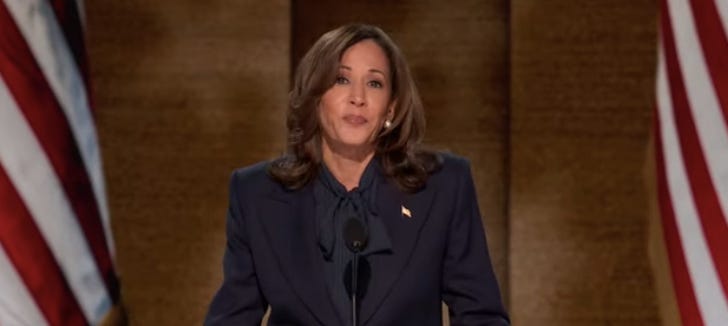
And in her CBS “60 Minutes” interview this week, in a segment that didn’t make it to the broadcast but was left for online “overtime,” Vice President Harris was asked, “Which foreign country do you consider to be our greatest adversary?” She replied, “I think there is an obvious one in mind, which is Iran.”
“Iran has American blood on their hands,” Harris said. “And what we saw in terms of just this attack on Israel, 200 ballistic missiles, what we need to do to ensure that Iran never achieves the ability to be a nuclear power, that is one of my highest priorities.”
Jacob Neusner yahrzeit: Back in 2016 for the New York Sun I covered the memorial service for Jacob Neusner, a remarkably prolific religious studies scholar who took the Hebrew and Aramaic texts of the Mishna and the Talmud, translated them into English, and explained how they functioned to sustain rabbinic Judaism and influence and interact with early Christianity.
I wrote then, “The headlines are full of bad news from our campuses — speech suppression, doctrinaire leftism, rape. Neusner’s career, in contrast, is vital, consequential, romantic. It is a reminder of the best of the academy, its creativity and its heterodoxy, there to be discovered in the study of ancient Jewish texts just as much in computer science or environmental and gender studies. One wishes for today’s undergraduates — whether at Harvard, at Bard, or somewhere else — that they are blessed to encounter teachers as open-minded, dedicated, challenging, humble, and rigorous as Neusner.”
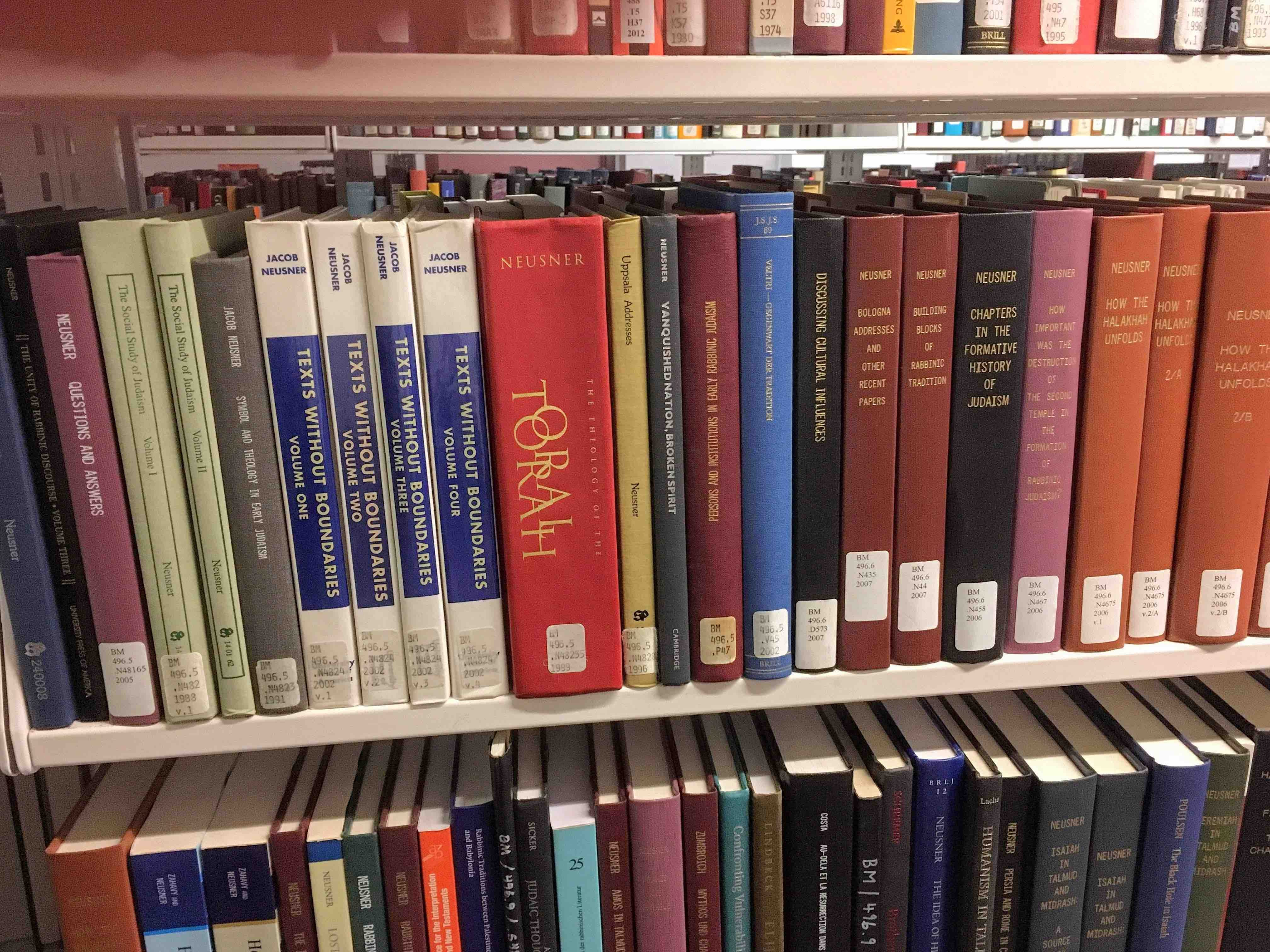
That take remains relevant and might even, though I hesitate to say so myself, qualify as prescient. One of Jacob Neusner’s sons, Noam Neusner, who served in the George W. Bush administration, has a new Facebook post up about his father. I asked Noam, who is a reader of The Editors, for permission to republish it here, which he graciously granted, and for which I am grateful. Here it is:
Today my family marks the yahrtzeit of my father, Rabbi and Professor Jacob Neusner, who died 8 years ago today, 6 Tishrei.
I often wonder what he would say and write about the events of this moment -- he was both a Zionist (he considered making aliyah in the '50s) and was critical of political Zionism as a replacement for robust, literate and religious Judaism. He believed deeply in Jewish life outside the State of Israel, and that the diaspora must remain a vital place of Jewish invention and dynamism, and not dependent on Israel for its identity.
I suppose he would have seen the return to synagogues and religious connection now common across world Jewry post 10/7 as a validation of his view that in the end, we cannot replace enchantment with politics -- when the heart is broken, we don't need policy, we need prayer.
He would have seen the close identity-affiliation of diaspora Jews with Israel as both a byproduct of the intellectual weaknesses in diaspora Judaism AND the dynamism and relative scale of Israeli Jewish life and culture.
The rise of religious Zionism, nourished by Mizrachi Jews, as a critical feature of Israel's national life in the last two decades would have surprised him in its richness. Diaspora Jews now depend on Israel in a way that wasn’t the case even in the post-67 period. Israel is the center of the Jewish world and the Ashkenazi-centric diaspora has receded to secondary status -- and my dad would have recognized that shift and not resisted it further. He might have suggested it was just as much a victory of Israel’s dynamic culture as a surrender by the aging and tired diaspora. In any case, he was a realist.
As for the rise of intellectually fashionable anti-Semitism especially among the professoriate and his former colleagues, he would have had no illusions. He would have had no problem unleashing his legendary wit and letter bombs against those who hide their Jew-hatred behind academic robes and fancy titles. They would not have been able to elide their own bigotries with vague and passive reassurances.
He wasn't fooled by academic pretension or rank — he knew who was any good, and that mediocrities were the most likely to hide amid faddish political fashions, administrative positions, and the faculty lounge and senate, whose meetings he faithfully ignored.
He would have stuck it to them, embarrassed them, and, if they tried to silence him, would have simply written more about them. That was his way. No fear.
The “no fear” line in particular is inspiring. It made me smile in the context of yesterday’s item here, “Harris speaks of Jewish “fear” on October 7 anniversary,” which generated some reaction in the increasingly lively reader comment section of The Editors.
It also made me think of a column I did for the Algemeiner in December 2023, “The Fear Trap: What’s Missing From the Current Campus Antisemitism Debate:” “From the point of view of educating future Jewish leaders or even just getting through the days ahead, the community needs to be cultivating the heroic virtues of courage and strength, not fixating on fear.”
The “fear” and “courage” question has implications that go beyond the issue of Jews and antisemitism to broader issues of intellectual vitality on American college campuses and in classrooms. I’ll get to those in a separate item, soon, I hope.
Columbia update: Khymani James, the former student representative to the Boston School Committee who, as a student at Columbia, was recorded saying “Zionists don’t deserve to live,” has now renounced the apology he issued for that statement.
Note that James’s bio on x reads “Anti-capitalist. Anti-imperialist. Student and educator, supporting and teaching liberation everywhere. FREE PALESTINE.” That’s a reminder of the regular theme here that the war against the Jews is a war against capitalism.
Anyway, Columbia student pro-Israel student activist Elisha “Lishi” Baker, catches James in a social media post in which James proclaims, “I never wrote the neo-liberal apology posted in late April, and I’m glad we’ve set the record straight once and for all. I will not allow anyone to shame me for my politics. Anything I said, I meant it.”
As I wrote here back in July, “Years ago someone warned me that when a writer flings around the term ‘neoliberal,’ it’s nearly a failsafe indicator that they don’t know what they are talking about and that their policy prescriptions can be safely ignored.”
Thank you: If you are reading this, can spare the $8 a month or $80 a year, and aren’t yet a paying customer, please take the few minutes to become one today. It will sustain our growth, support our independent journalism, and ensure your continued access. Some people might find it easier to complete the transaction on a desktop computer than on a phone. If you are having trouble with the signup or have questions, shoot me an email at ira@futureofcapitalism.com
Ira Stoll is spot-on in going "beyond the issue of Jews and antisemitism to broader issues of intellectual vitality on American college campuses and in classrooms".
Rabbi David Wolpe stressed the same point, broadening discussion about antisemitism at Harvard to focus on the the wider issue of intersectionality "ideology that works only along axes of oppression and oppressed": https://jewishjournal.com/cover_story/372630/my-year-at-harvard/
I've addressed these issues in 2 of my WSJ op-eds, which I've now made open access:
⦿ The wider issue of intersectionality: https://segal.org/gaza/woke/
⦿ The importance of wider approaches such as intellectual vitality: https://segal.org/gaza/harvardprotesters/
To try to solve the antisemitism problem by shoehorning Jews into identity-based approaches such as DEI is very short-sighted. What we need is identity-independent solutions.
Jewish collegians are afraid for two reasons: the sheer verbal violence hatred and intolerance of their enemies, and the deeper truth of their own ignorance and ambivalence re a Jewishness they don’t understand much less love and live.