

The Antitrust Case Against Apple
Plus, Biden bashes L.A.; Chinese electric cars as a security threat

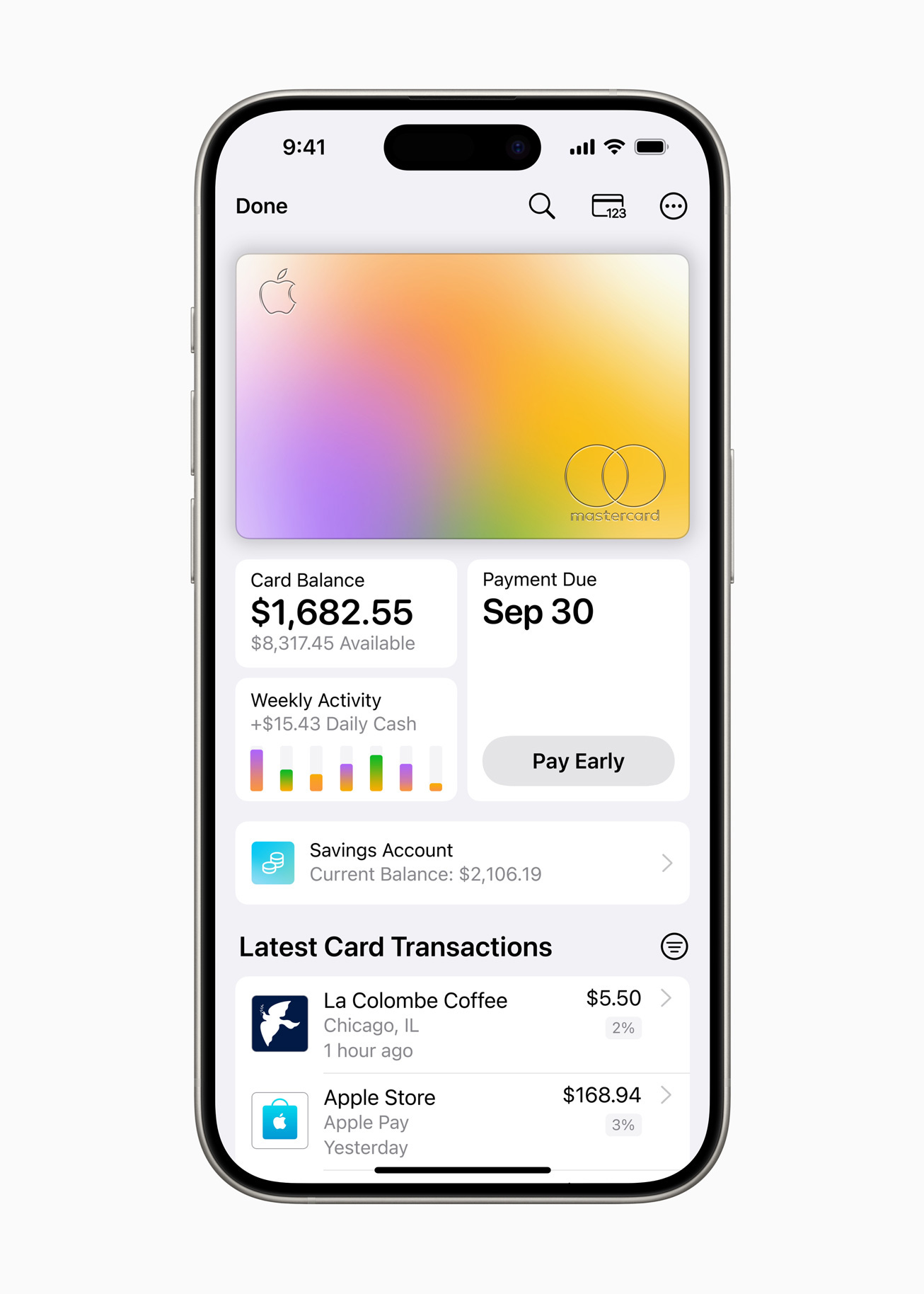
Apple shares were down 4 percent or so this afternoon, on a day the stock market was trading up overall, after the Justice Department and a bipartisan collection of state attorneys general filed an antitrust lawsuit against the company. It was a fine illustration of how regulatory action can destroy market value. Four percent of Apple’s roughly $2.6 trillion market capitalization is more than $100 billion, destroyed by Attorney Merrick Garland.
The complaint is also fascinating for the anticapitalist mindset it discloses, and for the tendentiousness with which it portrays the facts.
For example, it defines a separate market for “performance smartphones,” and then says Apple’s share exceeds 70 percent. Why not define the market as cellphones overall?
It says “Apple’s share among key demographics, including younger audiences and higher income households, is even larger.” Neither the Sherman antitrust act nor the Clayton antitrust act make any mention of “key demographics” in defining market power.
The complaint says that “today, Apple charges as much as $1,599 for an iPhone.” Yet given the improvements in the technology—the phones are now water resistant, the screens are less shatter-prone, the cameras are better, the internet connections are faster—the prices for the entry-level phones have actually stayed remarkably accessible. I’ve bought four of those phones over the past few years for my family and we typically wind up paying for them interest-free over two or three years at 11 or 20 dollars a month via deals with cellular carriers. You can buy a refurbished, unlocked iPhone 12 for $449 at Apple.com. You can get a new, nonrefurbished iPhone SE for $429. The original iPhone sold for $499 when it came out in 2007. What kind of “monopoly” is it when the price goes down over time and the product gets much better?
The Justice Department’s main gripe seems to be that Apple is making a lot of money. “In fiscal year 2023, Apple generated annual net revenues of $383 billion and net income of $97 billion. Apple’s net income exceeds any other company in the Fortune 500 and the gross domestic products of more than 100 countries,” the complaint says. Fortunately, no U.S. law yet prohibits building a profitable business, much as the Biden administration and the state attorneys general might like to pass such a law.
The complaint also says, “In fiscal year 2023, Apple spent $30 billion on research and development. By comparison, Apple spent $77 billion on stock buybacks during the same year.” Biden and Congressional Democrats have imposed a tax on stock buybacks. The New York Times has endorsed a ban on stock buybacks while also, hypocritically, buying back its own shares. Biden has proposed quadrupling the stock buyback tax. But so far, there’s no U.S. law mandating a ratio of spending on research and development relative to stock buybacks. It’s certainly not mentioned in either the Sherman or the Clayton acts. So what’s it doing in the complaint other than to express a sort of generalized Biden administration dismay at the fact that Apple shareholders have prospered?
The part of the government’s complaint I’m most sympathetic to is the one about the green bubble/blue bubble problems with the Apple messaging app.
I still haven’t gotten my iPhone to work sending messages to people with Android phones, which is frustrating. But my workaround on that is to switch those conversations over to a messaging app run by the parent company of Facebook, Meta. If Congress wants to pass a law requiring text-messaging interoperability, they can. But it’s hard to see how such interoperability is required by antitrust law.
The bigger issue is the trend in government, in both political parties, and sadly, in some elements of the press and the public, to see profitability, in and of itself, as proof of illegal conduct rather than as proof of skill in creating and operating a business or service that is valuable to the public. Of the companies I am a customer of that I resent for charging me too much money for what it provides, Apple is low, low on the list. The value provided relative to the money paid is huge—a bargain, really. That hundreds of millions of Americans have reached the same conclusion and voluntarily paid Apple for goods and services is less a sign of a monopoly than it is a testament to a really good business. The government sees it as a target to shake down, rather than as an American success story worth celebrating.
Apple is not perfect. I think they moved too much of their manufacturing to contractors based in Communist China and also that they’ve made too many compromises with the Communist Party in pursuing mainland China sales. Any discovery is going to find some email from some midlevel people who weren’t thinking about how their email would look in an antitrust case. Yet for the Biden administration and the state attorney generals to target it looks like an example of “pick the company and make the case” rather than “read the law and enforce it impartially as it was written.” It’s a trap that law enforcement falls into all too frequently, whether in antitrust or in criminal cases.
Apple said it would vigorously defend against the case. Let’s hope that defense extends not only to the technicalities of antitrust law and the app store, but to the broader point of celebrating free-enterprise success stories rather than targeting them for takedowns.
Biden on California versus Nevada: The flow of talent and capital from high-tax, high-regulation states like New York and California to lower-tax, lower-regulation states like Florida and Texas is a recurring theme around here. I wasn’t expecting to hear President Biden recognize it, but here he is on March 19, 2024, in at an event in Las Vegas, in Nevada, which has a state personal income tax rate of zero:
building America’s first high-speed rail line that — to take folks from Las Vegas to the — to Los Angeles in two hours instead of four.
You know, that’s going to create 35,000 — this first maj- — major high-speed rail line in America — 35,000 good-paying jobs, take 3 million vehicles off the road, and reduce pollution significantly.
It’s also taking the most signi- — (applause) — and, by the way, it’s going to cut the time in half. Now, I don’t know why anybody would want to get to LA in half the time — (laughter) — but I know why they all want to come here.
It’s almost as if Biden has discovered competition and choice. Later in the same speech he says:
folks, we know affordable housing has been a challenge for a long time. To solve it long term, we have to increase supply, because when supply is down and demand is up, costs rise.
The bottom line to lower housing costs for good is to build, build, build.
Hard to argue with that.
The rest of the speech, alas, was mostly the usual baloney, or, should I say, less inspiring.
Chinese electric cars as a security threat: Israel-based venture capitalist Michael Granoff, an early investor in electric cars, writes in the Times of Israel that Chinese electric cars could be a security threat. He reports that “In 2023, only the second year of sales, Israel was the third-largest export market for Chinese cars – an insane statistic given Israel’s size…. In January 2024, more Chinese cars entered Israel’s roads than cars from any other country.”
He goes on:
these vehicles are not just cars – they are highly sophisticated electronic devices. In many ways, they share more DNA with your smartphone than with traditional cars. They are chock full of microphones, cameras, and other sensors gathering and collecting images and data of all sorts.Teslas send this data back to servers in California. But Chinese EVs send their data to China-based data farms. And these vehicles can be seen everywhere – from the highways of Tel Aviv to the most sensitive military installations. When I visited my daughter on her base, I was asked to surrender my smartphone. But I was permitted to drive my car right in. And I parked next to a Chinese Geely Geometry.
Also, what if an adversary allied with China asked “China to turn off its cars in Israel? That might mean one thing if they made up five percent of the car park. But it might mean something altogether different if Chinese EVs represented a third of the cars on the road in Israel.”
The piece is written from an Israeli perspective but the same concerns might apply to the U.S. And you don’t have to be a far-right Republican China hawk to have the worry.
President Biden’s commerce secretary, Gina Raimondo, warned in a March 2024 television interview about both the surveillance capabilities of the Chinese cars and the risk that they could be remotely disabled. “The threats are potentially very significant,” she said. “Imagine a world where there’s 3 million Chinese vehicles on the road in America, and Beijing can turn them all off at the same time.”
Thank you!: Thanks for being a reader of The Editors. If you’re enjoying the newsletter, please spread the word by forwarding this email to friends along with a suggestion that they subscribe.