

Did Biden’s “I Shouldn’t Have Used the Word Illegal” Apology Go Far Enough?
Plus, Californians move to Texas; “Replace Capitalism With a Good Nap!”

MSNBC’s Jonathan Capehart has an interview with President Biden, following up on Biden’s State of the Union speech.
Capehart: “You used the word illegal…”
Biden: “Undocumented person. I shouldn’t have used the word illegal, it’s undocumented person.”…
Capehart: “So, you regret using that word?”
Biden: “yes.”
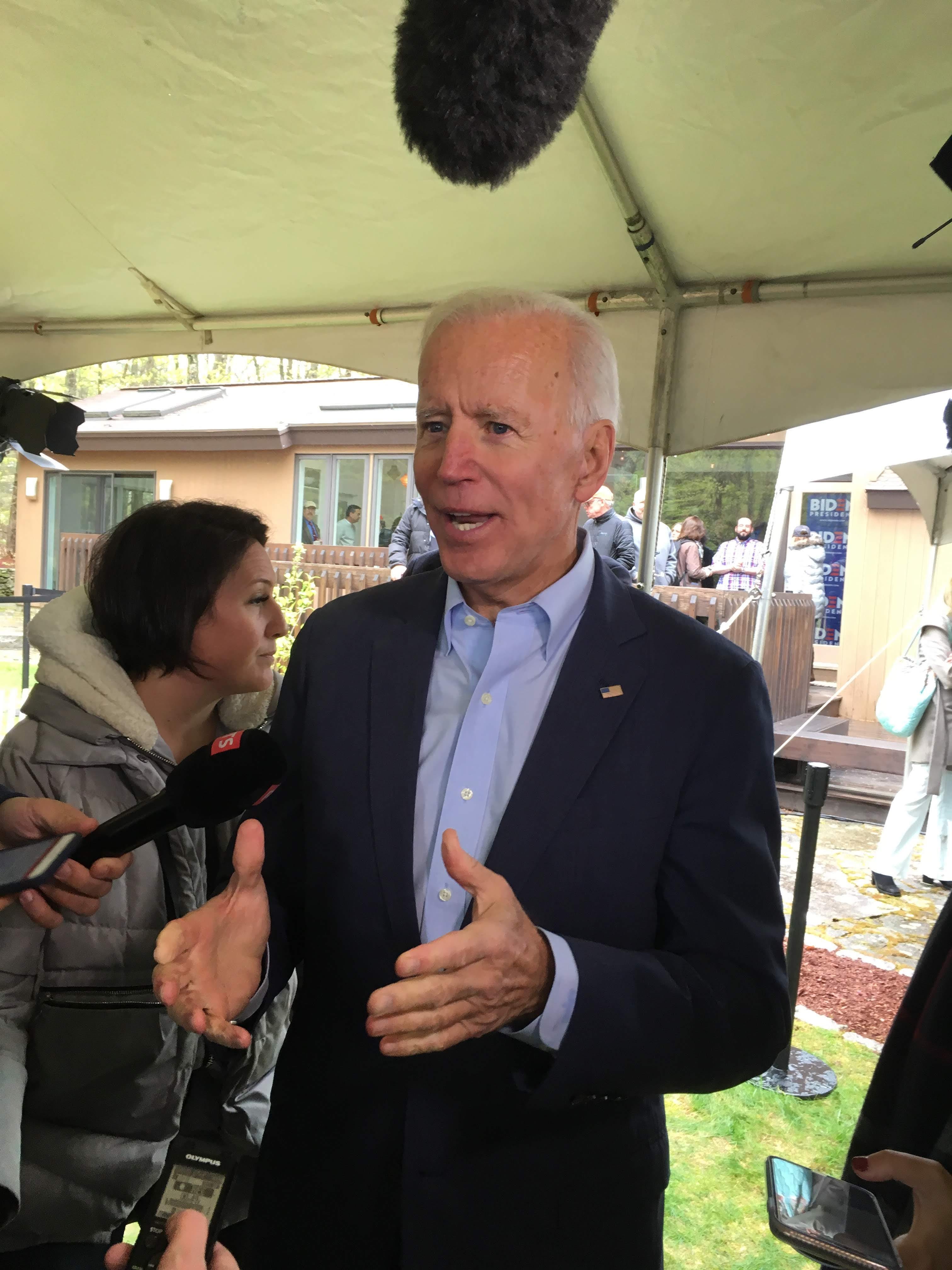
Maybe Biden is being smart, using the world “illegal” in the State of the Union before a large audience of swing voters, then backing away from it an interview with MSNBC’s largely left-leaning audience. It seemed to satisfy progressive Democrats. Congressman Chuy Garcia, Democrat of Illinois, tweeted, “I’m comforted that President Biden recognizes his serious error. We cannot parrot the xenophobic, dangerous rhetoric of the right, and we cannot perpetuate their failed enforcement-only immigration policies either.”
Yet for center-right commentators, the whole episode seemed telling. The writer Adam Rubenstein tweeted, “this type of hyperbolic remonstration, aimed at prompting an apology for repeating a minor cultural taboo (in this case successfully), leaves no one better off. It’s just morality policing.”
Said Robert Kelner, “I may be wrong, but this could be a significant moment in the campaign. An error (his retraction of the statement, that is) that will reverberate throughout the rest of the campaign and impact the outcome. He had it right the first time.” Said Kelner, “If Trump wins, this explains why. What was wrong with calling the illegal immigrant ‘an illegal’? It was a true statement. Biden looks weak and completely beholden to political correctness, wokeness, or virtue signaling. Whatever you want to call it. It’s Trump’s secret weapon.”
I’m a proponent of more legal immigration, but it strikes me that this flap is less about immigration than about the enforcement mechanisms that a certain set of leftists who dominate the press and academia use to signal their own enlightenment. It’s a kind of one-upmanship (one-uppersonship?) in which the ability to keep up with the most-up-to-date terminology is a brag that you have the leisure time available to prioritize that rather than, say, anything more prosaic, such as earning a living, or taking care of a family.
The high, or low, point of this for me came on a recent tour for prospective students and parents at a highly rejective college where the college-student tour guide pointed out a campus building that housed a center to support “students who identify as undocumented.”
I’m super-liberal on the gender identity stuff, but once you start with replacing men and women with “male-identifying” and “female-identifying,” the next step on the slippery slope apparently is that instead of undocumented and documented you have “students who identify as undocumented.” After all, you can’t require the students to show any documents actually to prove that they are undocumented. It might be a microaggression.
It’s part of a broader phenomenon in which objective facts are deemphasized and replaced by subjective feelings. You could ask, “what’s the harm? How many people are actually falsely going to claim to be undocumented, anyway?” The harm is to the idea of empirical reality, which, call me old-fashioned, seems somewhat important for a successfully functioning society, especially a democratic republic?
I’m a believer in the courtesy involved in calling people what they want to be called, and in avoiding intentional insults that diminish human dignity. But there is also something about this language-policing and extracting of apologies for using the incorrect term that seems vaguely totalitarian, and at odds with the principles of free speech.
Anyway, anyone who thinks Joe Biden is caving too far to the progressive left can take heart: at least the corrected language he offered was “undocumented” rather than “individuals who identify as undocumented.”
Texodus: The Los Angeles Times has a news article about the decision of actor Matthew McConaughey and his wife Camila Alves to move to Texas from Malibu, California. The move happened in 2014 but the trend remains a live one, as the extensive coverage in the California newspaper indicates. “Like the McConaugheys, more than 100,000 Californians moved to Texas in 2022, compared with around 40,000 who made the opposite move, according to U.S. census data analyzed by The Times in 2023,” the paper says.
We write a lot here about these migrations from high-tax, high-regulation, Democrat governed states to lower-tax, lower-regulation, Republican-governed states. The data support theoretical frameworks like Albert Hirschman’s idea of Exit, Voice, and Loyalty or, as Walter Wriston used to put it, capital goes where it is welcome and stays where it is well treated. The same is true of talent.
It’s also a twist on the inflation conversation. When a family chooses to cut their housing expenses and state income-tax expenses by moving to a less-expensive jurisdiction from a higher-tax jurisdiction, that change isn’t captured by the Consumer Price Index. It does, however, have a more real and concrete effect on a family budget than any carefully recorded price increase or tax rate change in a place where the family no longer resides.
Quote of the Day: From a long New York Times magazine article about the political left in France comes this passage about “Sandrine Rousseau, an economist and a Green Party member of Parliament who was a leader of the French #MeToo movement”: “Rousseau, a petite 52-year-old woman with a gray pixie cut, represents a southern district of Paris, which includes most of the bobo 13th Arrondissement. Visitors to her office at the Assemblée Nationale are greeted by a poster that reads: ‘Replace Capitalism With a Good Nap!’ Her policies often carry a whiff of the ridiculous but are typically based on solid research and are highly effective on social media.”
Who will tell her that naps are possible in capitalism, too? Or that the naps in capitalism might even be better, because in a free economy, high-quality sheets, mattresses, and pillows are more widely available than in any unfree economy? Or that one can sleep easier in a system of freedom than in one where one is reliant on the government?
Thank you!: Welcome to all our new readers and paying members. I appreciate your being here. Please consider spreading the word by forwarding this email to a friend who might like it and encouraging them to sign up as a reader.