


[The Editors is called The Editors, plural, not The Editor, singular, for a reason. When I launched it, a shrewd friend advised, “it can’t just be you.” I’m delighted to start including some additional voices. Today’s comes from Michael Mosbacher, who is associate comment editor at London’s Daily Telegraph. He is a past editor of Standpoint and The Critic, having co-founded both British magazines.—Ira Stoll.]
Britain’s once vast empire is now reduced to 14 territories with a combined population of less than 300,000 — mostly Caribbean islands, but also including Gibraltar at the tip of Spain, Napoleon’s spot of final exile Saint Helena in the mid-Atlantic, and the Falkland Islands of the war in 1982.
Of these remaining colonies, the Chagos Islands, or more legalistically, the British Indian Ocean Territory, is perhaps the most obscure. It is, though, developing into a real point of tension between the Trump administration and Keir Starmer’s Labour government. The brewing conflict illustrates the sharply different world views of the American president and the British prime minister.
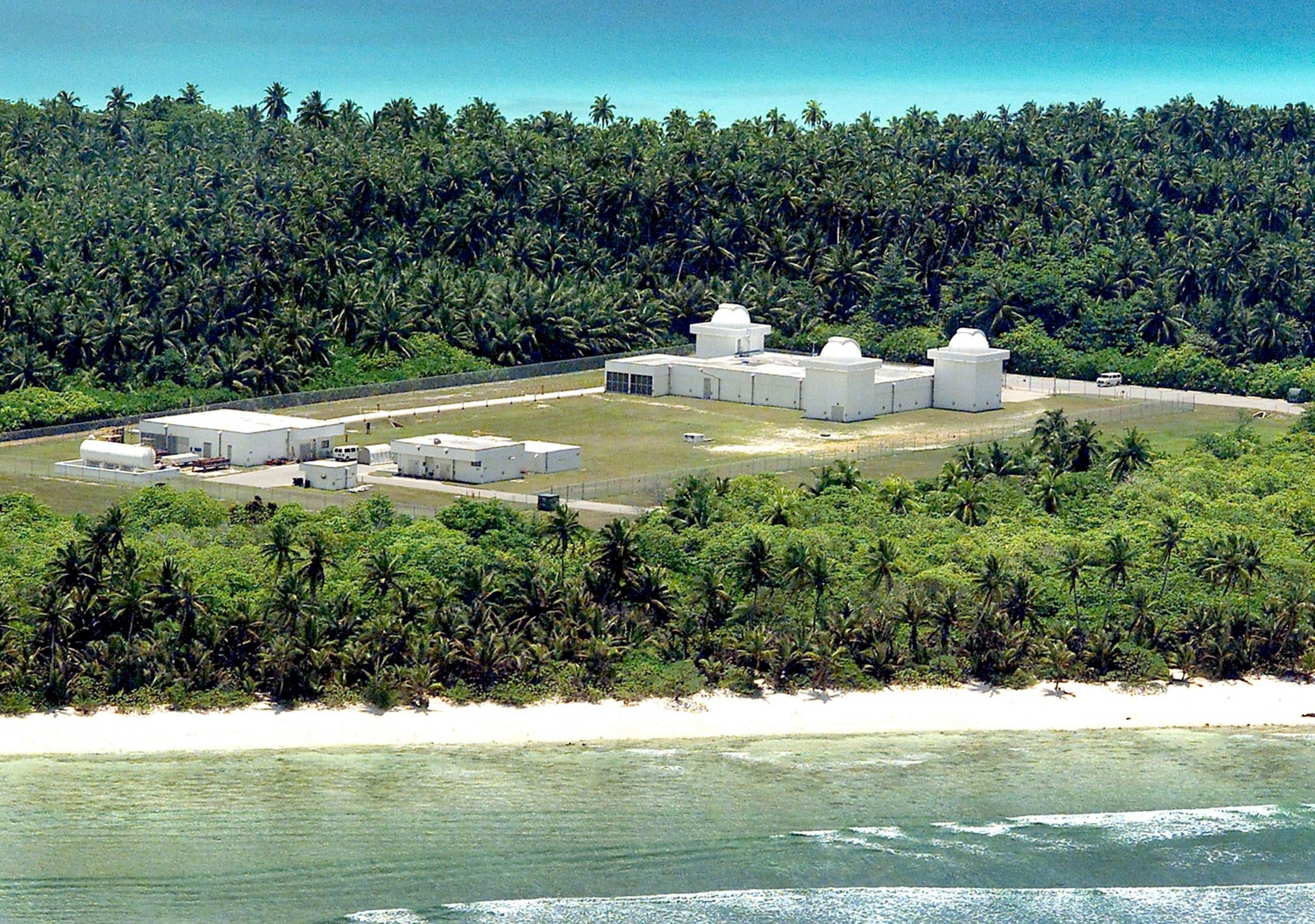
The Chagos Islands matter to the U.S., as the largest of them, Diego Garcia, is a joint U.S.-U.K. military base, in truth basically an American facility with a limited British presence. Starmer’s government is planning to dissolve the British Indian Ocean Territory and hand over the islands to Mauritius, 1,300 miles away in East Africa. Then the U.K. would lease back Diego Garcia for 99 years — at a hefty price totaling at least £9 billion (more than $11.3 billion) and arguably double that. (Mauritius has suggested the payments will be index linked and go up each year, although the U.K. denies it).
Starmer’s desire to sign such an unsatisfactory and one-sided deal is to ensure that the U.K. complies with the wishes of a rather dubious 2019 advisory ruling by the International Court of Justice. That judgment was then backed up by a U.N. General Assembly vote opposed by just three countries—the U.K., U.S., and—you guessed it—Israel.
Under the 1814 Treaty of Paris, Mauritius in the Indian Ocean, then called Isle de France, was ceded by the French to Britain. The Chagos Islands, although with very few links to Mauritius, were included in the territory and continued to be formally administered from there, although that rule was very light-touch.
In 1965 the Chagos Islands were removed from the British colony of Mauritius and set up as the British Indian Ocean Territory, in return for a payment by Britain to Mauritius of £3 million, roughly £50 million ($63 million) in today’s money. Some other islands were taken from the Seychelles and also included in the new territory, but these were subsequently returned just before that island group’s independence in 1976. Mauritius, without the distant Chagos, was granted independence in 1968.
That timing is why the International Court of Justice has deemed British rule to be illegal. There is a principle that parts of a territory should not be removed from a colony before it is granted independence—sort of the international law equivalent of a fraudulent conveyance in bankruptcy law. But it is a nostrum that is only selectively applied. If the structure had been enforced throughout the decolonizing British Empire, Zambia would still be part of Zimbabwe, Malaysia part of India, and Anguilla (still a colony) in the Caribbean would be part of independent Saint Kitts and Nevis.
There is now no indigenous population on the Chagos Islands. To what extent there was ever one is a matter of dispute. The islands were uninhabited until the late 18th century, when the French established a copra, or coconut, plantation in 1793 using African slave labor. Their descendents remained working on the islands, alongside other contract laborers. By the 1960s this population amounted to roughly 1,400 people.
In 1967 the U.K. nationalized the copra plantation, which was precarious economically in any case, and then closed it down and gradually removed the population. They were generally settled in Mauritius, although after long legal battles many won the right to settle in the U.K.
There are now around 10,000 people claiming Chagossian descent, largely split between the U.K. and Mauritius. There is a community of around 3,500 living in Crawley, the closest town to London’s Gatwick Airport, where many of them arrived in the U.K.
The Chagossians speak of their desire to “return” to their ancestral islands — although given the opportunity, whether many would actually return to a subsistence existence on islands that were reliant on precarious, and extremely isolated, coconut plantations is highly doubtful.
The Chagossians do appear united in opposition to Starmer’s proposed deal. They do not trust the Mauritian government and do not want to replace one distant ruler with another. Their preferred option seems to be continued British rule on better terms for the Chagossians and an ability to return to the islands of the archipelago other than Diego Garcia or outright independence. Considering the size and isolation of the place, independence seems unrealistic.
Mauritius is becoming increasingly cozy with China, and this is a major part of why the Trump administration appears so opposed to the deal. Will China be able to eavesdrop on American communications in Diego Garcia? Might in future decades the People’s Republic of China be offered its own base on another island in the archipelago?
Starmer’s deal is a terrible one for the U.K. It is not entirely Labour’s fault — the talks were already well underway when Tory Rishi Sunak was prime minister before July’s election. But Starmer is clearly very committed to them. The explanation seems to be his devotion to the dogma of international law.
Starmer is not a lifelong politician. He only became a member of Parliament at the age of 52, after a long legal career. On becoming prime minister, he raised Richard Hermer — a former colleague from the same left-wing barristers’ chambers — to the House of Lords and made him his attorney general. Among Starmer’s closest friends is Philippe Sands (separately, the author of “East West Street,” a fascinating book about the Holocaust, Lviv and the development of law on genocide) who represented Mauritius in its legal claim against the U.K. over Chagos.
For a man like Starmer, it is simply unthinkable to ignore the International Court of Justice — he seems to regard adherence to its diktats as almost synonymous with righteousness and virtue. It does not bode well for the U.K.’s future relations with Trump’s America.
There is one final irony. The 250,000 square miles of ocean around the Chagos Islands was declared a Marine Protected Area by the U.K. in 2010. This means that virtually all fishing, or indeed other interference, is banned and the seas are allowed to resuscitate. Under normal circumstances one might imagine that this is just the sort of initiative that progressive opinion would welcome. But not here — instead it is denounced as neocolonialism. Few think it would survive under Mauritian sovereignty. The Chinese fishing fleet is itching to trawl in Chagossian waters.
"Starmer is not a lifelong politician"
Starmer's unwillingness to prosecute Muslim rape gangs when he headed the Crown Prosecution Service suggests otherwise.