

Vance Called Harvard Endowment “Cancer on American Society”
Plus, Republican convention speakers denounce “corporate vultures,” “warmongers”

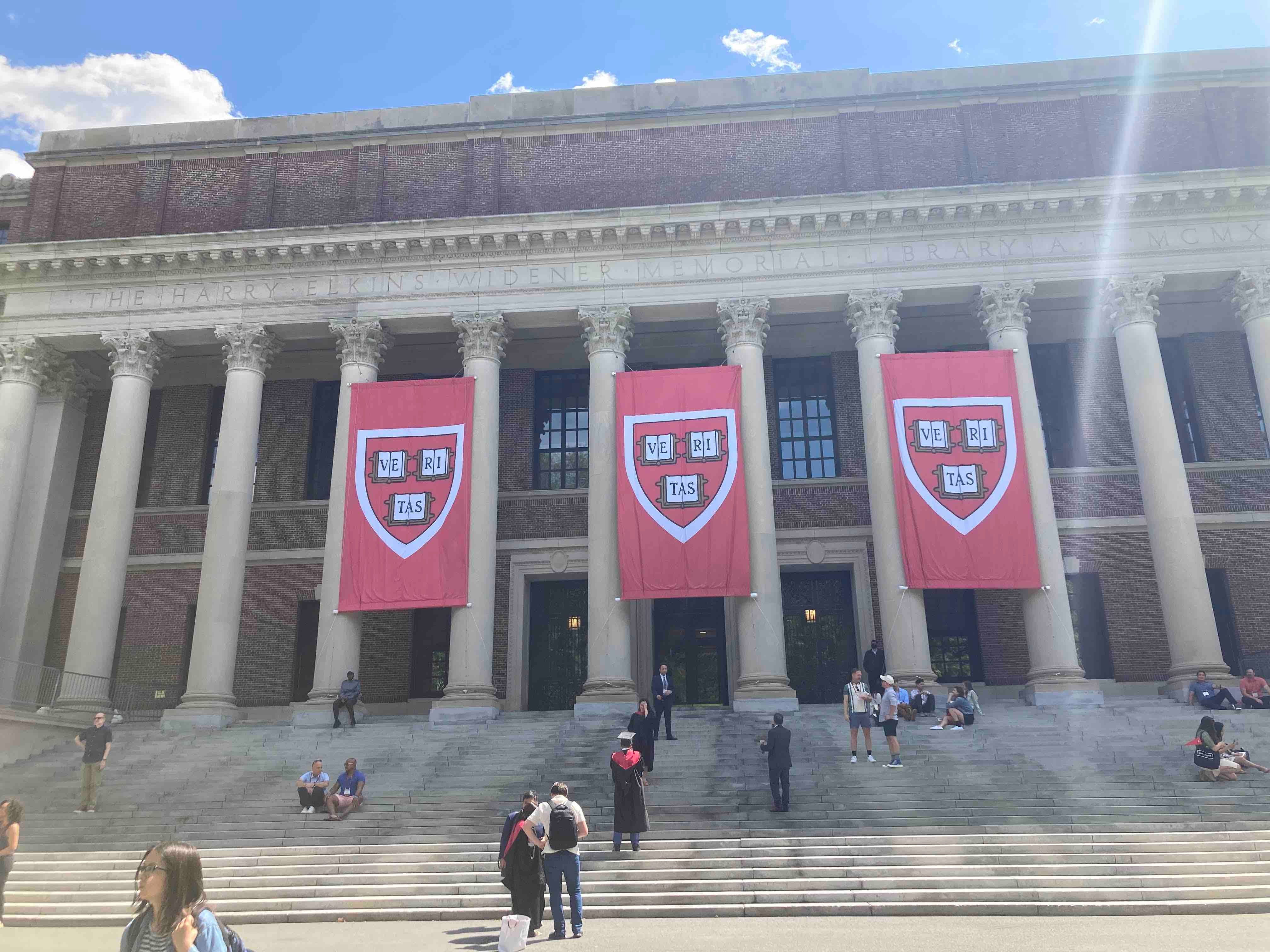
The Harvard endowment is a cancer on American society and should be taxed away, the Republican Party’s new vice presidential nominee, J.D. Vance, said in a 2021 interview.
In a 2021 interview with Tucker Carlson on Fox News, Vance, then a Senate candidate in Ohio, said, “The basic way this works is that the Ford Foundation, the Gates Foundation, the Harvard University endowment, these are fundamentally cancers on American society, but they pretend to be charities, and so they benefit from preferential tax treatment.”
“So AOC talks about taxing the wealthy, but the Harvard University endowment pays zero tax,” Vance said.
“These foundations are the ultimate institutions of identity politics,” Vance said. “We are actively subsidizing the people who are destroying this country, and they call it a charity. It’s just ridiculous.”
It wasn’t accurate in 2021 to say that the Harvard University endowment “pays zero tax.” In fact Congress in 2017 enacted, and President Trump signed into law, a 1.4 percent tax on investment earnings of private universities with endowments of more than $500,000 per student. At the time Harvard said it would cost the university about $40 million a year. Harvard valued its endowment at $50.7 billion on June 30, 2023, when the valuation was most recently disclosed.
On November 1, 2023, Trump issued a video saying, “Americans have been horrified to see students and faculty at Harvard and other once-respected universities expressing support for the savages and jihadists who attacked Israel.” He promised, “we will take the billions and billions of dollars that we will collect by taxing, fining, and suing excessively large private university endowments, and we will then use that money to endow a new institution called the American Academy.”
As a senator, on May 9, 2024, Vance introduced the “Encampments or Endowments Act,” threatening a cutoff of federal funds or “a tax equal to 50% of its endowment assets” on colleges that fail to “remove encampments from campus grounds within 7 days if teaching, research or other core institutional functions are impeded.” The measure has not yet attracted any cosponsors. Among the provisions of the legislation is this: “Tax imposed.—There is hereby imposed on each disqualified educational institution for any taxable year a tax equal to 50 percent of the aggregate fair market value of the assets of the institution at the end of the preceding taxable year.” The tax is designed not so much to be imposed but as a stick to prod noncompliant universities to substitute their own funds for lost federal financial aid dollars.
“We cannot allow people who hate our country to turn campuses into garbage dumps,” Vance said when he introduced the legislation. “My legislation will force colleges to follow the law, protect their students, and shut these encampments down. If they refuse, they’ll pay a hefty price. It’s time to end this national embarrassment.”
The universities say the endowments help to support the institutions’ research and teaching mission and preserve their independence. Critics says the endowments insulate the institutions and their managements from market pressures, making them unresponsive to complaints about discrimination, bias, stifling ideological conformity, and mediocrity.
Republicans court Bernie Sanders voters: The Republican National Convention’s first night sounded like at times more like a rally for independent socialist Bernie Sanders than the Republican Party of the George W. Bush or Mitt Romney era.
The party conventions typically feature attempts not only to rally the loyal base, but also to win over independents or even voters from the other party, so some degree of tacking toward the center for a general election is to be expected. Yet even by those standards, some of the rhetoric at the Republican convention on Monday was unusual and a sign of the ideological shifts of the party in the Donald Trump era.
A San Francisco venture capitalist who is close to Senator Vance and who co-hosted a Trump campaign fundraiser, David Sacks, praised Trump as “a president who will stand up to the warmongers instead of empowering them.”
The most prominent speaking slot went to the president of the International Brotherhood of Teamsters, Sean O’Brien, who denounced “corporate vultures” and “corporate elites” and “their pillaging of working people’s pocketbooks.”
O’Brien praised Senator Hawley, a Republican who recently denounced "global corporations" and "the pharmaceutical industry," "hedge funds" and "global capital" along with “Wall Street, Hollywood, and Silicon Valley.”
O’Brien attacked Amazon, Uber, Lyft and Walmart by name, along with the Chamber of Commerce and the Business Roundtable. “We must put workers first,” he said.
There are at least two possible ways to interpret all this.
The first possibility is that it’s political salesmanship aimed at winning states such as Pennsylvania, Michigan, and Wisconsin, and that, after the election is won, Trump will go on to govern, along with Republicans in Congress, in a more or less conventional Republican fashion. The left-wing rhetorical flourishes are the price one has to swallow for electing someone who will extend the corporate tax cuts, ease regulations on business, and increase defense spending.
The second possible way to interpret it is that it overlaps with some of Trump’s and Vance’s core beliefs. Here is Vance in an August 2019 interview (“J.D. Vance Becomes Catholic”) with the American Conservative’s Rod Dreher about becoming a Catholic: “I think the Republican Party has been too long a partnership between social conservatives and market libertarians, and I don’t think social conservatives have benefited too much from that partnership. Part of social conservatism’s challenge for viability in the 21st century is that it can’t just be about issues like abortion, but it has to have a broader vision of political economy, and the common good.” Trump has never been enthusiastic about the “endless wars” or “forever wars,” and ran in 2016 against the Iraq War.
The truth is probably some combination of the two. Trump and Vance aren’t Bernie Sanders Republicans, and they are communicating a message that is carefully targeted for political impact. And, they are also sincere, not entirely phony, when their convention expresses views that are less interventionist abroad, and more labor-oriented at home, than recently typical Republicans. Trump’s trying to win an election, not express an ideologically or intellectually coherent agenda. It’s risky, though, because once you unleash the rhetoric about standing up to the warmongers or about “corporate vultures” pillaging working people’s pocketbooks, it makes it much more difficult, as president, to defend the national security or America and its allies or to unleash the economic growth that will expand prosperity for labor and capital alike.
Biden’s price controls: President Biden, who constantly touts his $35 price cap on insulin, today proposed a 5 percent annual lid on rent increases.
“Today, I’m sending a clear message to corporate landlords: If you raise rents more than 5% on existing units, you should lose valuable tax breaks,” Biden said. A White House “fact sheet” explains, “Under President Biden’s plan, corporate landlords, beginning this year and for the next two years, would only be able to take advantage of faster depreciation write-offs available to owners of rental housing if they keep annual rent increases to no more than 5% each year. This would apply to landlords with over 50 units in their portfolio, covering more than 20 million units across the country. It would include an exception for new construction and substantial renovation or rehabilitation.”
Whether it’s medicine or rental housing, price controls invariably lead to shortages. If vanquishing inflation were simply possible by outlawing it, one wonders why Biden didn’t do it earlier on in his administration.
Maybe if Biden eased off the government spending pedal, interest rates could subside to the level at which families could afford to move out of the rental housing into owner-occupied homes, and the math would be better for investors borrowing money for building projects to add to the housing supply.
Thank you: At The Editors, we have no endowment. We rely on paying readers. Thanks to those who have already signed up. If you haven’t yet, please assure yourself full access, support our growth and sustain our independence by becoming a paid subscriber today. If you are a “corporate vulture” or your work involves government relations for Harvard or some other well-endowed university, you might even be able to consider it a business expense.