

U.K. Moves To Ban Tobacco and To Legalize Assisted Dying
The irony has so far been little remarked upon

[The Editors is called The Editors, plural, not The Editor, singular, for a reason. When I launched it, a shrewd friend advised, “it can’t just be you.” I’m delighted to start introducing some additional voices. Today’s comes from Michael Mosbacher, who is associate comment editor at London’s Daily Telegraph. He is a past editor of Standpoint and The Critic, having co-founded both British magazines.—Ira Stoll.]
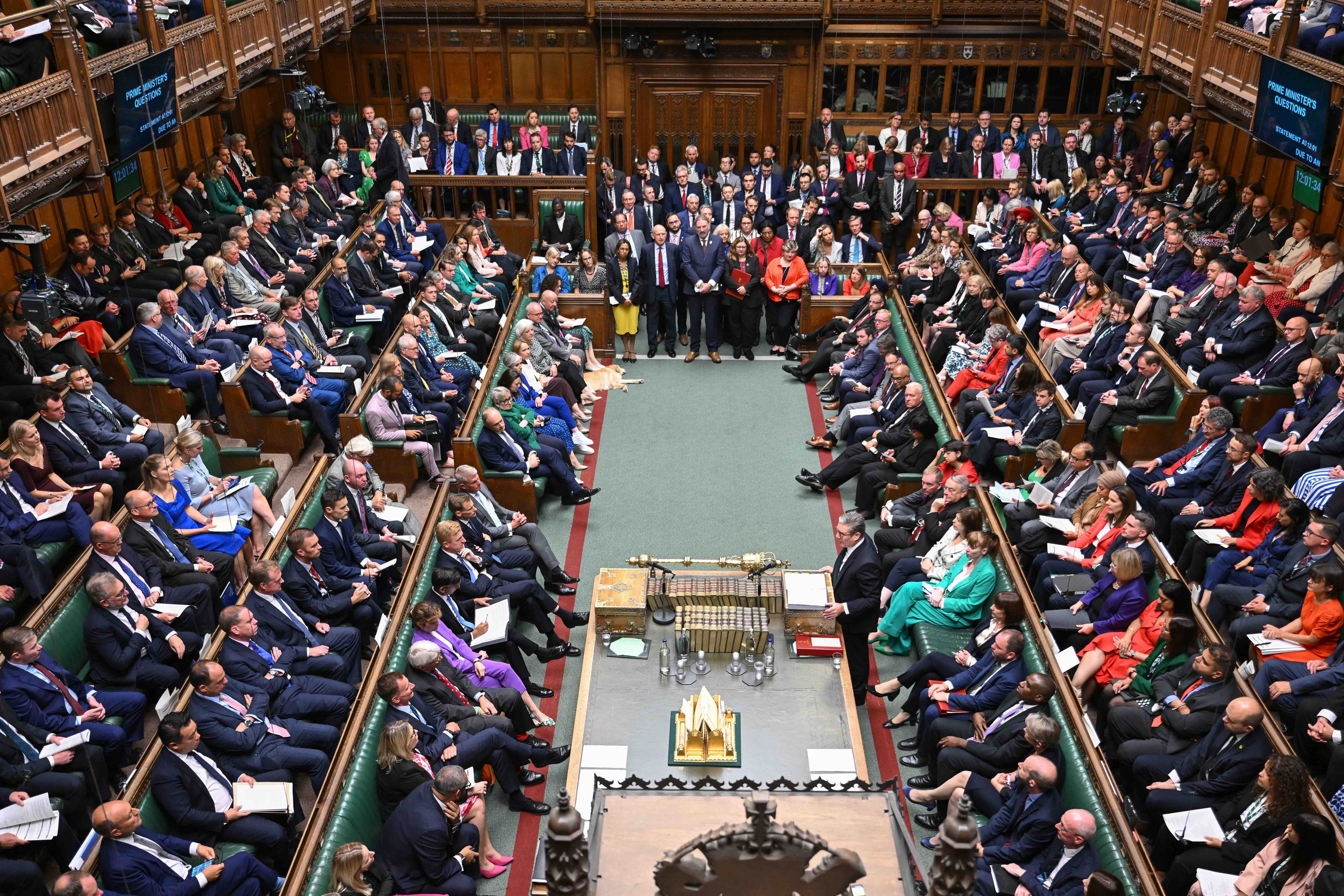
Britain’s House of Commons has had two unusual and historic votes this past week. On Tuesday it voted to ban anyone now aged 15 and under from ever buying tobacco. The age restriction on purchasing cigarettes will go up each year to keep the product just out of reach. When the last person born in 2008 dies, tobacco will be completely illegal.
It will be the most draconian anti-smoking measure in the world. It is modeled on a law passed in New Zealand, but when their Labour Party was turfed out the incoming government had the good sense to repeal the measure before it took effect.
And on Friday the Commons voted to legalize assisted dying. England and Wales look set to join Oregon, Canada, Switzerland, Belgium, and much of Australia in giving state sanction to the medicalized killing of the old and infirm. As with all such measures when initially introduced, the proposals before Parliament are restrictive. Only those with six months or less to live, signed off by two doctors and approved by a senior judge will be able to avail themselves of this service. But once introduced—once the initial taboo is broken—such practices tend to expand.
So if both measures make it onto the statute books—the tobacco ban looks certain and the assisted dying provision looks likely—it will be illegal to kill oneself slowly, but perfectly fine to die rapidly at the hands of a doctor’s lethal injection or in a “suicide pod.” In the Commons votes, four Conservative members of Parliament and more than 200 from Labour managed somehow to square that particular circle. The irony has so far been little remarked upon.
Both votes are unusual in another sense. Party-line voting is more vigorously enforced in Britain’s Commons than in Congress. MPs are “whipped,” or instructed by their party leadership, on how to vote in the vast majority of divisions. Rebellions do, increasingly, happen—but broadly speaking they are rare. Repeat offenders risk “losing the whip,” meaning they cannot stand for re-election for their party.
But assisted dying was a “free vote” without a party instruction. So was the smoking ban for the opposition benches.
The smoking ban was approved overwhelmingly, by 415 votes to 47. That it would pass was no surprise—Labour has a huge majority and their MPs were whipped—but the paucity of opposition is still shocking. Only 35, thankfully including new party leader Kemi Badenoch, out of 121 Tory MPs voted against it (most sat on their hands, with 23 actually approving the move). And among the Liberal Democrats, the party that masquerades as a defender of liberty and still claims the mantle of John Stuart Mill, over five times more MPs backed the measure than opposed it.
Don’t imagine that the gradual tobacco prohibition is the brainchild of Britain’s new socialist government. The idea of importing the measure from New Zealand was the brainwave of Tory PM Rishi Sunak. He was heading for almost certain defeat, and he wanted this public health measure to be his legacy. Calling the election early meant the move could not complete its parliamentary passage under his watch, but Labour have been only too happy to reintroduce it.
The debate on assisted dying has been bubbling away for 25 years or so in the UK, but has usually not been prominent. What has changed is that the politics of celebrity has come into play.
A popular campaigning TV presenter of the 80s and 90s, Esther Rantzen, is dying of cancer and has made changing the law her final cause. During this summer's election campaign Labour leader Keir Starmer promised Rantzen that parliament would vote on assisted dying—and here we are.
The vote on Friday was 330 in favor and 275 against—a wider margin than most were expecting as the opponents had been gaining support in some unexpected quarters.
This did not turn out to be a simple Right/Left issue. Some on the Tory benches use personal responsibility and pro-freedom arguments to support assisted dying. Others on the Left of the Labour Party oppose assisted dying on the grounds that the vulnerable who might feel a burden on society would feel pressured to die. A likely contributing factor for anti-Israel figures like Jeremy Corbyn who oppose the bill is that they do not wish to antagonize their Muslim base.
And here another oddity arises. In the parliamentary debate, religious arguments were all but absent. Some of the MPs opposing the move clearly are motivated by their personal faith, but virtually all are unwilling to be explicit about this. Instead the arguments aired were about the inadequacy of palliative care, the undermining of medical ethics, unethical conduct by children itching to get their hands on their parents’ assets (or trying to avoid spending on nursing care), and the slippery slope of this inevitably leading to wider euthanasia.
Some of the most interesting opposition came from those arguing that they are not opposed to assisted dying in principle, but that the UK’s system of socialized medicine is simply not up to administering it. And this criticism does not purely come from those inherently skeptical of Britain’s NHS healthcare system. It has been most eloquently made by the man now in charge of this behemoth, Labour health secretary Wes Streeting. It is worth remembering next time Bernie Sanders or a similar figure sings the praises of taxpayer-funded healthcare. Even politicians from the party that invented it have lost their faith in this model.
The NYT surprised me with this report on the assisted dying issue:
https://www.nytimes.com/2024/11/29/world/europe/uk-assisted-dying-bill-vote.html
Some lawmakers said they feared that some of those patients might end their lives prematurely to remove the physical or financial burden on their families “... as a clinician working at the fringes of life, I heard my patients frequently say, ‘I don’t want to be a burden,’ or ‘I’d rather the money went to the grandchildren than on my care.’”
The following surprises me:
⦿ In contrast to the view expressed by that lawmaker, the impulse to have money go to heirs instead of to expensive terminal care seems like a reasonable one
⦿ In the American system I'd imagine that there would be financial consequences for the family in such decisions, but I had imagined that was not the case in the UK's National Health Service.