

Two Current Harvard Students Ask to Join Kestenbaum’s Antisemitism Lawsuit
Plus, how the Celtics are worth $6.1 billion


A second-year Harvard Business School student and a second-year Harvard Law School student are asking a federal judge to allow them to join Alexander “Shabbos” Kestenbaum’s lawsuit against Harvard for “rampant anti-Jewish hatred and harassment.”
Kestenbaum completed his studies at Harvard Divinity School in 2024. Some other students who were part of his lawsuit agreed in January 2025 to a settlement with Harvard. The addition of the two other current students, if the judge approves it over opposition from Harvard’s lawyers, could help Kestenbaum counter the argument that his case is moot because he no longer attends the school.
The development comes as Harvard is under increasing pressure to respond further to a situation that already resulted in the January 2024 resignation of Harvard President Claudine Gay and also forced the resignations of presidents of Columbia and the University of Pennsylvania. At least one anti-Israel advocacy group has set April 1 as a date for the return of the encampments that marred campuses in spring 2024; “set up camp to free Palestine and win back your own free speech,” the message says, listing dozens of colleges, including Harvard.
President Trump has moved to deport or refuse entry to non-citizen anti-Israel activists, and he also has threatened to withhold federal funds from universities that fail to comply with government rules forbidding anti-Jewish discrimination.
The business school student seeking to join the Kestenbaum suit as “John Doe #1” is a Jewish Israeli student who the complaint says was “physically assaulted” during an October 18, 2023 anti-Israel protest. “Multiple members of the mob began to forcefully grab him and physically push him back away from the protest,” the complaint says.
The law student identified in the suit as John Doe #2 was “trapped in Wasserstein Hall by a pro-Hamas mob with no response from Harvard,” the complaint says, referring to an October 19, 2023 anti-Israel demonstration at Harvard. “Fearing a violent attack, students in the study room removed indicia of their Jewishness, such as kippot, and hid under desks.” When one of the students emailed the law school’s assistant director of student life, Jeffrey Sierra, asking what could be done to address the rampant antisemitism, he directed her to campus mental health services and said he was “not in a position to do more.”
The filing asks for injunctive relief including ordering Harvard to take steps such as “disciplinary measures against, including the termination of, deans, administrators, professors, and other employees responsible for the antisemitic abuse permeating the school that Plaintiffs experience, whether because they engage in it or permit it,” and also “disciplinary measures, including suspension or expulsion, against students who engage in such conduct.” It also asks for “adding required antisemitism training for Harvard community measures” and “appointing a neutral expert monitor to oversee compliance.”
In additional filings, lawyers for the Jewish students explain that “Even if John Does #1 and #2 were not permitted to join this lawsuit, they intend to file their own lawsuits—which would likely be consolidated, just like the previous two cases, leading to the same outcome this Motion seeks, but with more briefing and wasted resources.” It says, “Harvard’s motives are clear: it wants to squeeze Plaintiff Kestenbaum on a tight scheduling order and use its vast resources to divide and conquer the lawsuits.”
Another filing includes the emails among lawyers for Harvard, led by Felicia Ellsworth of Wilmer Hale, and the lawyers for the Jewish students. They show the lawyers dickering over the numbers of document requests, interrogatories, and requests for admissions from each side. “50 still seems high to us, giving [sic] the significant overlap in the factual allegations between the two complaints. We think 45 of each, per side, should be more than adequate. Let us know if that works for you,” Ellsworth writes to Jared Friedmann of Weil Gotshal.
“Hi Jared, Sorry to be slow in responding. Let us coordinate schedules and I’ll be back in touch. Thanks, Felicia,” she writes in another email that the lawyers for the Jewish students filed with the court.
Another email from Ellsworth indicates that Harvard will oppose allowing the two current students to join Kestenbaum’s suit, and also that the university will oppose letting them do so anonymously. That’s awkward, because Harvard’s hardball litigation tactics against the Jewish students who are complaining of antisemitism undercuts Harvard’s attempts to portray itself as responsive, rather than hostile, to the students.
Wilmer Hale lost the Harvard affirmative action in admissions case at the Supreme Court while racking up tens of millions in fees, for which Harvard was on the hook after its lawyers failed to provide timely notice to its insurance company, which would have been responsible for paying the bills. The same firm also prepped both Penn and Harvard for the disastrous congressional hearing before Chairman Virginia Foxx and Rep. Elise Stefanik. Ellsworth sat in the front row at that hearing, next to current Harvard president, then-provost, Alan Garber, and behind Claudine Gay. A WilmerHale partner, William Lee, was the senior fellow of the Harvard Corporation, and another two partners, Seth Waxman and Jamie Gorelick, were members of the Harvard Board of Overseers. Waxman, who is working on defending Harvard against the Jewish students and who also worked on the affirmative action in admissions case, is a former president of the Harvard Board of Overseers.
Harvard has, in court filings and in communications with alumni, Congress, and donors, attempted to portray the campus antisemitism problem as diminishing. Yet more than a year after Garber took over from Gay, some prominent figures believe that Harvard has not adequately addressed the problems. A former president of Harvard, Lawrence Summers, who is also Charles W. Eliot University Professor, posted to social media on March 3, 2025, “Harvard continues its failure to effectively address antisemitism. Despite President Garber’s clear and strong personal moral commitment, he has lacked the will and/or leverage to effect the necessary large scale change, and the Corporation has been ineffectual.” Summers followed up with a series of specific criticisms, including the fact that an antisemitism task force named by Garber has not yet published a report of findings. “It is by the way shocking and I think outrageous that months after Harvard’s abject failures after Oct 7, the Task Force hasn’t even reached a conclusion. Nor has any accountability for failure been taken anywhere from the Corporation on down,” Summers said.
The case is before Judge Richard Stearns of the U.S. District Court of Massachusetts. Kestenbaum’s lead lawyer is Jason Torchinsky of Holtzman Vogel.
The $6.1 Billion Celtics: One reason basketball has flourished as a sport is that it isn’t particularly capital-intensive. For downhill skiing, you need skis, boots, bindings, poles, and a mountain with snow. For crew or sailing, you need boats and docks. For basketball, all you need is a ball and a hoop.
Yesterday’s announcement that the Boston Celtics basketball team will be sold at a valuation of $6.1 billion risks puncturing the notion that basketball doesn’t require a lot of money. It’s also a reminder that some of the most valuable things in capitalism aren’t plant and equipment—the Celtics deal doesn’t even include TD Garden, the real estate where the team plays. Instead the value has to do with people and the reputation for excellence that they accrue over many, many years.
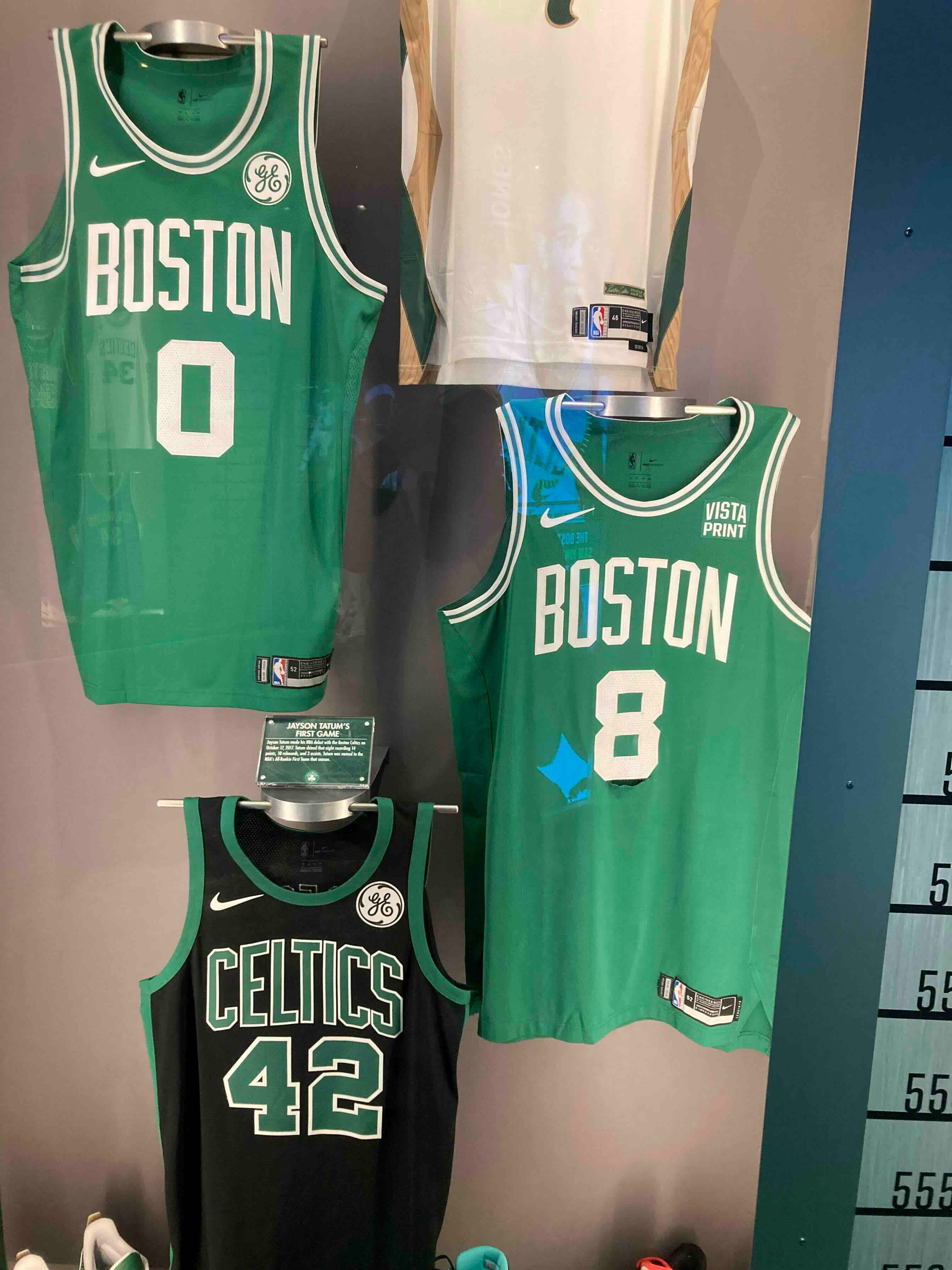
The news made me remember that for a while I owned some units in the Boston Celtics Limited Partnership. At some point—probably before 2002, when an ownership group led by the Grousbeck family bought the team for $360 million—the partnership was wound down, and I ended up with a small amount of cash instead of a tiny fraction of an ownership interest in the Celtics. The subsequent owners did pretty well. Turning a $360 million investment into $6.1 billion over 23 years counts as a success, even though precisely how much of a success is a bit murky; because it’s now a privately owned operation, it’s unknown how much the owners have invested additionally or taken in losses or distributions over that period.
What’s inspiring about it, to me, is the value. The Celtics are one of the rare sports teams—the Yankees and Dodgers in baseball also come to mind—that have been world champions not only during a single era, but repeatedly. There was the Bill Russell and Bob Cousy period of the late 1950s through the 1960s, then the Larry Bird-Robert Parish-Kevin McHale period of the 1980s (the common thread being Red Auerbach as coach and then general manger), and, more recently, the 2024 champions with players like Jayson Tatum, Kristaps Porziņģis, and Jaylen Brown.
Boston is a small market compared to New York or Los Angeles. And many outsiders view Boston as somehow racist. Yet when the Celtics are winning—which they often are—the fans get behind them. Only in America can black (or in the case of Porziņģis, Latvian) players with a Jewish (Auerbach) coach or general manager win for a team with an Irish-American (“Celtics”) identity in a city (Boston) founded by WASPs. The press release announcing the new ownership says its leader, William Chisholm, “burns with a passion to win on the court” and quotes him as saying he will “work to bring more championships home to Boston.” People may say he and his partners, who include Rob Hale, Bruce A. Beal, Jr., and Sixth Street, are overpaying. But one reason the Celtics are so immensely valuable is that they have a culture that values winning. The finance guys understand that and are willing to pay a premium for it. The fans appreciate it, too. Not everything is as zero-sum, win-lose as a professional basketball game. But a nice thing about competitive capitalism is that it incentivizes excellence. The world’s best players—from Porziņģis to Luka Dončić and Nikola Jokić—want to be in America, because it is where there are the greatest rewards for winning. And in a way, when players, owners, and fans all benefit, the rewards are widely shared, so, it’s a win-win-win.