

Trump Weak-Dollar Policy Is Hit by a Democratic Star
“Hidden tax,” Ritchie Torres says as president presses Powell

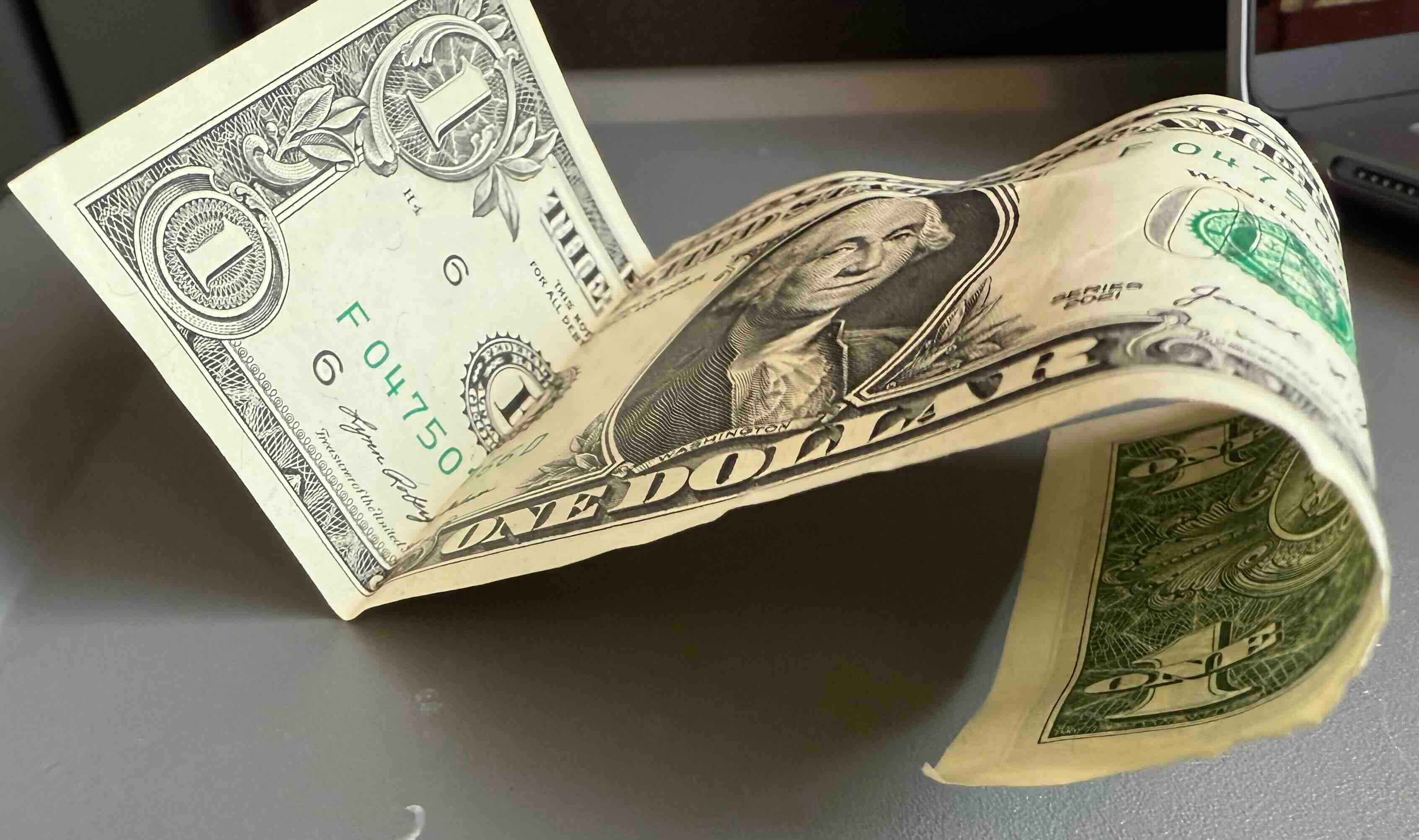
A rising star of the Democratic Party is criticizing President Trump for the weakness of the U.S. dollar.
Rep. Ritchie Torres, 37, who represents the Bronx and who has attracted national attention for his strong support of Israel, took to social media this morning to fault Trump for the declining value of the dollar against other currencies.
“The value of the U.S. dollar—relative to a basket of major currencies—has fallen by over 10% in the first half of 2025, marking the worst performance in half a century,” Torres said. “With the U.S. importing approximately $3.3 trillion in goods annually, a 10% dollar decline effectively imposes a $330 billion hidden tax on American consumers and businesses. Trump’s hidden tax on America.”
In a January 2024 letter to partners in Key Square Capital Management LLC, Scott Bessent wrote, “Another differentiated view that we have is that Trump will pursue a weak dollar policy rather than implementing tariffs…. Weakening the dollar early in his second administration would make U.S manufacturing competitive. A weak dollar and plentiful, cheap energy could power a boom. … A strong dollar should emerge by the end of his term if the US reshoring effort is successful.”
The attention to the issue from Torres, a Democrat with exceptionally sound political instincts, suggests that Trump may pay some political price for the weak dollar. It’s an echo of a similar episode from Trump’s first term. Treasury Secretary Mnuchin’s January 2018 comment at Davos that “Obviously a weaker dollar is good for us as it relates to trade and opportunities,” brought a response from money manager Ray Dalio, who also used the phrase “hidden tax” to describe a weaker currency.
The comments from Torres came on the same day that Trump himself was making an issue of monetary policy. At a cabinet meeting, in response to a question about Fed Chairman Powell possibly having misled Congress about what Senator Tim Scott has called a “Taj Mahal” of a new Fed headquarters building, Trump said if so, Powell “should resign immediately and we should get somebody in there that’s going to lower interest rates.” Trump said “Too Late” Powell had been cutting rates “like crazy” before the election.
Trump followed up later in the day with a social media post saying that “Too Late” Jerome Powell “has been whining like a baby about non-existent Inflation for months, and refusing to do the right thing.” Said Trump: “CUT INTEREST RATES JEROME — NOW IS THE TIME!”
As Bessent observed in the partner letter, there’s a transition period from a weak dollar to a strong dollar “if the US reshoring effort is successful.” The “basket of major currencies” are themselves fiat currencies. Democrats like Senator Schumer have been complaining for years about artificially low Chinese currency, so part of this is just a kind of opportunistic political attack. Schumer complained the weak Chinese currency relative to the dollar made it harder for American manufacturers, while Torres is now complaining that the relatively weaker dollar (and relatively stronger foreign currencies) is making imported goods more expensive for American consumers.
Anyway, Ritchie Torres is not some monetary policy bore, scold, or quack. He’s not selling gold coins during the commercial breaks. He even understands, unlike some other Democrats, that “tax,” hidden or otherwise, is not something people generally like. When Torres starts talking about the dollar it’s a warning to the Trump administration and to Congress that a strong dollar—and some incontrovertible definition of it—is a destination to keep in mind. Not for sloganeering purposes, but as a way of keeping trust with ordinary Americans who keep their savings in hard-earned dollars, the value of which they would prefer not to have eroded by government policy.
Know someone who would enjoy or benefit from reading The Editors? Please help us grow by forwarding this email along with a suggestion that they subscribe. Or send a gift subscription:
A good illustration for this column would have been a graph of the performance of the S&P 500 this year denominated in Euros or some basket of major currencies (not a basket of deplorable currencies).