

Trump Economist Signals Weaker Dollar
Plus, banker Jamie Dimon praises Israel, talks tough on Iran

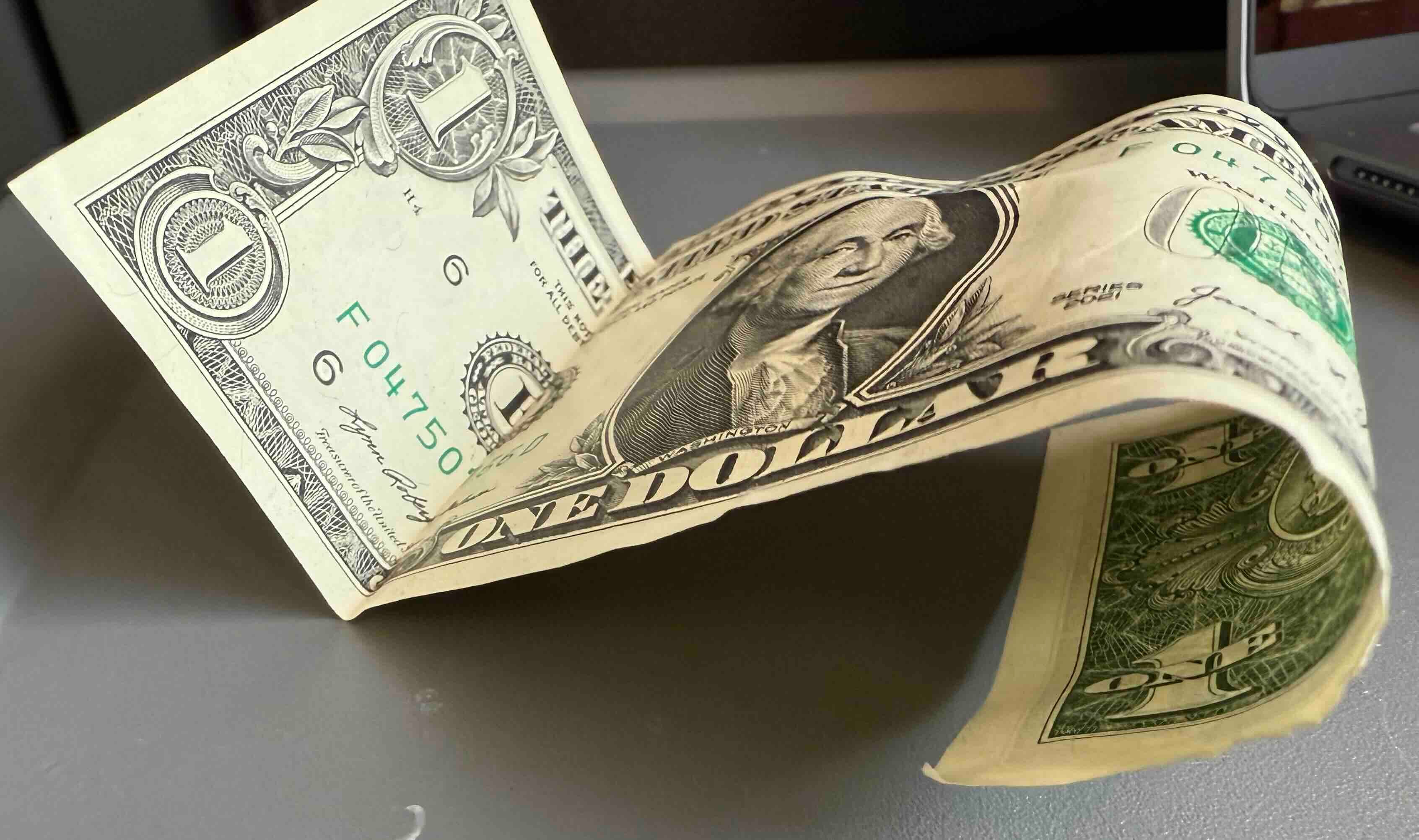
President Trump’s choice to be chairman of the Council of Economic Advisers, a 2010 Harvard economics Ph.D. named Stephen Miran, wrote a November 2024 paper for Sander Gerber’s Hudson Bay Capital in which Miran says, “The root of the economic imbalances lies in persistent dollar overvaluation that prevents the balancing of international trade.” He also writes, “While many analysts believe there are no tools available to unilaterally address currency misvaluation, that is not true.”
“From a trade perspective, the dollar is persistently overvalued, in large part because dollar assets function as the world’s reserve currency. This overvaluation has weighed heavily on the American manufacturing sector while benefiting financialized sectors of the economy in manners that benefit wealthy Americans,” Miran writes.
The Miran paper describes a scenario in which the U.S. and other governments conspire to drive down the price of the dollar relative to foreign currencies. “It is easier to imagine that after a series of punitive tariffs, trading partners like Europe and China become more receptive to some manner of currency accord in exchange for a reduction of tariffs,” he writes.
Miran describes a prospective “Mar-a-Lago Accord”—modeled on the Bretton Woods or Plaza accords.
“Such a Mar-a-Lago Accord gives form to a 21st Century version of a multilateral currency agreement. President Trump will want foreigners to help pay for the security zone provided by the United States. A reduction in the value of the dollar helps create manufacturing jobs in America and reallocates aggregate demand from the rest of the world to the U.S.”
The problem with this approach is that while politicians can try to fix prices, there are free-market signals, such as the price of the dollar against gold, Bitcoin, groceries, or real estate, that eventually provide a true indication of a dollar’s value. If Americans start to get the idea that their dollars will be worth less because Trump and Stephen Miran and Senator Schumer, who has been banging this drum since his 2005 New York Times op-ed with Lindsay Graham, think that will be better for American manufacturing exports, there’s a risk that they will move money out of dollars and into other assets.
Search for the word “gold” in Miran’s paper and you get citations to Linda Goldberg and Dan Goldbeck and then eventually a motherlode:
The Gold Reserve Act also authorizes the Secretary to sell gold in a way “the Secretary considers most advantageous to the public interest,” providing additional potential funds for building foreign exchange reserves. However, the Secretary is statutorily required to use the proceeds from such sales “for the sole purpose of reducing the national debt.” This requirement can be reconciled with the goal of building foreign exchange reserves by having the ESF [Treasury’s “exchange stabilization fund”] sell dollars forward. If gold sales are used to deliver dollars into the forward contracts, it will likely satisfy the statutory requirement of reducing national debt. There are other means of structuring the ESF transaction as a form of debt contract to comply with the law. While this is probably statutorily permissible, selling national gold reserves to buy foreign exchange instruments could be politically costly, and changes the asset composition of the USG’s balance sheet. Still, because gold pays no interest, selling it for positive-yielding foreign debt should result in income for the U.S. Government.”
This would be “politically costly” for good reason. Having the U.S. Treasury sell gold and buy Chinese or European or Mexican debt as a way to drive down the gold price to make the devaluation of the dollar less obvious is a fine way to destroy confidence and fuel inflation. It might drive the price of cryptocurrency higher but only in an apocalyptic way.
I’ve been in the camp that sees Trump’s lower-tax, less regulation, and open-for-business policies as basically bullish, especially alongside potential technology-driven productivity gains. That still seems the likeliest scenario. But a weak-dollar policy aimed at boosting manufacturing at the expense of “wealthy Americans” could easily turn into a case of “be careful what you wish for, you might get it.”
Trump’s pick for Treasury Secretary, Scott Bessent, famously helped George Soros attack the British Pound and the Japanese Yen. It sure would be something if the new administration tried a similar stunt aimed at the U.S. dollar.
Miran’s paper acknowledges, “many of these policies are untried at scale, or haven’t been used in almost half a century.” It also asserts, “this essay is not policy advocacy but an attempt to catalogue the available tools and analyze how useful they may be for accomplishing various goals.”
The Wall Street Journal’s Greg Ip flagged the Miran paper in a column yesterday. Ip’s headline and framing were mostly about tariffs and trade, not the dollar and gold.
If the incoming administration is looking to boost American manufacturing, there are plenty of policy options— not just lower taxes and less regulation and better long-term fiscal policy that will help drive down interest rates, but also support for genuinely free and independent labor unions in places such as Communist China and Vietnam. Devastating the value of the American dollar is just another word for the inflation that defeated President Biden. It could be a costly policy, in whatever units it is measured.
Dimon’s CBS interview: JPMorgan Chase CEO Jamie Dimon has a long interview with Lesley Stahl of CBS News. It is uneven, but there are some highlights. In some ways Dimon echoes his remarks from Davos in January 2024 in which he said Donald Trump was “kind of right.”
“Ineffective and incompetent government is part of it. People look at what we do in government and they say, well, what do you do with the $5 trillion we gave you? We had very long wars, we had EV companies are getting gifts…Illegal immigration is the highest it’s ever been in this country for four or five years, and we did nothing about it,” Dimon says in the CBS interview. “Maybe 90 percent of Americans say ‘yes, we should have proper border security.’” (Dimon later noted that three of his grandparents were Greek immigrants who came to America without high school degrees.)
“We grew at 2 percent for 20 years, and I think it should have been 3 percent,” Dimon said, attributing the slow growth in part to “overweening bureaucracy that just cripples the formation of businesses.”
“What are the policies that can drive that, what did we get wrong and what can we fix?” he asks. “Can we make government more competent and more efficient?...the bureaucracy is extraordinary….It’s got to be changed.”
Dimon says Europe has slow growth compared to us because of “excessive regulations, bureaucracy, anti-business behavior, anti-innovation.”
Even in the U.S., Dimon says, “you can’t get permits.” He gave the example of the bridge between Staten Island and New Jersey. “It was falling down. It took 12 years to get the permits to rebuild it,” he said.
Dimon says he sees the “Most complicated and risky geopolitical situation since World War II,” including “Iran maybe on the verge of nuclear weapons.”
”American leadership is required to fix this,” he says.
“I took a trip to Israel, basically to hug our employees and some of our clients, some of whom lost their children in the terrorist acts there. I think what they’ve done is amazing and they’ve gone against the advice of a lot of the world, but they’ve wiped out a lot of Hezbollah, they’ve wiped out Iranian defenses,” Dimon said. “We’ve been dealing with this thing, you have proxy wars forever. At one point, the world should say, there’s no more ‘proxy,’ you know, go at the head. . …I think it actually increases the chance of long-term peace.”
On tariffs, Dimon said, “That tool may be a useful tool properly used.” Of Trump and the tariffs:“he’s a negotiator.” He also said, “look at what China’s been doing for years,” in terms of unilateral tariffs.
Dimon said he wakes up at 4:30 a.m. “I read the papers,” he said. He said he’s constantly asking, “what can we do better?” with “constant analysis, constant observation, constant follow-up lists.”
Thank you: Please buy your Editors subscription today before we are forced to raise prices to compensate for the fact that the dollars you are buying it with will be worth less. It will also ensure your complete access to all the content, sustain our editorial independence, and support our growth. If you already are a paying customer, thank you.