

The Regulation Fuels the Inflation
Why are eggs more expensive? Not just bird flu.

The Consumer Price Index for March 2024 came in hotter than expected at 3.5 percent for 12 months, all items, 3.8 percent for 12 months “all items less food and energy,” sending the stock market down by lowering expectations for a Fed rate cut.
It sent me digging into the CPI. One of my main realizations was how crude a measure it is. It includes prices of a lot of things I don’t ever buy. Pork? I don’t eat it. Tobacco? I don’t use it. Pet services? I don’t have a dog or a cat or a gerbil or fish.
Housing? We bought our house a more than decade ago and refinanced the mortgage at a fixed rate when interest rates were low, though the CPI says my “owners’ equivalent rent of primary residence” has soared 5.9 percent over the past year.
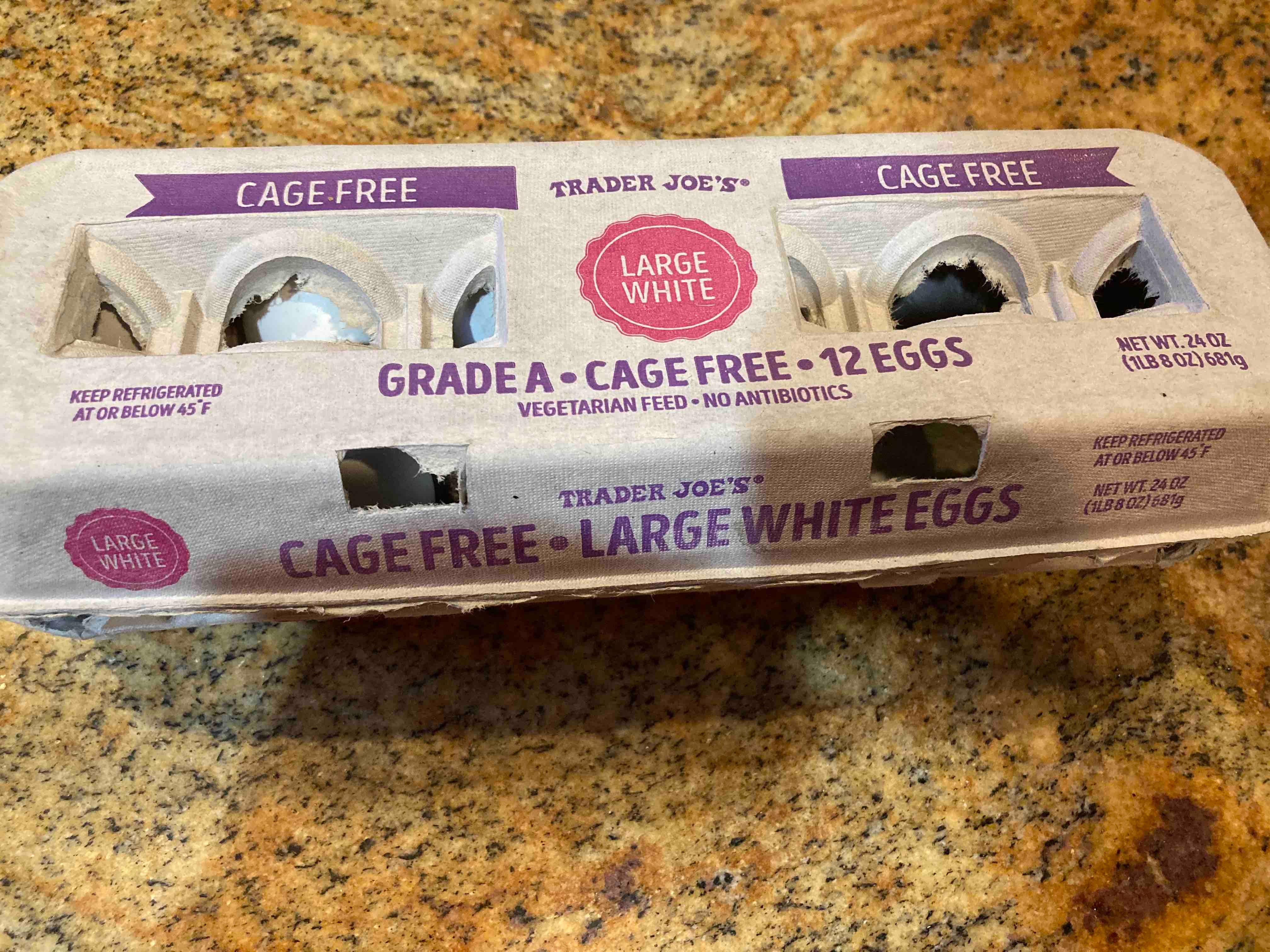
What our household does buy a lot of, though, are eggs. We have a couple of pescetarians in the family, and Passover is coming, which means eggs on the seder plate and cooked with matzo in a variety of other dishes. Christians may deploy Easter eggs for their own springtime religious holiday. And egg-flation is a thing, so much so that it was a topic in the weekly conversation between Gail Collins and Bret Stephens on the New York Times editorial page.
Said Collins, “you can’t expect the average shopper to be cheery when the price of eggs keeps going up. (Thank you, bird flu.)”
Stephens replied, “It isn’t just avian flu and the price of eggs.”
The latest CPI print shows egg prices down 6.8 percent from a year ago, but prices remain at levels considerably above where they were for years. The Associated Press has a fairly thorough look at some of the reasons. “Chicken feed represents up to 70% of a farmer’s costs, and feed prices doubled between 2020 and 2022, Mulder said. Weather, COVID-related disruptions and the war in Ukraine — which drove up the price of wheat and other crops — were all contributors,” the article says.
“Elsewhere, government regulations play a part in lifting egg prices. Multiple states, including California and Massachusetts, have passed cage bans for egg-laying hens since 2018; this year, bans are set to take effect in Washington, Oregon and Michigan. Converting to cage-free facilities is a big investment for farmers, and consumers may not always realize that’s a factor in the higher prices they see at the grocery store, Metz said,” the AP story says.
I’m all for humane treatment of egg-laying chickens, but part of thinking economically is realizing that there’s nearly always some kind of tradeoff.
From 2004 to 2008 there was what a federal jury in 2023 found was an egg-pricing conspiracy to limit supply.
So much of the inflation story is shaped by political narratives—Biden’s spending, the Fed’s Zero Interest Rate Policy, or ZIRP. The left would have you believe it’s all price-gouging corporations fattening their profits. But eggs are an egg-cellent and not so egg-ceptional (forgive the dad jokes, please) example of how the regulations fuel the inflation. You don’t need to be a free-market true-believer to recognize that; even the Associated Press acknowledges it.
So maybe part of a successful solution to the inflation problem might involve tackling not only the monetary policy (Fed) and fiscal policy (spending) piece of it but also taking a look at the regulation piece of it and realizing that those costs get passed along, too?
Commission on Debates: When a New York Times news article is being most emphatic in warning readers not to believe something, sometimes it’s a pretty good indicator that whatever that thing is, it’s true.
A Times news article by Michael Grynbaum, about whether President Trump and President Biden will debate, includes this passage:
“The Debates can be run by the Corrupt DNC, or their Subsidiary, the Commission on Presidential Debates (CPD),” Mr. Trump wrote in his Super Tuesday post. In fact, the commission is an independent, nonpartisan entity with no link to the Democratic Party.
“In fact,” as the Times would put it with all its pomposity, the Commission’s own website explains the background that when the commission was formed, “co-founders Kirk and Fahrenkopf served, respectively, as chairmen of the Democratic National Committee and Republican National Committee.”
The commission’s page about its leadership lists Presidents Carter and Obama, both Democrats, as honorary co-chairs; a former aide to Senator Edward Kennedy, Antonia Hernandez, as a chair; and the USAID director in the Obama administration, Rajiv Shah, as a board member. There are Republicans listed as well, but it is overstating matters to say that the commission has “no link to the Democratic Party.” It has a lot of Democrats on its board, and it was co-founded by a chair of the Democratic National Committee. It’s more accurate to call it bipartisan than “nonpartisan.” Independent or third party candidates have sometimes complained that they’ve been locked out of the debates by the Democrat-Republican duopoly.
Sure, Trump is overstating it when he says the commission is a “subsidiary” of the DNC. But it doesn’t help matters for the Times to overstate it, in response, with the “no link” language.
Thank you!: We reached 100 paying subscribers this week, a landmark that entitles us to a Substack “bestseller” badge. Please help to fuel our continued growth by telling a friend, colleague, or family member about this newsletter or by upgrading to a paid subscription. How else is the editor going to pay for all those egg-spensive eggs?
The Bureau of Lies and Statistics, with all its revisions after initial reports, is a great example of the statement: “There are lies, damned lies, and statistics.”
If there are debates this fall, when the commission employs Democratic stalwarts to “moderate” or provoke Trump into unruliness, they ought also to use Ben Shapiro to allow for a real conservative to pose some thought provoking questions to Joe.