

The New York Times Goes After Doctor Oz
Plus: a live event March 6 in Wellesley, Mass.

On March 6, 2025, at 7 p.m. in Wellesley, Massachusetts I’ll be moderating a live event with Former IDF Spokesperson and Senior Fellow at Foundation for the Defense of Democracies Jonathan Conricus and Israel Advocate Ysabella Elisheva Hazan. Details and registration information are here. If you are in the area and can make it, I’d love to see you there.
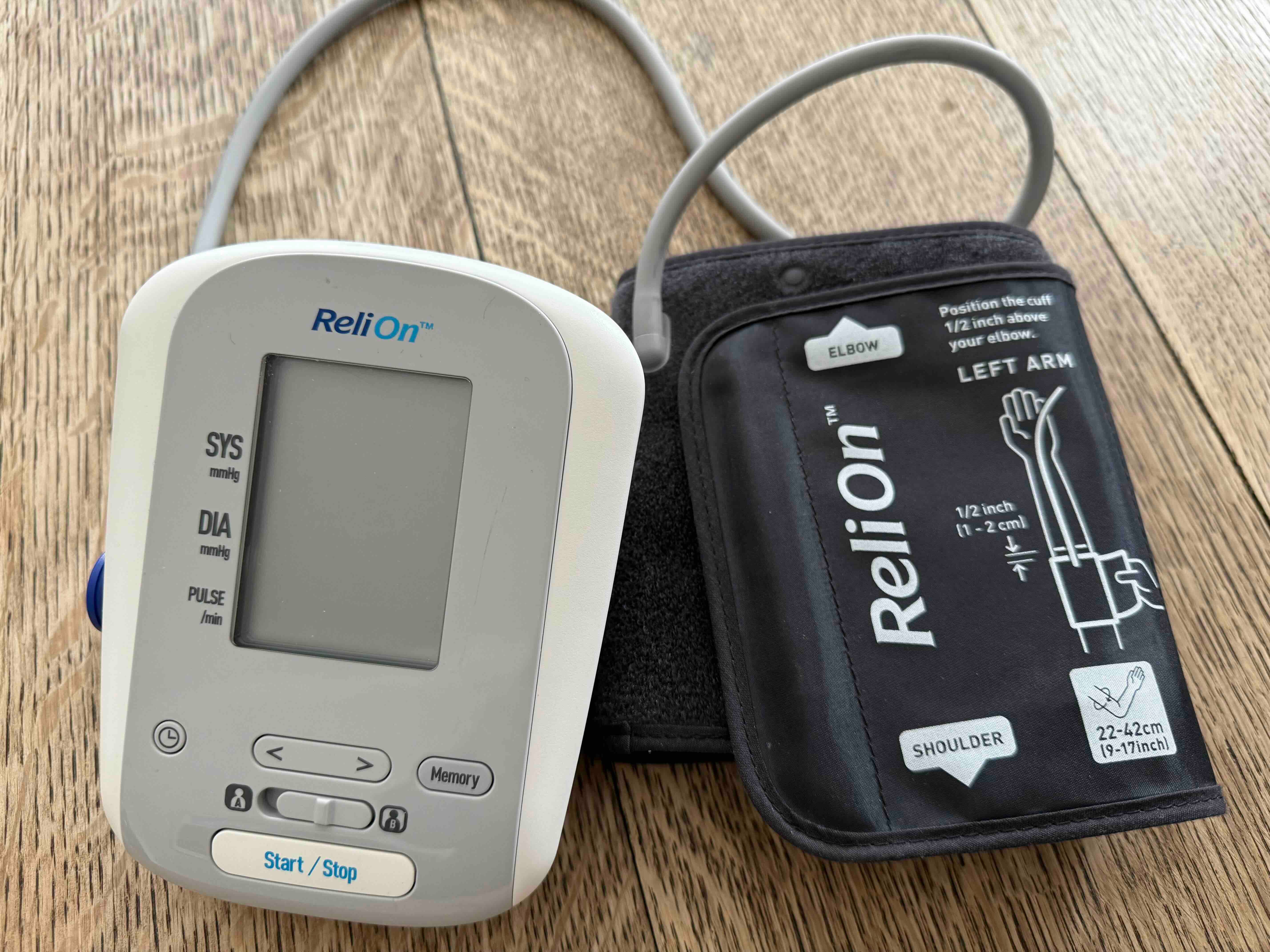
The New York Times has a big front-page investigative article about “Dr. Mehmet Oz, the celebrity TV doctor nominated by President Trump to oversee Medicare and Medicaid.” This is an article that could have used some better editing, or at least the involvement of some science and medical editors and reporters rather than only business and investigative editors and reporters.
The article includes this passage:
Another trusted partner was Omron, a maker of blood pressure monitors. It announced it had “joined forces” with the Dr. Oz show in a 2010 news release though neither the show nor the company have revealed the financial details of their arrangement.
In an episode available on his YouTube channel, Dr. Oz wore scrubs and featured Omron’s device to explain the virtues of taking your blood pressure. He worked with Walmart to get Omron device coupons for consumers and provided them to his audience.
Omron’s foundation has been a generous donor to Dr. Oz’s personal charity, HealthCorps, giving more than $250,000 since 2016, according to tax records reviewed by The Times.
An Omron spokesman said it too paid Sony and the company had “no current ties” to Dr. Oz.
Omron’s business, however, relies partly on Medicare, which pays for its blood pressure monitor in some circumstances, and he would oversee requests for expanded coverage.
…ethics experts say these endorsements may be particularly problematic.
The Times makes it sound like promoting a home blood pressure monitor is some kind of scandal.
Yet right at NYTimes.com, you can find an article, updated January 17, 2025, reporting, “A dependable home blood-pressure monitor can be a vital health-management tool for people with hypertension. It’s also a great tool for anyone who needs or wants to check their blood pressure and pulse rate at home. After interviewing medical professionals and spending over 50 hours considering more than 80 monitors since 2017, we’ve determined that the Omron Platinum BP5450 is the best machine for monitoring blood pressure at home. We found it comfortable, consistent, and overall easy to use.”
The New York Times website links to Amazon, Walmart, and Best Buy so that customers can buy the monitor, and it notes that the Times may earn a commission if customers buy via the hyperlinks.
In other words, the Times is attacking Dr. Oz for doing precisely what the Times itself is doing—making money by telling people to buy an Omron home blood-pressure monitor at Walmart.
Maybe what the Times doesn’t like is the competition?
It turns out that home blood-pressure monitoring is not some quack recommendation. In 2008 the American Heart Association, American Society of Hypertension, and Preventive Cardiovascular Nurses Association issued a “joint call to action” encouraging the practice. “Home blood pressure monitoring (HBPM) overcomes many of the limitations of traditional office blood pressure (BP) measurement and is both cheaper and easier to perform than ambulatory BP monitoring,” they said. It avoids “the white-coat effect,” the increase of blood pressure during a visit to a doctor. A recent random trial in Britain with Omron-provided equipment showed patients who got the home blood pressure monitor wound up with better-controlled systolic blood pressure after one year than a control group of patients who just had their blood pressure taken at the doctor’s office.
Anyway, that the Times is attacking Dr. Oz for this seems to indicate that they have some axe to grind against him because he is a Trump nominee and the Times doesn’t like Trump. There may be good reasons not to like Dr. Oz or to oppose his nomination, but advocacy of home blood-pressure monitoring is not one of them. The Times’ decision to include it in the article makes it look like they are just throwing the whole kitchen sink at him rather than taking a thoughtful or careful approach. Where were the editors?
Times columnist Bret Stephens said in 2022: “Oz played a key role in a life-threatening medical emergency in my family. I know a lot of people love to hate him. But he’s always going to be good in my books, I’m not going to comment on him other than that, and our readers should know the personal reason why.” The front-page Times attack does not include that perspective. I interviewed Oz in 2022 when he was running for U.S. Senate against Democrat John Fetterman. Fetterman has turned out better than expected in the Senate. Oz may turn out better than expected, too.
Barnard expulsions: Multiple news sources report that Barnard College has expelled two anti-Israel students who disrupted a class earlier this semester.
It’s possible the students had previous disciplinary records that made this a third-strike sort of situation.
Typically, elite colleges are extremely reluctant to take that step of expelling anyone. In addition to a philosophical belief that everyone deserves a second chance, that college is a learning experience, and that no one is irredeemable, expelling a student hurts a college in competitive rankings by lowering the college’s graduation rate. That’s a little ironic, because some prospective students might be glad to learn that a college is taking a hard disciplinary line against anti-Israel class-disrupters. In the statistics, “expelled for being an anti-Israel class disruptor” looks the same as “dropped out because the school didn’t provide enough support or financial aid to keep the student engaged”—it’s the track-and-field equivalent of “did not finish.”
The other observation I had about the Barnard expulsions was that the precipitating incident was extremely well documented by student cellphone video that was widely shared on social media. In a pre-cellphone-video, pre-social media age, it would have been easier to brush this sort of thing under the rug and dismiss it as a he-said, she-said situation.
Technology has changed campuses. In some ways it’s made it easier to intimidate Jewish students because the videos of the anti-Israel disruptions are widely seen and reach an audience much larger than the in-person crowd. Yet it’s also made it harder for the disrupters to escape accountability for their actions. This is true not only at Columbia but also at Harvard, where Judge Stephen McClenon asked Naomi Shatz, a lawyer for Elom Tettey-Tamaklo, a Harvard Divinity student from Ghana: “Would you agree that the video speaks for itself?”
It would be interesting to know how the Columbia administration identified the Barnard disrupters despite the disrupters' virtually complete head coverings. Was it the voices? The eyes?
Will the future be an arms race between administrators and disrupters over identification ability?
Will disrupters start wearing sunglasses or even goggles to avoid being identified?
Will disrupters use voice-altering technology? Or just carry printed materials and stay mum? And will heroes such as Lishi Baker, who posted the video of the class disruption (https://x.com/LishiBaker/status/1881770163680457142) then need to harvest DNA from finger prints of the disrupters to identify them? Or will disrupters start wearing gloves to avoid leaving fingerprints?
I predict that efforts of the disrupters to remain anonymous will fail. If they adopt all the measures described here they will be seen as the cowards and thugs that they are.