



“The enemy is billionaires,” a new entrant to the U.S. Senate race in Maine declares in an introductory video.
The video was reportedly produced by Morris Katz, a close aide to the Democratic nominee for mayor of New York, Zohran Mamdani. Katz also promoted the Senate candidate in a social media post: “He’s going to defeat Susan Collins & he’s going to be a Senator who relentlessly fights the egregious income inequality that’s destroying this country.”
The video, for a candidate named Graham Platner, is a sign that other Democrats nationwide will try to replicate Mamdani’s strident socialism and hope that it will be a winning political message for them.
The video features a tattooed Platner splitting wood with a maul.
“We have watched this state become essentially unlivable for working class people, and it makes me deeply angry,” Platner says in the video. “The fabric of what holds us together is being ripped apart by billionaires and corrupt politicians profiting off of destroying our environment, driving our families into poverty, and crushing the middle class.”
“I did four infantry tours in the marine corps and the army. I’m not afraid to name an enemy, and the enemy is the oligarchy, it’s the billionaires who pay for it, the politicians who sell us out,” Platner says.
Collins, the Republican incumbent, was first elected to the Senate in 1996. She chairs the Senate Appropriations Committee. To run against her Platner would first have to win a Democratic primary against several other candidates. The state’s governor, Janet Mills, a Democrat who is term-limited, is also reportedly looking at the Senate race.
The Democratic campaign demonizing billionaires is highly selective. The Democrats hardly ever publicly attack left-leaning billionaires such as Penny Pritzker or George Soros. And they also fail to acknowledge that when someone becomes a billionaire in America, it frequently means that the person created a company that employs a lot of people and that creates a lot of value for customers and investors through voluntary, mutually beneficial transactions. Maybe if Maine had more billionaires the state would be doing better than it is. Or maybe if the state created a public policy environment geared at attracting millionaires rather than shaking them down or scapegoating them, the Maine economy would be booming like that of neighboring, lower-tax New Hampshire.
Harvard, MIT, Columbia economists assail Israel as “unconscionable”: How did 23 academic economists—including ten Nobel prize winners—get fooled into signing a letter to Prime Minister Netanyahu that applies double-standards to and demonizes Israel based on inaccurate information?
I wrote to several of the economists who embarrassed themselves by signing the letter—Claudia Goldin of Harvard, Daron Acemoglu of MIT, Joe Stiglitz and Edmund S. Phelps of Columbia, Angus Deaton—with some polite questions:
Hi, I'm a reporter and editor and had some questions about this economists' letter on Gaza. I hope you can help.
1) Who initiated/organized this?
2) Is there a similar letter about famine in Sudan, which is worse? If not, why single out Israel?
3) You call on Israel to “pursue in good faith a ceasefire accord that will improve the humanitarian situation, return the hostages home and end the fighting.” Have you economists made a similar call to Qatar, Egypt, and Turkey, which are sheltering Hamas leaders? Or to Hamas? Why not?
Neither Goldin, Acemoglu, Stiglitz, Phelps, or Deaton deigned to respond to me. Maybe they were busy with important economics matters. Maybe my email didn’t make it through their filters. Or maybe they realized that their answers to those questions would expose their letter for what it is: an example of the demonization, double standards and groupthink that have turned college campuses into hostile environments for Jewish students, staff, and faculty.
I did get a response from one of the signers, Olivier J. Blanchard, who is the Robert M. Solow Professor of Economics Emeritus at MIT. Blanchard said he did not know who initiated or organized the letter. He said he singled out Israel “because it is a country close to my heart (I am jewish by my mother) and a democracy. I obviously care about any place in the world where people starve or die.” And he said, “There are many guilty parties. But right now, it is the Israeli government that is directly responsible for the lack of food.”
Blanchard at least replied, but I found the response unsatisfactory. The letter, dated August 13, relies heavily on the U.N. for its evidence of what it describes as “the spreading starvation in Gaza.” But as the Israeli government has pointed out, the U.N. statistics are misleading and incomplete.
In a new “Misson Brief” Substack post, a spokesman for the Israel Defense Forces, Lieutenant Colonel Nadav Shoshani, writes, “We’re not blocking aid — we’re facilitating its entry. Meanwhile, Hamas is booby-trapping humanitarian corridors, stealing shipments, and using sick children as tools in its propaganda war….Hamas is starving Israeli hostages to skin and bones, while they themselves are well fed off of stolen humanitarian aid.”
The economists’ letter also dwells on what it claims is an Israeli plan to “relocate hundreds of thousands of Gazans into a confined zone, stripping them of freedom of movement and basic dignity. It is unconscionable for Israel to treat civilians as liabilities to be contained rather than as human beings entitled to livable conditions.” The economists ask Netanyahu to “renounce unequivocally any plan to establish camps for Gaza civilians.” The Gazans have been confined by Egypt and by other countries that decline to allow them to escape a war zone. Is it more humane to require the Gazan civilians to remain in an active war zone dominated by the Hamas terrorist group that is cynically using them as human shields? The economists seem to think the refugee “camps” that the UN maintains as a way of preventing the resettlement elsewhere of Palestinian Arabs are acceptable, but temporary shelters to keep Gazan civilians out of active war zones are “unconscionable”?
Perhaps part of the problem is that these economists rely for their information on the left-wing anti-Israel news outlets that the universities provide their students and professors with complimentary access to. But even those outlets haven’t devoted much attention to the “camps” anti-Israel attack line. Who has? Qatar-controlled Al Jazeera, which headlined July 16, “Israel presses ahead with Gaza ‘concentration camp’ plans despite criticism.” The International Holocaust Remembrance Alliance working definition of antisemitism adopted by the U.S. government and by increasing numbers of universities says “Drawing comparisons of contemporary Israeli policy to that of the Nazis” could be antisemitism.
Given that the economists won’t say what generated their letter, it’s tempting to speculate.
Some of the signers, including MIT’s Acemoglu, David Autor, and Esther Duflo, are affiliated with the Abdul Latif Jameel Poverty Action Lab at MIT. That lab, backed by the Saudi Arabian Community Jameel, in 2024 launched a lab with seven embedded staff in Egypt’s Ministry of Planning and Economic Development. The JPAL Middle East and North Africa 2024 annual report features a map that pointedly omits Israel from the region. Maybe that’s because Israel is prosperous, not because it’s Jewish, but the map of the region includes some oil-rich countries that are also prosperous, but that are, unlike Israel, predominantly Arab or muslim.
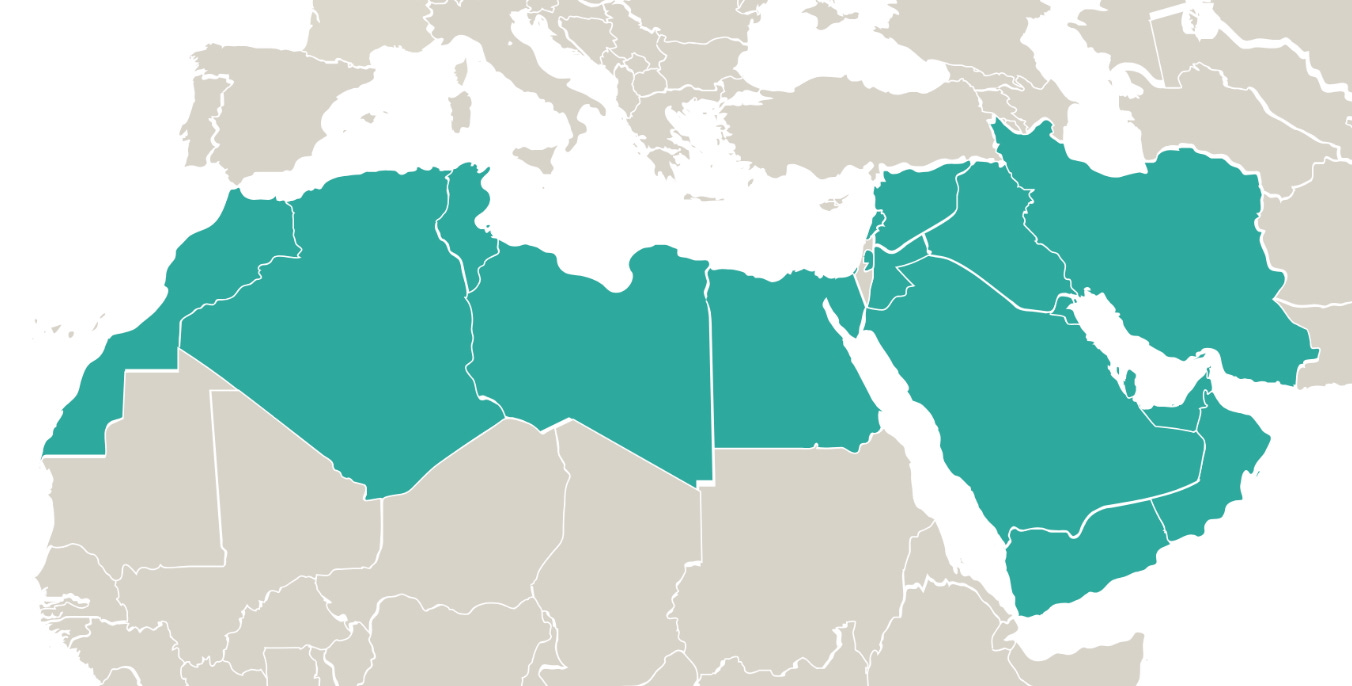
A February 2025 event with J-Pal At American University in Cairo featured Egypt’s Minister of Planning, Economic Development, and International Cooperation along with Ahmed Elsayed, J-PAL MENA’s Executive Director, for a program with “support from UNICEF Egypt.”
Egyptian President El-Sisi’s son, Mahmoud al-Sisi, reportedly made huge profits from facilitating smuggling supplies from Egypt into Hamas-controlled Gaza. Egypt is technically at peace with Israel and has its own concerns about destabilizing Islamist extremism, but as David Wurmser wrote here back in February (“Are Egypt and Israel Stumbling Toward War?”), “Egypt’s abysmal behavior in allowing its common border with Gaza to be used for the dangerous smuggling of weapons, money, and material to Hamas built the problem that exploded on October 7. Hamas could arm only to the level that Egypt enabled it. Once exposed, rather than help Israel fix the problem it enabled, Egypt manufactured tensions with Israel to divert attention from its own culpability.”
The Editors gets no funding from Saudi Arabia or from Egypt. We are a reader-supported publication. Know someone who would enjoy or benefit from reading The Editors? Please help us grow, and help your friends, family members, and associates understand the world around them, by forwarding this email along with a suggestion that they subscribe. Or send a gift subscription. Thank you!
I admire your temperate tone and even think it is the best one to adopt in dealing with this. I have to say, however, that these economists do not deserve this temperate response.
Blanchard's claim that Israel "is close to his heart," but that he believes Israel now "is directly responsible for the lack of food” in Gaza is hard to take seriously. If Israel were truly close to his heart, he would at least know how Israel has attempted to deliver food to Gaza, he would know how Hamas thwarts that effort, and he would know how unprecedented it is to expect a nation in the midst of a war launched against it to also care for the population of the enemy still at war with it. His "heart" would lead him to at least contend with that Israeli perspective. It would lead him to be suspicious, or at least aware, of the idea that it is an unprecedented moral inversion to transform Hamas's actual genocidal war and its cruel sacrifice of its own population into a fantasy about Israel being to blame for Gaza's suffering. I do not believe Blanchard holds Israel close to his heart, and I have to conclude that none of the other signatories do either. Their utter failure to confront even the most basic flaws in the leftwing-Hamas take on this war is a colossal betrayal of the academic standards to which I assume these economists try to hold themselves in their own academic work.
Sorry for this rant, but really, it is just too much sometimes to take.
The letter calls upon Israel to “pursue in good faith a ceasefire accord that will improve the humanitarian situation, return the hostages home and end the fighting.”
It is odd that the letter doesn't mention the other parts of the deal under consideration, releasing thousands of terrorists, including 150 serving life sentences, typically for murder.
This may fool undergraduates in the USA, but it doesn't fool many in Israel who know only too well that many deaths have resulted from releases of terrorists in past deals.