

Religion Is Thriving, Not Declining, New Study Shows
Plus, Harvard anti-Trump team balloons to 17 outside lawyers

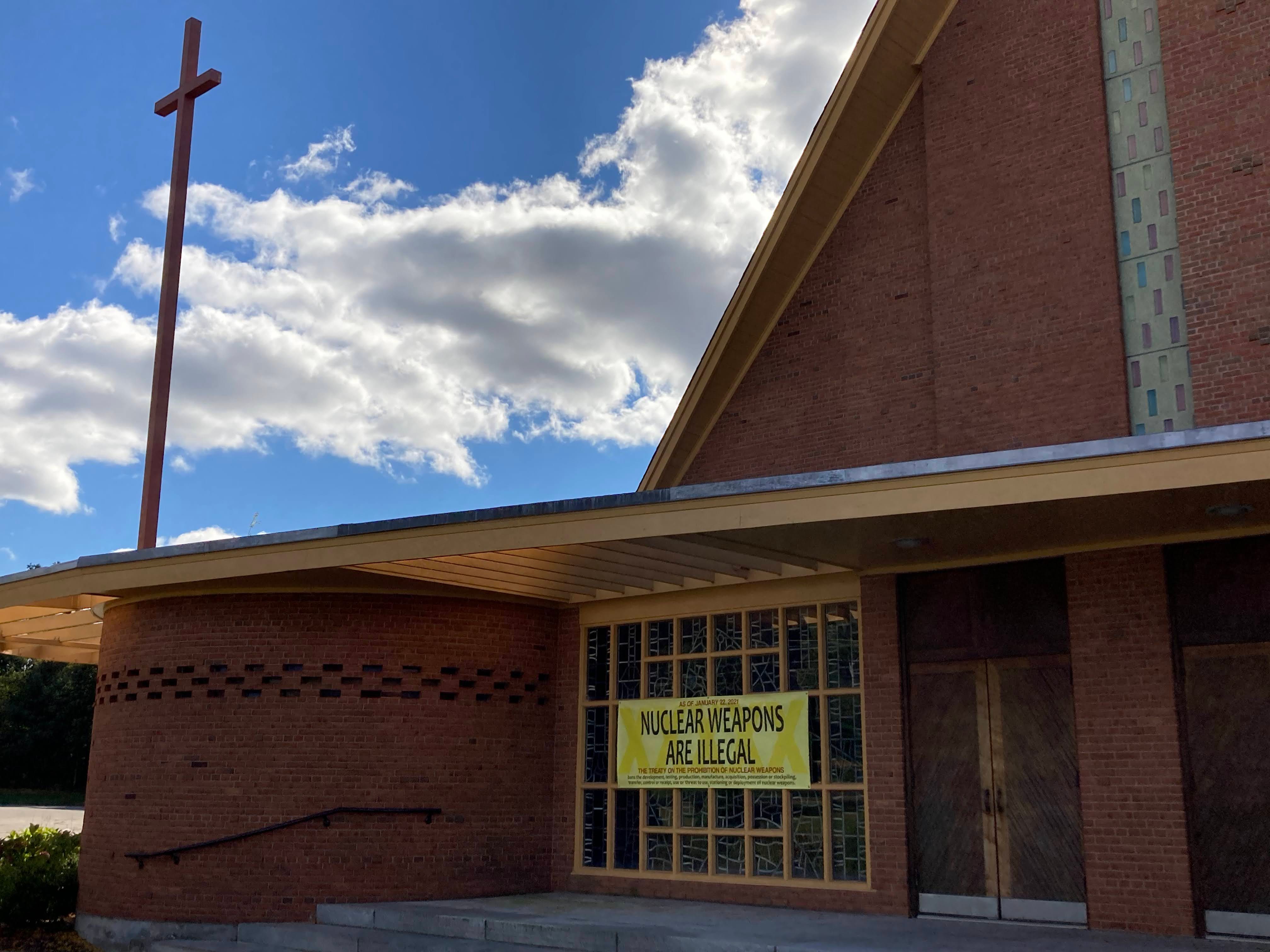
Religion is not declining, it’s thriving, a new National Bureau of Economic Research working paper says.
The paper, “Religion in Emerging and Developing Regions,” is by economists Sara Lowes of the University of California, San Diego; Eduardo Montero of the University of Chicago; and Benjamin Marx of Boston University.
“Rather than waning, religious beliefs, practice, and institutions may be adapting to the profound social and economic changes sweeping across the globe—consistent with religion’s remarkable ability to reinvent itself in previous periods of change,” they write, relying largely on survey data and a synthesis of other research. “Religious adaptation, rather than decline, may therefore be the key phenomenon at play in many regions.”
“Former communist countries are, if anything, experiencing a resurgence of religion,” they write. “The declining trends observed in the U.S. and Western Europe—for both the importance of religion and religious service attendance—stand in contrast to the rest of the world.”
The authors speculate about reasons for the resilience of religions in developing countries. “Instability may drive people to look to religion for both risk management and psychological comfort,” they write. Also, “religion often serves as an anchor for identity in periods of rapid social and economic change.”
“Future research could help shed light on how religion can unite communities against external threats (a cultural defense mechanism) or help individuals navigate life transitions by providing continuity and community (a cultural transition mechanism),” they write.
Some economists are using experimental techniques to measure the effects of religion, they report. One study involved “a randomized evangelical training program for ultra-poor households in the Philippines to test how evangelical religious beliefs and practices can influence poverty. Six months after households received an intensive Protestant theology and values course, participants showed increased religiosity and even earned higher incomes on average (with evidence pointing to improved “grit” and work habits as a mechanism). However, these gains dissipated by 30 months, suggesting only a short-run boost from the religious intervention.” Another involved “a randomized field experiment in Jordan to test whether explicitly religious messaging can drive real behavioral change in water conservation…Women in treated classes were 28% more likely to donate to a water charity after the lesson and, three months later, reduced household water use by 17% as measured on their quarterly water bills.”
“Religious denominations also gain market shares by responding optimally to prevailing policies or environmental conditions,” they write. “Religious organizations behave much like firms that re-price, re-package, or relax product features to retain market share when input costs rise.”
Harvard anti-Trump team balloons to 17 outside lawyers: Harvard’s team of outside lawyers working on the university’s lawsuit to restore federal research funding has ballooned to 17 attorneys, a new court filing shows.
The filing is five pages—three pages of text, a one page certificate of service indicating that the a copy was sent to the government, and an entire page devoted to listing all the lawyers Harvard has working on the case. Nine of the lawyers— Steven P. Lehotsky, Scott A. Keller, Jonathan F. Cohn, Mary Elizabeth Miller, Shannon G. Denmark, Jacob B. Richard, Katherine C. Yarger, Joshua P. Morrow, and Danielle K. Goldstein, are with a single firm, Lehotsky Keller Cohn LLP. An additional six lawyers—Douglas Hallward-Driemeier, Stephen Sencer, Joshua S. Levy, Mark Barnes, John P. Bueker, and Elena W. Davis—are from Ropes & Gray, a Boston-based firm that has a long history of representing Harvard. The Harvard team also includes William A. Burck of Quinn Emanuel and Robert Hur of King & Spalding.
That doesn’t include the in-house lawyers at Harvard’s general counsel office; Harvard provost John Manning, who is a former dean of Harvard Law School; or Harvard Corporation member Kannon Shanmugam, who is co-chair of the Litigation Department at Paul, Weiss.
I wrote to Lehotsky asking, “Is there a point at which it becomes excessive or there are diminishing returns? Is 17 the optimal number of lawyers here in addition to Harvard's in-house counsel, Provost Manning, and Kannon Shanmugam?” (I could have also included Harvard law professor Noah Feldman, but I hadn’t yet seen his intriguing, though poorly headlined, Bloomberg column on the legal issues in the Harvard case. The column was headlined “Amy Coney Barrett Is a Maddening Voice on Grant Cases,” but the text of it says, “Barrett seems genuinely uninterested in the politics or the outcome. She’s trying to be a precise lawyer. That’s consistent with her jurisprudential philosophy, inspired by the late Justice Antonin Scalia, which holds that judges should stay out of politics and decide legal issues based solely on the law.” That’s “maddening”? Only to the Bloomberg crew.) I also asked Lehotsky, “are any of these people pro-bono or are they all getting paid?” I did not hear back from him.
I also informally checked with some lawyers I know on whether 17 is too many. I got a mixed response, ranging from one who said it was ridiculous to another who said it’s not unusual for high-profile cases—similar to the trend of increasingly long lists of authors in scientific journal articles.
Maybe Harvard’s decisionmakers are determined that if the university winds up losing its case against the government, it’s not going to be on account of being shortsightedly stingy when it comes to spending on legal talent. On the other hand, it’s busy making a public case that federal funding cuts are devastating life-saving cancer research. If Harvard has the money to pay all these lawyers, maybe it can pay for the cancer research without so much taxpayer funding? The last time Harvard’s legal spending hit the headlines it was when the university was suing its insurance company in an unsuccessful effort to get the insurance company to pay for more than $15 million in legal expenses related to Harvard’s losing effort to defend its use of racial preferences in college admissions. Harvard failed to provide the timely notice to the insurance company that was required under its policy, so it wound up on the hook for the bill.
Thank you: If you know someone who would enjoy or benefit from reading The Editors, please help us grow, and help your friends, family members, and associates understand the world around them, by forwarding this email along with a suggestion that they subscribe. Or send a gift subscription. Thank you!
I'm curious which religions are "thriving" and "experiencing a resurgence" globally. For example, the rise of a supremacist religion could be troubling.