

“Neoliberalism” Emerges as Election-Year Enemy
Plus, Paul Berman on the Harvard cartoon scandal; an Israel update from General Avivi

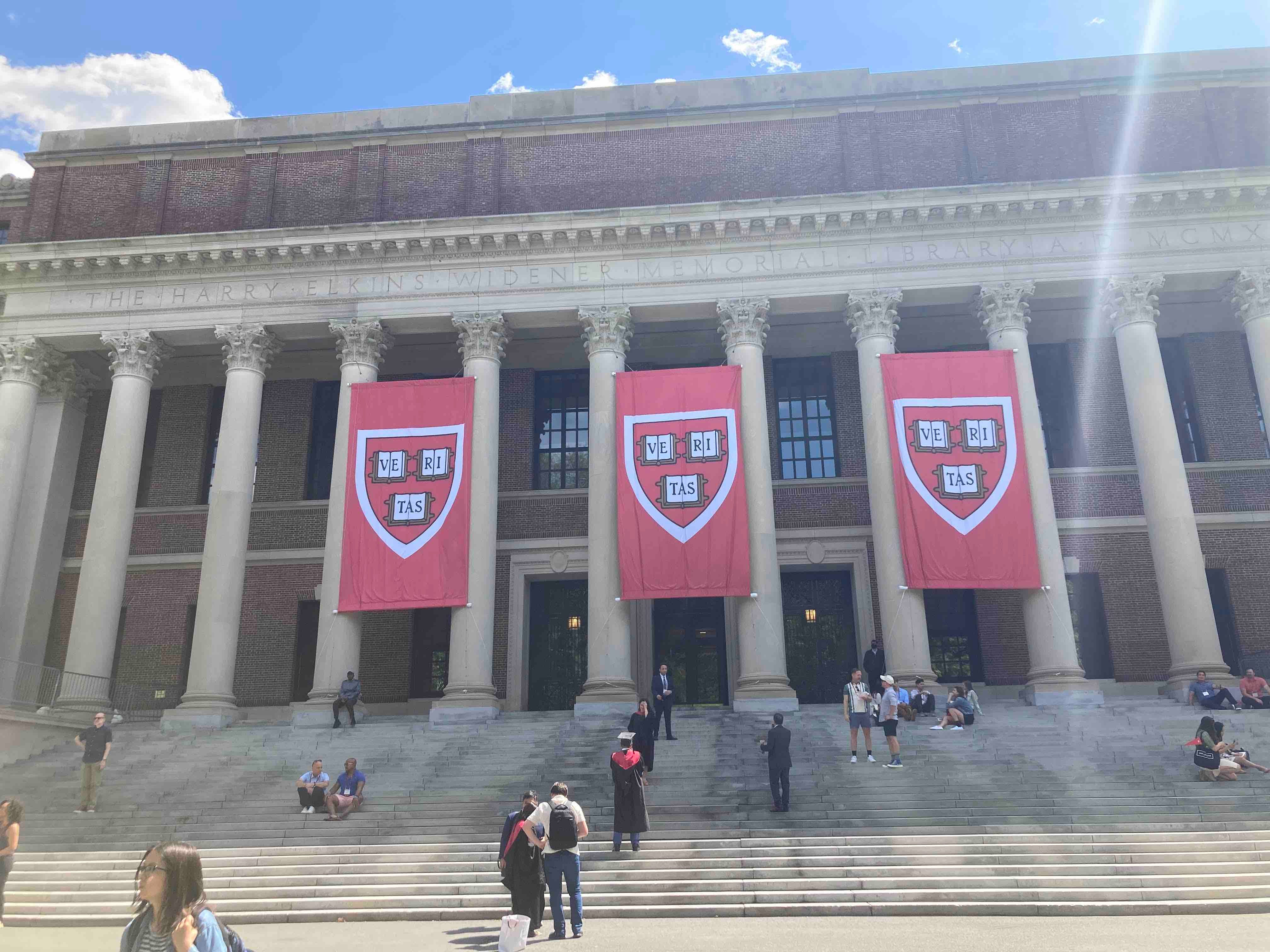
A Harvard government professor, Michael Sandel, writes in the New York Times, “To win back the trust of the voters they’ve lost, Democrats need to acknowledge that the neoliberal globalization project they and mainstream Republicans pursued in recent decades brought huge gains for those at the top but job loss and stagnant wages for most working people….By 2016, four decades of neoliberal governance had created inequalities of income and wealth not seen since the 1920s. Labor unions were in decline. Workers received a smaller and smaller share of the profits they produced. Finance claimed a growing share of the economy but flowed more into speculative assets (like risky derivatives) than into productive assets (factories, homes, roads, schools) in the real economy.”
A columnist for the Financial Times, Rana Foroohar, writes, “I think Harris understands how far the political and economic pendulum has swung from the neoliberal paradigm that reigned for decades.”
Years ago someone warned me that when a writer flings around the term “neoliberal,” it’s nearly a failsafe indicator that they don’t know what they are talking about and that their policy prescriptions can be safely ignored.
In a New Yorker piece, “The Rise and Fall of Neoliberalism,” that ran last summer, another Harvard professor, Louis Menand, who teaches English, explained, “Neoliberalism, in the American context, can be understood as a reaction against mid-century liberalism. Neoliberals think that the state should play a smaller role in managing the economy and meeting public needs, and they oppose obstacles to the free exchange of goods and labor. …most types of neoliberalism reduce to the term ‘markets.’ Get the planners and the policymakers out of the way and let the markets find solutions.”
Trump, Vance, Biden, and Harris all, to at least some extent, are expressing public solidarity with this idea that the government should prioritize workers over Wall Street, and that the free flow of goods and labor across international borders should be less free.
But it’s one thing to denounce, or blame, “neoliberalism,” or even Wall Street, and it’s another thing to propose alternatives.
Those tariffs to keep out imports raise prices for American consumers and can wind up protecting inefficient domestic companies or mediocre domestic products from the discipline of foreign competition.
If markets aren’t going to allocate capital or set prices, who is? Politicians? The lobbyist-and-interest-group friends of the politicians? Columnists at the FT and the New York Times? “Experts” working for the government? What happens to property rights and rule of law in such non-market systems?
If Sandel thinks job loss, stagnation, and inequality characterized the 1976 to 2016 period, which, in any event, fell somewhat short of a fully faithful implementation of free-market paradise, imagine what misery might attend a dismantling of market systems in favor of central planning. It isn’t even necessary to imagine; history is littered with the grim examples. Even today, in the U.S., we can see the costs of heavy government involvement in the education and healthcare sectors.
The Sandel op-ed includes a laundry list of specific proposals—a higher federal minimum wage, a tax on financial transactions, “require companies to give employees seats on corporate boards”—but they all involve tradeoffs that he doesn’t acknowledge. (Notice that it’s largely the Harvard government and English professors, not as much the economics faculty, running away from neoliberalism.)
Denouncing “neoliberalism” is an economic policy parallel to demonizing “neoconservatism” in foreign policy. People may not like “neoconservatism,” but they don’t like Al Qaeda, the Islamic Republic of Iran, or Communist China, either. People may not like “neoliberalism,” but they don’t like taxes or big powerful government bureaucracies that trample private property rights, either. A lot of the talk against “neoliberalism” is just a smokescreen barely concealing a push to grab more power for government.
Paul Berman on the Harvard cartoon scandal: The Summer issue of the journal Liberties has a piece by Paul Berman, “A Stupid Cartoon and the University Ideology,” following up on the scandal over that cartoon, published by Harvard Faculty and Staff for Justice in Palestine, that “showed blacks and Arabs being jointly oppressed by their enemy, the Jews.”
“If I were a university president with the autocratic power to make professors do what I want, I would mobilize the more level-headed ones under my command to undertake a broader investigation. This would be an inquiry into a climate of opinion that hovers over the university humanities departments and maybe a few other places, and over the art world and the literary world, and seeps at times into the mainstream press,” Berman writes:
“What should the universities do? I would mobilize my imaginary committee to confront the broader climate of opinion as a whole. This would mean recognizing that the wave of virulent campus anti-Zionism, hidden and overt, together with the wave of virulent hatred in the art and literary worlds, amounts to something more than a failure of civility. It is an intellectual crisis. And the source of the crisis is not the students, and not a handful of radical organizations, either, even if the radical organizations are awful. Nor is the source merely the handful of professors who look and sound crazy. The source is a series of doctrines and assumptions that have degenerated from something authentically interesting into something grotesque, quietly presided over by professors who look and sound not just reasonable but attractively up-to-date….”
An Israel update from General Avivi: One of the key sources I rely on for trustworthy information, context, and perspective about what is going on in Israel and the broader Middle East has been the daily Zoom briefing of Israel’s Defense and Security Forum.
Its chairman and founder, Brigadier General (Reserve) Amir Avivi, was on today talking about how Israel will respond to the Iran-backed Lebanese Hezbollah attack that killed Druze children in Israel’s Golan Heights. (“There will be a response, but it won’t be a response that will bring the region straight to war.”) He also addressed the reported detention of and subsequent conflict over Israeli soldiers accused of mistreating Palestinian prisoners. “Yes, it’s hard. Yes, it’s difficult,” General Avivi said. “Looking at 4,000 years of Jewish history, we are still in the best shape we have been, ever.”
Thank you: At The Editors, we are the antidote to negativity bias. Neoliberal, neoconservative, liberal, conservative, “no labels”—we’re happy to have you as a paying customer. If you haven’t yet signed up, please do. If you have already, thanks.
And if you know someone else who’d enjoy it, please help to spread the word by passing this along.