


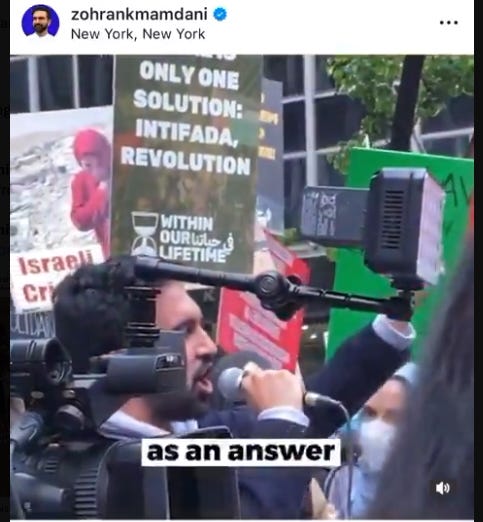
The mayor of New York City, Zohran Mamdani, rolled out his choice for schools chancellor over the New Year’s break. Maybe he was hoping that the selection, Kamar Samuels, would avoid scrutiny. Lots of education types are on vacation. Whatever remains of the press corps is focused on Mamdani’s inauguration rather than on personnel decisions, even when those are significant choices such as a leader of the largest school district in the United States, with about 900,000 students.
Mamdani said Samuels will “ensure we deliver educational excellence for every student.”
The record so far is that Samuels has been a failure. Immediately before being named chancellor he was superintendent of District 3, which includes Manhattan’s Upper West Side. There, Samuels did not actually deliver “educational excellence for every student.” The most recent proficiency rates for District Three show vast racial discrepancies:
8th grade math proficiency rates:
White: 86%
Black: 34%
Latino: 49%
8th grade English language arts proficiency:
White 88%
Black: 47%
Latino: 57%
Before arriving in District 3, Samuels was deputy superintendent of District 13, in Brooklyn. The proficiency rates for that district in 2022, the year he left, were a disaster for everyone:
8th grade math proficiency:
White: 9%
Black: 8%
Latino: 13%
8th grade English language arts proficiency:
White: 67%
Black: 45%
Latino: 45%
Before going into district administration, Samuels was the principal of a middle school called Bronx Writing Academy. When he left there, around 2019, the proficiency rates were:
27% of students were proficient in English language arts (compared to 45% in New York State)
18% of students were proficient in math (compared to 47% in New York State).
And these are at New York City public schools that are spending more per student—one estimate put it at $42,168—than almost anywhere else in the U.S.
I used to help edit an education policy journal, so I am familiar with, and even sympathetic to, all the responses that people make to data like these: The math and reading scores are too narrow a measure to judge the success of a school, people say. We can’t count on schools alone to eliminate inequalities that pervade other aspects of American society on dimensions like health, family structure, income, and parental socio-economic status, people say. If the student is living in a homeless shelter or his father is in prison or his mother is addicted to drugs, the student may have a hard time paying attention in class, people say. Yet the fact remains that there are some high-performing public charter school networks and even inner-city Catholic schools that have done a tremendous job of taking poor children and not only getting them to pass state math and reading tests but also to enroll in college and participate in civics and science and arts and physical education and otherwise flourish. Those schools, and their leaders, have achieved better results than has Kamar Samuels, who has been a failure.
When Samuels was asked about the state test scores in an interview with the West Side Rag, he was basically dismissive of them. Asked, “what do you see as the importance of test scores compared to other markers of learning when it comes to evaluating a student’s work? Does it all come down to what a student gets on a statewide test?” Samuels replied that he emphasized in-class tests rather than the statewide evaluations. “In terms of usefulness, I gear toward our assessments and day-to-day tasks,” he said.
At least the West Side Rag asked about test scores. Other outlets just give Mamdani’s choice a free ride based on vibes. The New York Times ran a news article reporting that Samuels “is regarded by supporters as a leader with a focus on equity and improving outcomes for students who have traditionally been underserved.”
Matt Gonzales, a former member of a school diversity advisory panel under Mr. de Blasio who has advocated for integration measures, said that Mr. Samuels was “ready for the role.”
“His record particularly on educational equity and school integration are things that bring me a lot of excitement and create a sense of hopefulness,” Mr. Gonzales said.
…
Micah Lasher, a state lawmaker in the Manhattan district that Mr. Samuels leads, called him an “absolutely superb educator and leader — incredibly thoughtful about how to make schools work for all our kids, and effective in implementing his vision.”
The Times also quoted Mark Levine, the city comptroller, who said that Samuels “has consistently managed to lead with principle and nuance.”
For the politicians and the Times to describe it as “superb” is simply detached from empirical reality. It’s as post-truth as Mamdani’s claims of a Gaza “genocide.”
Mamdani made “affordability” his campaign theme, with a promise of “free” childcare. But if when the “free” childcare ends the city’s public-school options are so limited that the choices become paying for private school, moving to the suburbs, or entering a charter school lottery and praying, “affordability” becomes as much as a mirage as was educational “equity” under Kamar Samuels.
By the time New York figures all this out, Samuels will probably be off to some new job at the Ford Foundation, Columbia University, or the Ocasio-Cortez presidential administration. The city’s public school students that he failed to educate will, unfortunately, face a more challenging future.
All the principle and nuance and thoughtfulness and excitement don’t add up to much if at the end of the day the students can’t do math, read, or write. In that sense the bigger danger about Samuels is that he is a stand in for what New Yorkers can expect from Mayor Mamdani: lots of excitement and fancy talk about “equity,” but terrible results.