

Judge Orders Anti-Israel Harvard Students to Anger-Management Class, Community Service
They “failed to show an ounce of remorse,” says Jewish student they were charged with assaulting

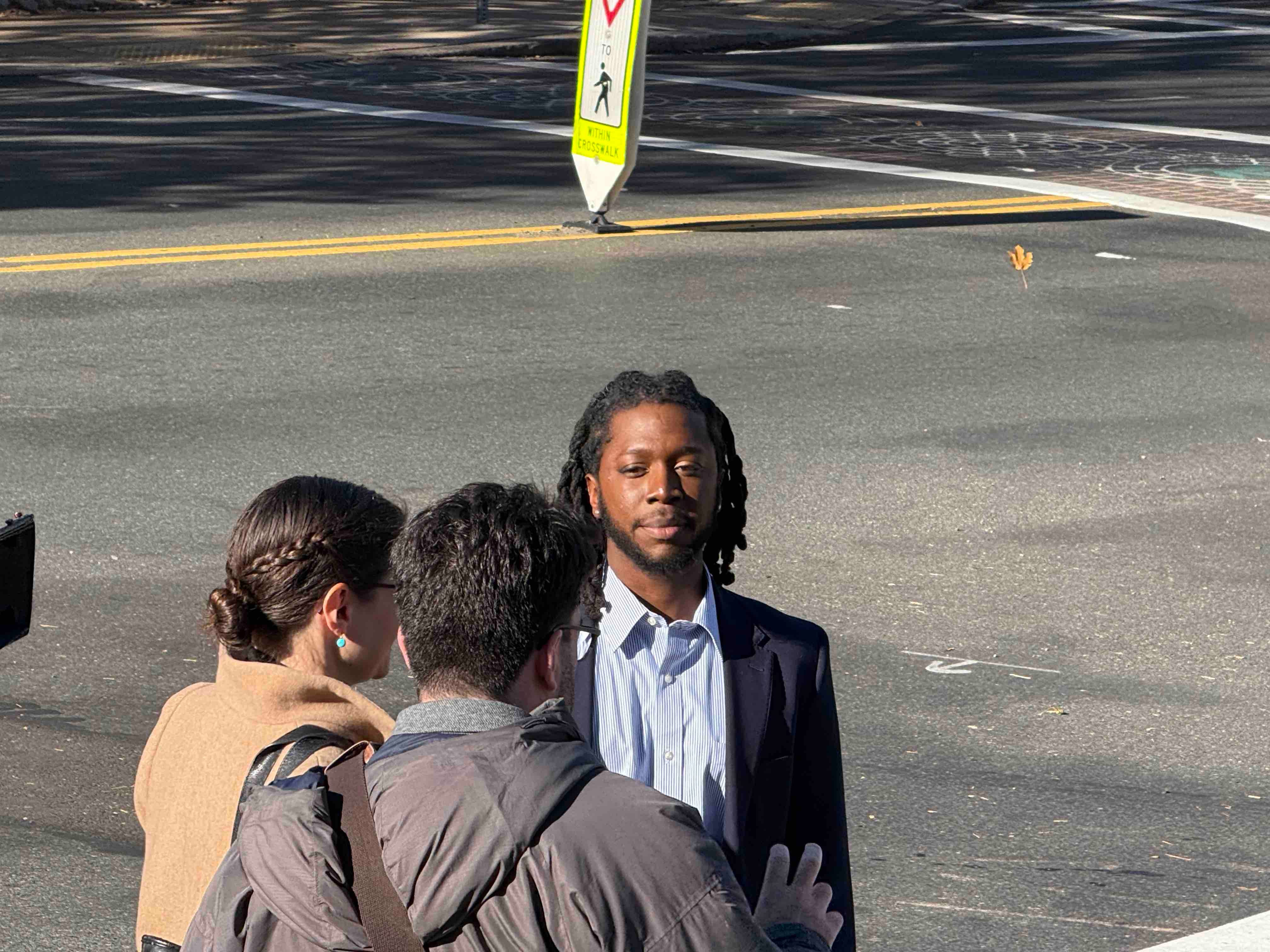
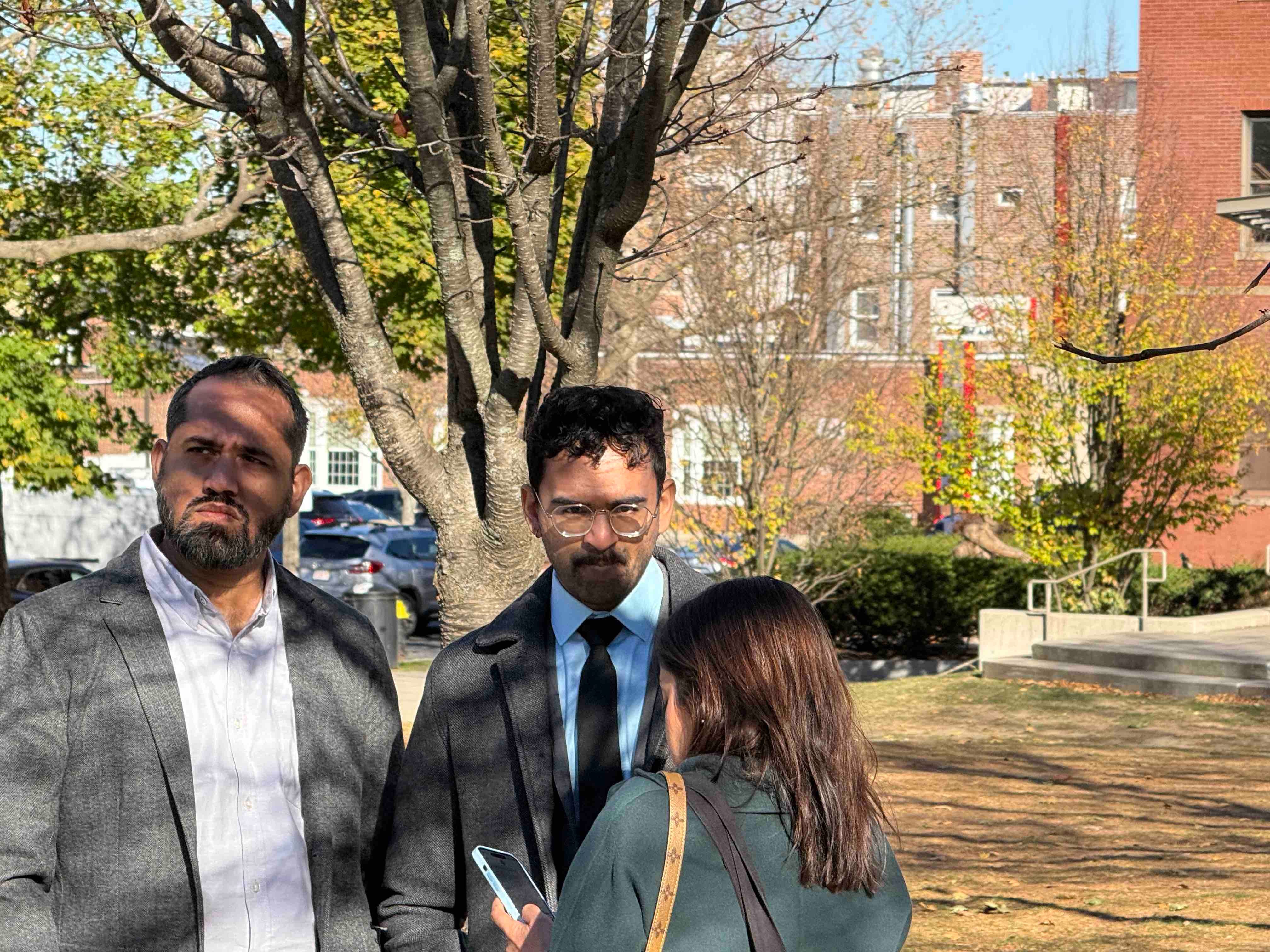
Two Harvard student anti-Israel activists charged with misdemeanor assault and battery for their treatment of a Jewish student at a protest will have to take an in-person anger-management class and spend 80 hours picking up trash or doing other community service through Suffolk County, Judge Stephen McClenon ruled today.
The anti-Israel students, Elom Tettey-Tamaklo and Ibrahim Bharmal, won the “pre-trial diversion” that they were seeking. The judge gave the prosecutor a win when it came to the amount of community service—80 hours rather than 40—and the requirement to serve it through the county rather than by volunteering at Harvard or another nonprofit organization. The prosecutor also got a small win with the order to take an anger-management class in addition to a Harvard negotiation class that the defendants had proposed.
The judge’s order, however, fell short of what the victim in the case and the prosecutor had sought, which was a statement from Tettey-Tamaklo and Bharmal that they had done something wrong, and that the Jewish student was not at fault.
The victim in the case, a student at Harvard Business School, Yoav Segev, spoke before a packed Boston Municipal Court, Brighton Division. He said he was born in Qatar, the son of Israeli diplomats, and became an American citizen at age 16. He said he had volunteered for 50:50 Startups, an incubator of companies with both Arab and Jewish cofounders. He said he’d spent January 2025 in Saudi Arabia and the United Arab Emirates and that before the October 18, 2023, event at Harvard Business School, he’d been known on the campus for his commitment to Middle East peace.
Segev said Tettey-Tamaklo had published an article seven months before the event saying that terrorists “must be celebrated.” He described the article as part of Tettey-Tamaklo’s “ongoing and public support for antisemitism.”
He said Tettey-Tamaklo and Bharmal are “grown men,” and that their attack “lasted over five minutes and was premeditated.” He described it as “an act of political violence,” noting that it included not only a “physical assault” but that there was a group chant of “shame, shame, shame” directed at him “while they pushed me around.”
He said Tettey-Tamaklo and Bharmal “have failed to show an ounce of remorse” and instead launched a media campaign in an attempt “to mischaracterize me as the aggressor.”
“They have villainized me in the media,” Segev said, saying he felt the “need to clear my name.”
Segev said he’d spent the past 18 months in therapy to deal with the trauma of the assault, and that he’d been told by someone at a company where he’d applied for a job that because of the publicity about the attack, “you will only get a job at a Jewish firm.”
He said he’s lost sleep over the right punishment for Tettey-Tamaklo and Bharmal. “Initially I was willing to be pretty forgiving,” he said, but the defendants “have made my life miserable,” demonstrating “continued hatred for Jews and continued poor behavior.”
“Just today, Defendant Tettey-Tamaklo showed up in a kaffiyeh. He wants this case to be political,” Segev said.
The prosecutor in the case, Ursula Knight, said the defense’s suggestion that the defendants take a Harvard negotiation class was “completely tone deaf,” noting that “In this case we have a hands-on assault and battery…a gang gathered around…actual interpersonal violence.” She said the defendants’ community service should be “picking up the trash” like other Suffolk County criminals, not doing volunteer work at Harvard.
Naomi Shatz, a lawyer for Tettey-Tamaklo, a Harvard Divinity student from Ghana, said Tettey-Tamaklo and Bharmal “simply can’t make those statements” desired by Segev. “They aren’t true,” she said. She also said that requiring the students to acknowledge wrongdoing is “antithetical to the purpose” and intent of pre-trial diversion. She said her client works in international aid and his career could be derailed if he has a criminal record. She suggested the students were arrested for protesting. “There is no basis to believe that any of these students pose any threat to the public,” Shatz said.
A lawyer for Ibrahim Bharmal, Monica Shah, said her client, Bharmal, who at an earlier hearing she described as “a Pakistani Muslim student,” had attempted mediated discussions with Segev but “at every juncture those requests were denied.” She said Bharmal, a law student, had volunteered with the Harvard Defenders legal clinic. And she disputed the account of the interaction that was offered by Segev and the prosecutors, downplaying its severity. “It was not hands-on. It involved a scarf, and there’s no physical injuries,” she said. “Diversion is the appropriate remedy.”
The judge ordered another status hearing on July 25.
Earlier in the proceeding, the judge had ordered the lawyers to confer. “I was under the impression that there was an agreement,” the judge said. When it became clear that there wasn’t one, he said, “You guys go have a talk. We’ll call the case again.”
The prosecutor contended, “if there’s a disagreement as to the facts, then the case should go to trial.” The judge, however, preferred the alternative route and ruled in favor of the pretrial diversion. If the terms are fulfilled, that would leave Tettey-Tamaklo and Bharmal without a criminal conviction on their records.
Every seat in the courtroom was full, with Harvard students in keffiyehs and hijab packed in alongside Jewish community members and tensions running high.
In another courtroom on another side of Boston, also yesterday morning, a federal judge, Allison Burroughs, set a briefing schedule and scheduled a July 21 hearing in a case about the federal government freezing billions in research funding for Harvard. That funding freeze stems in part from the negative publicity about Harvard and concern about antisemitism that flowed from the October 18, 2023, event.
Elom Tettey-Tamaklo and Ibrahim Bharmal entered pleas of not guilty back on November 15, 2024. The October 18, 2023 event was a factor in escalating the crisis at Harvard that had been building for a long time but that went to a new level after the October 7, 2023, Hamas-led terrorist attack on Israel. It triggered a letter from prominent Harvard Business School alumni including Joanna Jacobson, Mitt Romney and Seth Klarman, that said, “The videos that have been made public, particularly the most recent violent assault of an Israeli student on the Harvard Business School campus, allow us all to see how Jewish and Israeli students are targets of threats and violence from groups of pro-Palestinian students.”
In the months that followed, Harvard president Claudine Gay was forced to resign, while applications and donations to Harvard declined. Donald Trump made violent campus antisemitism a campaign issue, inviting one student suing Harvard, Alexander “Shabbos” Kestenbaum, to speak at the Republican National Convention.
The main punishment will not be "community service". It will be the memory of the internet that will give pause to anyone seeking to employ these people.
In the USA we believe in the importance of such information. In Europe, they have created a right to have such information erased.
This judge must think it's still the Biden presidency, where antisemitic rioters get off with a bit of sensitivity training.
He'll know better once our Ghanian antisemite is deported. The ICE man cometh!