

Israel-Syria Peace Would Help Puncture Pariah-State Myth
Hopes rise for Jerusalem-Damascus deal; Palestinian population could help al-Sharaa with re-Sunnification

Expectations are rising for a possible deal between Israel and Syria, an agreement that could be advanced as early as this week with a potential meeting between Prime Minister Netanyahu and President Ahmed al-Sharaa in New York on the sidelines of the United Nations General Assembly.
Among the signs that the two sides are closing in on a deal:
•On September 21, at the opening of his cabinet meeting, Netanyahu said, “Our victories in Lebanon against Hezbollah have opened a window for a possibility that couldn't have even been imagined prior to our latest operations and activity, and that is the possibility of peace with our neighbors to the North. We are holding talks with the Syrians, and there is some progress, but that vision is yet for an appointed time.”
•A September 17 statement from “Members of the Good Will Jewish Mission to Syria” — Rabbi Asher Lopatin of Etz Chayim Synagogue in Oak Park, Michigan; Rabbi Mendy Chuitrik of the Ashkenazi Jewish community of Turkey and chairman of the Alliance of Rabbis in Islamic States, and Carl Gershman, the founding president of the U.S. National Endowment for Democracy (1984-2021) — expressed hope about what it called “a new beginning” and “the government’s cooperation with neighboring countries.”
•A September 21 readout of a phone call between Secretary of State Rubio and Saudi Foreign minister Prince Faisal bin Farhan Al Saud said, “The Secretary and the Foreign Minister discussed Syria and Sudan, along with efforts to secure the return of the hostages from Gaza, address urgent humanitarian needs, and ensure Hamas plays no role in the future of Gaza.”
Here’s some of what would be in such a deal, and why it would be appealing to the U.S., to Israel, and to Syria’s leader:
For the U.S., an agreement would offer President Trump an opportunity to reinforce his public image as a peacemaker. A Russia-Ukraine deal and an end to the war in Gaza have so far eluded him, but Trump frequently speaks of his success in mediating agreements to resolve other international disputes, such as between India and Pakistan, Azerbaijan and Armenia, and Rwanda and the Democratic Republic of Congo. “President Trump is the President of Peace,” read an August 2025 release from the White House headlined “President Trump Brokers Another Historic Peace Deal.”
The U.S. ambassador to Turkey, Thomas Barrack, has been mediating between Israel and Syria. Having the U.S., Israel, and Saudi Arabia—rather than Russia, Iran, or China—be the dominant powers in Syria would be a strategic win for the U.S., given that Syria under the previous regimes of first Hafez, then Bashar, Assad was allied with by the Soviet Union, Russia, and, eventually, Iran. The Assads were both Baathist—a totalitarian ideology shared with Saddam Hussein’s Iraq and influenced by Nazism—and Alawite, a variety of Islam that is different from either the Shiite religion of Iran (and of socialist New York mayoral candidate Zohran Mamdani) or the Sunni religion of Saudi Arabia and much of the rest of the Middle East.
For Israel, the agreement would be a concrete refutation of the falsehood, common in the U.S. press, that the country’s string of victories after the October 7, 2023 Hamas-led terrorist attack have somehow turned Israel into a “pariah state.” Netanyahu has acknowledged what he describes as “public diplomacy damage,” but he has attributed it to the media influence of Qatar and China and to “large Islamist minorities” in Western Europe.
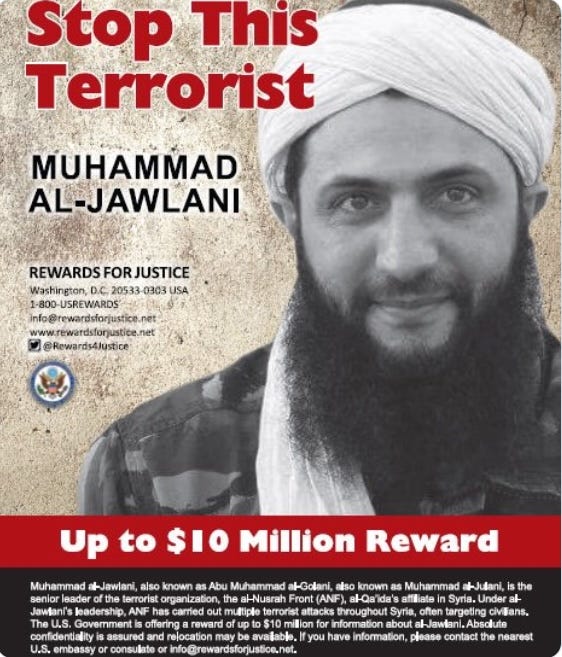
If even Syria and its president, Ahmed al-Sharaa, who as recently as 2017 was described by the U.S. government as “the senior leader” of a terrorist organization, the Al Qaeda affiliate in Syria, can make an agreement and warmer relations with Israel, it just makes the people in Europe and on American college campuses, or mayoral candidate Mamdani, advocating for a boycott or the arrest of Netanyahu seem more absurdly extreme. Mamdani, for example, is taking a position that is literally more anti-Israel than the former head of the Al Qaeda affiliate in Syria.
Mamdani has said he’d have the New York Police arrest Netanyahu for genocide. A public meeting and handshake between Netanyahu and al-Sharaa would make Mamdani look as ridiculous as New York Times columnist Thomas Friedman or as the Wall Street Journal’s Saturday “review” section, which recently fronted a pariah-state narrative by two news reporters of the Journal. Six Qatari officials—Sheikh Ali Alwaleed Al-Thani of Invest Qatar, Jassim Al-Khori of Media City Qatar; Badr Mohgammed Al Meer of Qatar Airways Group, Sheikh Mohammed Bin Faisal Al Thani of the Qatar Free Zones Authority, H.E. Saad Bib Al Kharji of Qatar Tourism, and AbdulAziz Ali Al-Mawlawi of Visit Qatar—are members of the invitation-only Wall Street Journal CEO Council, which does not appear to include such large contingents from any other country.
Israel also has military and economic goals for which Syria can be helpful. A demilitarized zone south of Damascus can help improve security in northern Israel, which was largely evacuated after October 7 because of the threat of rockets, drones, and other incursions from Iran-backed Hezbollah. There’s also the chance of a trade and humanitarian corridor stretching from Israel to Northern Iraq.
For al-Sharaa, the deal would bring funding from Saudi Arabia to help rebuild Syria after years of Civil War and totalitarian rule. Crucially—and most western observers overlook this because they don’t understand the religious dynamics—a deal with Israel could offer al-Sharaa the opportunity to “re-Sunnify” Syria by absorbing voluntary migration of Palestinian Arabs from Gaza or from Judea and Samaria. The Sunni population in Syria had been devastated by the Iranian-backed Alawites, who used chemical weapons and other brutal tactics against opponents. In addition to helping al-Sharaa, that could also help Israel by moving potentially hostile Arabs farther away and resettling them in places where they already have religious and cultural ties.
What’s more, Israel has emerged from the post-October 7 wars as the dominant regional power, setting back the Iranian nuclear program and severely damaging Hezbollah in Lebanon and Hamas in Gaza. Without Israeli backing, Syria might disintegrate or turn into a battleground between Russia, Qatar, Syria, Turkey, Saudi Arabia, Iran, the U.S. and Israel. All those powers—along with, to some extent, Iraq, China, and Lebanon—already are competing for influence in Syria, but a deal with Israel (and along with it, implicitly, the U.S. and Saudi Arabia) would help give al-Sharaa, and Syria, a better chance of survival and a future as something other than a failed state.
Thank you: The Editors is not funded by Qatar and does not have a CEO Council (though maybe we should start one); we rely instead on paying readers. If you know someone who would enjoy or benefit from reading The Editors, please help us grow, and help your friends, family members, and associates understand the world around them, by forwarding this email along with a suggestion that they subscribe. Or send a gift subscription. If it doesn’t work on mobile, try desktop. Or vice versa. Or ask a tech-savvy youngster to help. Thank you to those of who who have done this recently (we see the results, and they are encouraging) and thanks in advance to the rest of you.
Program note: We’re planning to resume normal publishing on Thursday after the Rosh Hashanah holiday. A happy, healthy, free, and prosperous 5786 to all readers of The Editors.