

Immigration Issue Helps Decide Another Election—This Time, in Ireland
Sinn Fein self-sabotages, failing to capitalize on a chance to gain political power

Another election has been decided by the issue of immigration. The Republic of Ireland held parliamentary elections last weekend, and this time around, the insurgent populist party saw its hopes dashed in part by maladroit handling of the migration issue.
Negotiations will take a while to play out, but a past prime minister — or Taoiseach as they call them in Ireland — Micheal Martin, the 54-year old leader of Fianna Fail, looks certain to return to office, after two years as deputy prime minister, or Tánaiste. And the current Taoiseach, Simon Harris, the 38-year old leader of the other traditional party, Fine Gael, will become Tánaiste.
Ireland’s insurgents, Sinn Fein, come from the left of the political spectrum, unlike most of their European counterparts. They are a deeply unappetizing bunch. They are the political wing of the Provisional Irish Republican Army, which waged a deadly terrorist campaign against British rule in Northern Ireland from 1969 till 1997. The IRA finally agreed in 2005 to permanently give up the “armed struggle.”
Their past violence, conducted in league with the Soviet Union and the Palestine Liberation Organization, is hardly the only unappealing thing about Sinn Fein. It is a far-left party committed to the full gamut of policies that suggests — sub-Marxist economics, wokery, and deep hostility to Israel. They are now the largest party in Northern Ireland, which is part of the United Kingdom, and they are set to remain a permanent feature of Northern Ireland’s devolved government due to the complex power-sharing coalition arrangements put in place with the peace deal ending the IRA’s terror campaign.
Sinn Fein had set their sights on entering government south of the border too — indeed they had been polling as the largest party in the Republic for nearly all of the last four years, often 10 or more percentage points ahead of their closest rivals.
The Republic of Ireland was ripe for a political shakeup. Its politics has been dominated since the 1930s by the two nominally centre-Right parties — in truth they are anything but — Fine Gael and Fianna Fail. When the bulk of Ireland became independent in 1922, the country descended into civil war between those who were willing to accept the Treaty with Britain setting up what was then called the Irish Free State and those who thought it was an act of capitulation and there should be no agreement unless the British withdrew from the whole of Ireland.
For decades how people voted was to a large extent determined by which side their ancestors took in the Civil War. Fianna Fail (the anti-Agreement side) were slightly more anti-British and a bit more strident in their support for traditional Catholic mores, until recent years — but there the practical political divide really ended.
When Ireland changed from a deeply Catholic country to a place as secular as much of Europe, these parties changed with it. Fine Gael changed more rapidly, but Fianna Fail did not take long to follow. Power oscillated between these two blocks. During the Celtic Tiger years of the mid 1990s to the late 2000s, Ireland appeared to be booming, with GDP per capita nominally far outstripping that of the UK. (It is still nearly double that of Britain.) The figures, though, are nonsense. Ireland offers low taxes for multinationals routing their European activities, at least on paper, through the country. But much of this business does not happen in Ireland in anything more than a perfunctory sense. Because Ireland’s population is small — just over 5 million—this distorts the per capita figures.
This feeling of prosperity came crashing down during the global financial crisis of 2007-2009. The old parties were blamed for the renewed feeling of impoverishment. Sinn Fein, with its left populist message, gained traction. In the previous election, in 2020 Sinn Fein got the most votes, although not the most seats in Ireland’s fiendishly complex single-transferable vote electoral system. As a way of keeping Sinn Fein out, the traditional rivals of Fine Gael and Fianna Fail did the previously unthinkable and went into government together.
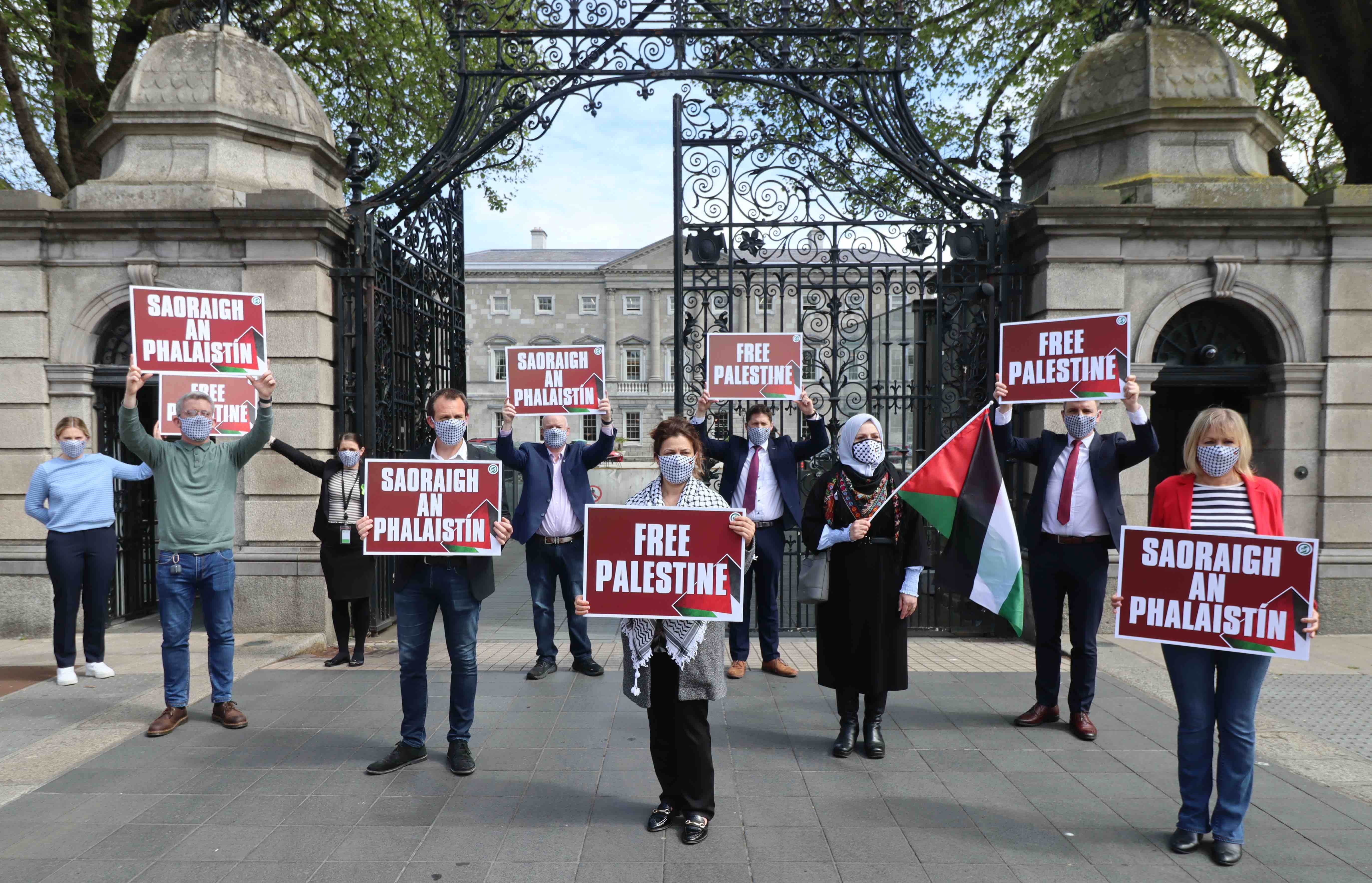
This establishment cohabitation inevitably only further turbocharged Sinn Fein. But this came tumbling down in the autumn of 2023 — when Ireland saw large scale, sometimes violent, protests against mass immigration. With eerie similarities to what happened in England nine months later (The Prematurely Denounced as Disinformation Riots), these disturbances were kicked off by the stabbing of three children and a caretaker by an attacker of Algerian origin outside a primary school in the center of Dublin. Despite the public backlash from their natural supporters, Sinn Fein remained steadfast in its support for open borders. And “Palestine solidarity” remains a particular passion.
Until the Celtic Tiger years, the issue troubling the Irish Republic was emigration, not immigration. Despite high birthrates, the country’s population was no higher at the start of the 1970s than it had been in the 1920s (just under 3 million). Immigration to Ireland only took off in the 1990s, but then it did so rapidly. The largest group are Poles, Indians, and Romanians — a substantial proportion of whom are Roma. But there are also arrivals from Pakistan, Turkey, Syria and Algeria. Today 20 percent of Ireland’s population was born outside the country. This has produced a backlash in a country that had previously seen very little immigration.
Sinn Fein’s support base — the poor, those felt left behind by the boom years, the marginalised — are precisely the groups most affected by mass immigration. But the party has remained relentlessly pro-immigration. Both polling and anecdotal evidence suggests this explains Sinn Fein’s fall in support. It has not been a massive swing — the three blocks of Sinn Fein, Fianna Fail and Fine Gael received a roughly equal share of the vote. But the seismic political shift towards Sinn Fein that had been expected last year did not materialize.
It is not that the traditional parties have called for closing the border. And it is also not that new immigration-critical voices have so far significantly emerged; such parties only won, depending on who you include, between four and six seats out of 174. Their low showing is partly explained by a plethora of small parties swimming in these waters, with none gaining the traction to take off. The electoral system also does them no favors.
For now Fine Gael and Fianna Fail will shack up once more and deliver more of the same. And large parts of Ireland’s electorate will feel unrepresented. They are ripe for the taking, perhaps in another four years.