

Harvard’s Lawyers Use Garber Encampment Message Against Jewish Students Who Are Suing
Hours after interim president’s note, it is cited in federal court filing

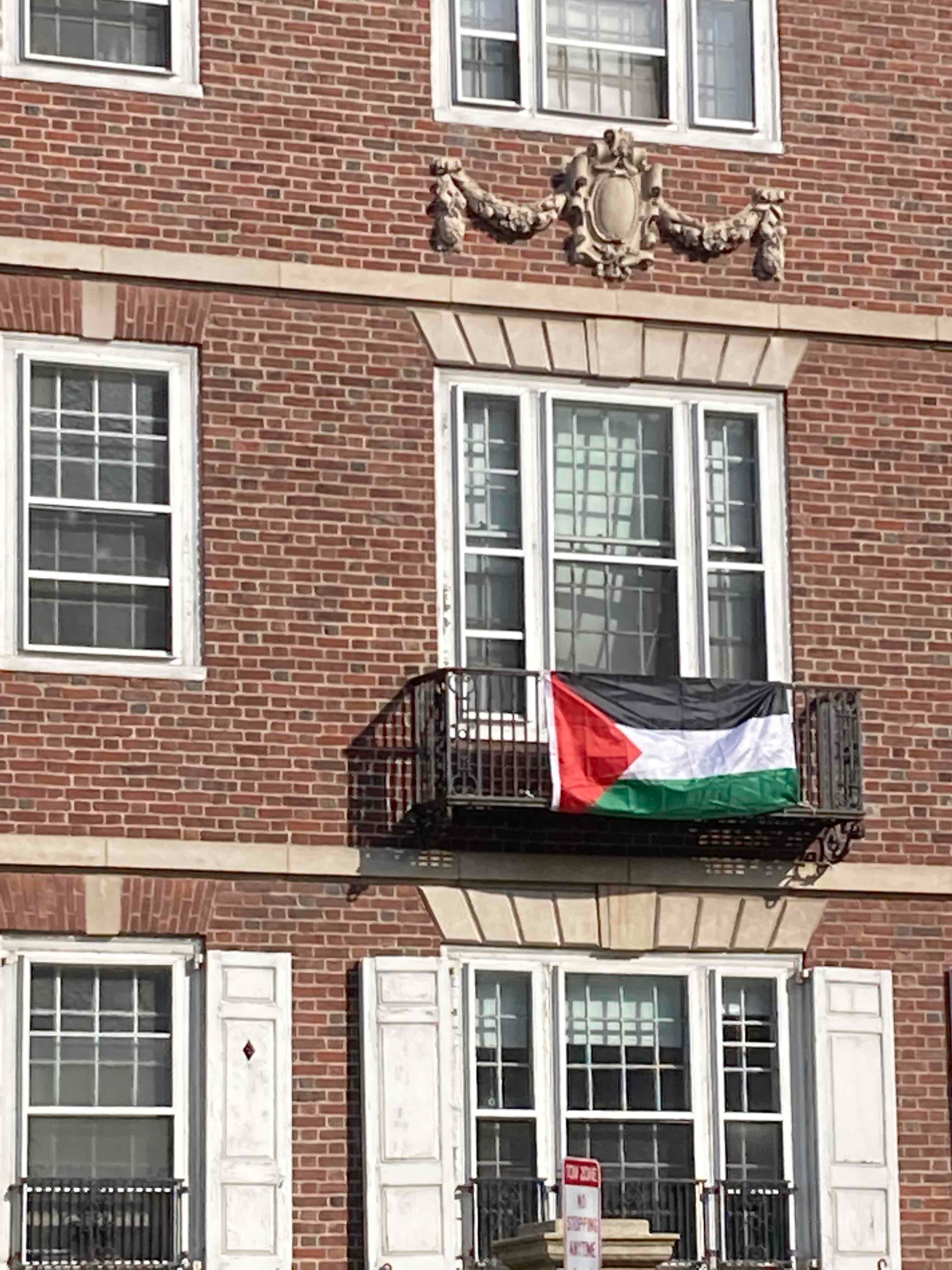
Just hours after Harvard interim president Alan Garber sent a message calling on anti-Israel protesters to “end the occupation of Harvard Yard” and threatening to put participants on “involuntary leave,” Harvard’s lawyers cited the action in a court filing seeking to dismiss a lawsuit by Jewish students.
The court filing was due May 6, which may help to explain why Garber, who had let the encampment alone rather than calling in police to clear it or negotiating an end to it, finally spoke out when he did. The encampment protesters had also issued an ultimatum with a May 6 deadline, and the approach of Commencement and reunions also puts a premium on clearing the central area of the Cambridge, Massachusetts, campus.
Yet in addition to the practical realities on campus, Harvard is facing legal pressure from Jewish students who say, in a federal civil rights lawsuit, “antisemitism at Harvard has been particularly severe and pervasive” and that “Mobs of pro-Hamas students and faculty have marched by the hundreds through Harvard’s campus, shouting vile antisemitic slogans and calling for death to Jews and Israel.”
The May 6 Harvard filing in the case of Kestenbaum v. President and Fellows of Harvard College says, “Interim President Garber announced on May 6, 2024, that those ‘who participate in or perpetuate its continuation will be referred for involuntary leave from their Schools.” It goes on, “Rather than proving (as Plaintiffs proclaim) that Harvard is indifferent to antisemitism on campus, these developments show the opposite and underscore the prematurity of Plaintiffs’ claims.”
A hearing on Harvard’s motion to dismiss is scheduled for May 30 at 2 pm before Judge Richard Stearns of U.S. District Court for the district of Massachusetts. Incremental filings in the case haven’t attracted much press or public attention, but offer a preview of the arguments the judge will have to consider in deciding whether to allow the case to move forward.
A former clerk to Justice Roberts who is also a lecturer at Harvard Law School, Felicia Ellsworth, is leading the Harvard legal effort as part of a team of eight lawyers, four from WilmerHale and four from King & Spalding. The Ellsworth-Seth Waxman team at Wilmer Hale previously represented Harvard in another discrimination case, involving Asian-American applicants, that resulted in a dramatic loss for Harvard at the Supreme Court, along with more than $25 million in legal bills that were uninsured because Harvard failed to provide timely notice to its insurance company. Harvard also lost a case suing the insurance company for failing to pay, though for that case it used the firm Anderson Kill.
A Harvard Divinity School student, Alexander “Shabbos” Kestenbaum, is the named plaintiff on the case, along with Students Against Antisemitism, Inc. He is represented by Kasowitz Benson Torres LLP, a New York-based firm that has filed a series of suits against universities on behalf of Jewish students. A Boston lawyer, Timothy Madden, is also working on the case.
Harvard argues that a civil rights lawsuit by a Jewish student is something like a supermarket avocado—not ripe, not ripe, not ripe, and then so overripe that it’s moot. If you think I’m exaggerating, go read the Harvard filing for yourself: “Plaintiffs’ claims are not ripe….Plaintiffs’ claims are premature because they challenge Harvard’s ongoing response to shifting and developing events and its in-progress efforts to prevent and punish harassment while protecting free speech rights,” the Harvard filing says at one point. “It is too early to judge the efficacy—let along legal sufficiency—of Harvard’s response.”
Also, Harvard claims that “Kestenbaum’s imminent graduation renders his injunctive claims ‘inescapably moot.’”
If the judge lets Harvard get away with that simultaneous “too early” and “too late” defense, the court might as well repeal Title VI of the Civil Rights Act of 1964 altogether by judicial fiat, because every university will be able to wait out any discrimination complaint by claiming a response is “ongoing” until a student’s “imminent graduation” renders the discrimination claims “moot.”
Perhaps to anticipate that, the amended complaint also includes a declaration by a first-year student at Harvard Law School. She writes, “I am extremely fearful that this demonstration will turn physically violent, not only because of the previous assault on a Jewish Harvard student and the myriad safety concerns at similar demonstrations at Harvard since October 7, but because of the violence at ongoing encampments at other universities that is being widely reported in the news.” It reports, “a Jewish teaching fellow at Harvard College told me that when he tried to approach the encampment area, the student protestors ‘body-checked’ him and pushed him out of the area.”
Thank you!: Appreciate our coverage of antisemitism on campus and the university’s response or lack of it? Please help us grow by becoming a paying member. If you’ve already done so, thank you.