

Harvard Employee Was Fired For Celebrating Jewish Holiday, He Says
School told him he couldn’t file discrimination complaint because he was no longer a current community member

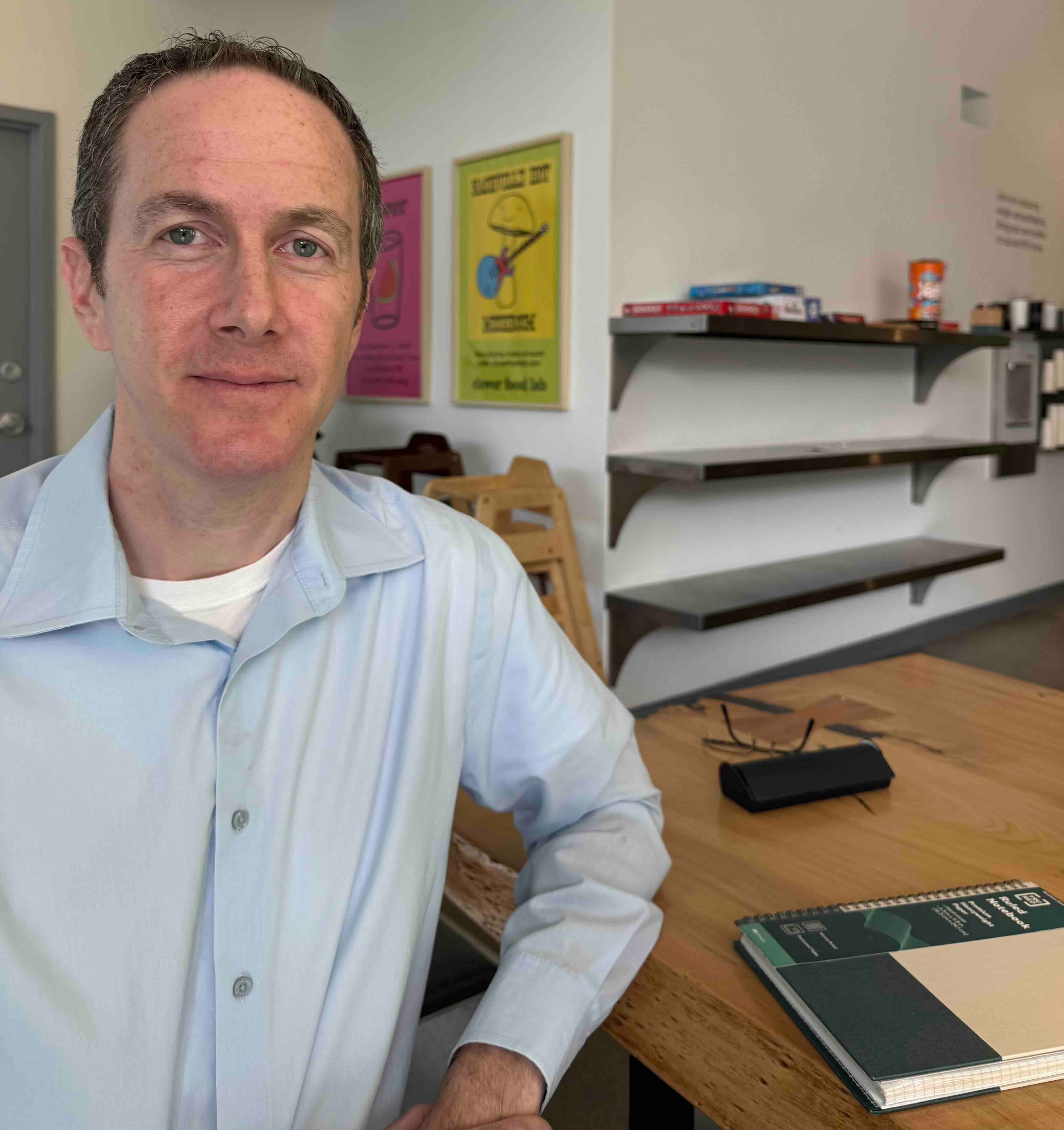
A former Harvard employee says the university fired him for observing the Jewish holiday of Rosh Hashana.
The former employee, Daniel Lilienthal, filed a complaint in July 2025 with the Equal Opportunity Employment Commission, charging Harvard with “unlawful discriminatory practices relating to his employment based on religion, as well as retaliation.”
He says that when he tried to report discrimination through Harvard’s own channels, specifically its Non-Discrimination and Anti-Bullying policy, he was told that the discrimination complaint process was only open to “current community members” and that, because he was already fired, he was not eligible to file a discrimination complaint with the university.
Lilienthal started work September 23, 2024, as Associate Director of Finance and Grants Administration at the Harvard T.H. Chan School of Public Health in the Center for Biostatistics in AIDS Research. He took October 3 and 4, 2024, off for Rosh Hashanah. When he returned to work after the holiday, he says his supervisor reacted negatively and was critical of his absence. The following week he was abruptly fired on a Zoom call in which, according to Lilienthal, his supervisor told him that he was not a “fit” for the role.
“I was a fit until I took off for a Jewish holiday,” Lilienthal told The Editors in an interview.
The timing of the events is a sign that even after antisemitism at Harvard became a national issue, the university was still operating in a way that appeared discriminatory to at least one Jew who had previously worked there for years. A Harvard president, Claudine Gay, had already resigned in January 2024 in part for mishandling congressional testimony about Harvard’s poor response to an outbreak of antisemitism on campus. In July 2024, the Republican National Convention featured a Harvard student, Alexander “Shabbos” Kestenbaum, denouncing the university’s response to Jew-hate. And in August 2024, a federal district judge, Richard Stearns, ruled, “Harvard has failed its Jewish students.”
Disclosure of Lilienthal’s situation—which is being made public here for the first time—comes as Harvard’s federal funding is coming under intensified federal pressure. On September 29, 2025, the U.S. Department of Health and Human Services’ Office for Civil Rights referred Harvard to administrative suspension and debarment proceedings on the grounds that the university acted “with deliberate indifference toward discrimination and harassment against Jewish and Israeli students on its campus.”
The dean for communications and strategic initiatives at the Harvard school of public health, Stephanie Simon, said in response to an inquiry about the case from The Editors, “Employees at Harvard Chan School and across Harvard University are free to take time off for religious holidays pursuant to our policies and procedures. It is University policy to reasonably accommodate requests for time off for religious observance. We review any concerns raised by former employees and take appropriate action as needed.”
Before taking the Harvard Chan School of Public Health job, Lilienthal had worked eight years for other parts of Harvard, receiving consistently positive reviews from his supervisors.. He hasn’t found another full-time position since being fired a year ago. “It’s been a major disruption to my career,” he said, disappointing for many reasons but in part because, “I was good at my work.”
He says a lawsuit against Harvard is likely, pending an EEOC investigation. He also says he’d like to see the formal Non-Discrimination and Anti-Bullying policy changed so that the university will accept complaints including discriminatory firings rather than rejecting them because they are not from someone who is a “current community member.”
“It’s a pretty ridiculous policy,” he told me. He says he’s “not a burn-it down type person,” and would like to see Harvard improve and live up to its values. “It shouldn’t take an EEOC filing or threat of a lawsuit for Harvard to do the right thing when it comes to handling discrimination complaints,” he says. “But there’s something institutionally wrong with Harvard’s policies at the moment and that needs to be called out.”
Thank you: The Editors is a reader-supported publication that relies on paying customers. If you appreciate the content, please sign up today as a free or paid subscriber. If you are a paying subscriber to The Editors already, thank you. For the rest of you, if you appreciate the content, please become a paying subscriber today to assure your full access and help support our independent journalism. The cost is as little as $1.54 a week, which is less than a cup of coffee.
Good to know a grown-up institution like Harvard has an "anti-bullying" policy. Always helpful to infantilize human interactions.