

Harvard Broke Rules to Welcome Back Biden Aides
Plus: interest rates will stay put, Fed officials suggest

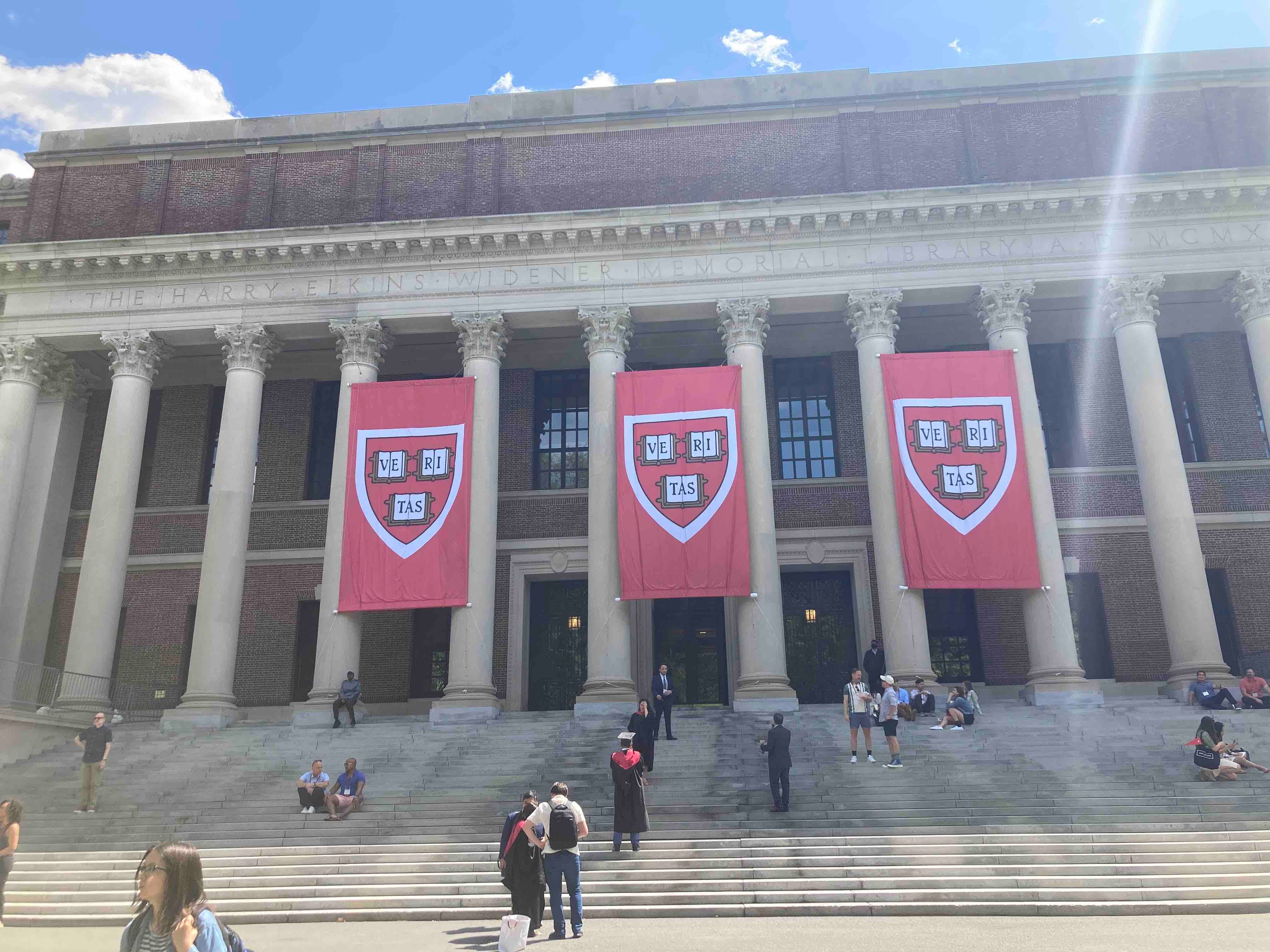
Back in 2018 when Richard Pipes died I mentioned an interview he gave in which he explained why he left the Reagan administration. “Harvard only gives you two years leave of absence, so when my two years were up, I returned," Pipes said.
That was the 1980s, when Harvard, apparently, still believed in holding professors to a primary commitment to academic life at Harvard—to scholarship.
The standards have apparently changed, to judge by recent developments. The Harvard Kennedy School’s new dean, Jeremy M. Weinstein, announced in January that Nicholas Burns, who since 2021 had been the U.S. ambassador to China under President Biden “will rejoin the Harvard Kennedy School faculty.” From the Harvard Kennedy School announcement:
In addition to resuming his professorship at HKS, Burns will also join the Fairbank Center for Chinese Studies at Harvard as a faculty affiliate.
Before his appointment as U.S. envoy to China in 2021, Burns taught for 13 years at the Kennedy School as the Roy and Barbara Goodman Family Professor of the Practice of Diplomacy and International Relations. He founded and led the Future of Diplomacy Project in the School’s Belfer Center for Science and International Affairs and was faculty chair of the School’s programs on the Middle East and South Asia.
This guy wasn’t even ladder faculty, he was “professor of the practice,” which is lower status, though most students don’t understand the difference, and Harvard still let him be in charge of “the School’s programs on the Middle East.” Yet after four years in the Biden administration, it’s “resuming” time in Cambridge for Professor/Ambassador Burns.
Likewise, Samantha Power, who was Biden’s USAID administrator from 2021 to 2025, also gets welcomed back to Harvard after four years. From the May 16, 2025, Harvard announcement: “On June 1, Samantha Power will return to Harvard Kennedy School as the Anna Lindh Professor of the Practice of Global Leadership and Public Policy and to Harvard Law School as the William D. Zabel ’61 Professor of Practice in Human Rights. Power, who recently served in the Biden administration as the administrator of the U.S. Agency for International Development (USAID), was most recently on the HKS and HLS faculty from 2017 to 2021….From 2017 to 2021, Power was the Anna Lindh Professor of the Practice of Global Leadership and Public Policy at the Kennedy School—where she was affiliated with the Carr-Ryan Center and the Belfer Center for Science and International Affairs—and a professor of practice at Harvard Law School.” Another “professor of the practice.”
Will Harvard be welcoming any members of the Trump administration as professors of practice after they serve four years in a Republican administration? Pipes had to return to Cambridge after two years, because the people running Harvard at the time—Derek Bok, Henry Rosovsky—probably believed it did not serve the institution well to leave a position vacant for such a long stretch. Who would teach the courses?
The Faculty of Arts and Sciences has a policy still online: “Consistent with the FAS’s policies concerning all leaves (see FAS Appointment and Promotion Handbook, Chapter 3), leaves for public service, which are unpaid, may not be granted for more than one year at a time. Ordinarily, faculty members should not be out of the classroom for more than a year at a time. It is possible on occasion to request a second year of unpaid leave for the purpose of service in the public interest. By vote of the Corporation, leave for more than two successive years is not possible. Resignation from the Harvard appointment is the only alternative to returning to University service after more than two consecutive years of leave. With regard to the frequency with which public service leaves may be taken, or intervals of time between such leaves, it is ordinarily expected that FAS faculty members will demonstrate their primary commitment to Harvard in a sustained fashion, over the course of multiple years.”
So you have a written Harvard policy—still up online—that “By vote of the Corporation, leave for more than two successive years is not possible,” a policy that apparently applied to Richard Pipes serving in the Reagan administration. Yet when Kamala Harris loses the election, Nicholas Burns and Samantha Power waltz right back to Cambridge to be “resuming” and “return” and “rejoin.” Even if they were not technically on leave during the interim, it sure looks like someone was holding spots for them—the same spots they left.
It is this sort of thing that gives rise to a widespread impression that Harvard is less about teaching and research and more a kind of holding spot for Democrats during periods when they are out of office. These aren’t six-month fellowships at the Institute of Politics. These are jobs with the word “professor.” For Harvard to make the announcement now, in the midst of a high-profile conflict with the Trump administration and while it’s claiming that life-saving medical research is in jeopardy because of cost cuts, is particularly boneheaded. Why not just tell Samantha Power to go get a job at Tufts or at the Council on Foreign Relations for a while until Harvard ousts Penny Pritzker, settles with the Trump administration, and lifts its hiring freeze. Were there nationwide searches for these positions open to all comers? How’s Harvard going to fix its viewpoint diversity problem if it restocks its faculty ranks with the same people?
Powell’s chorus: Federal Reserve officials are running around trying hard to make it seem reasonable that they stopped cutting interest rates once President Trump was inaugurated.
“I worry a lot about the inflation side,” the president of the Federal Reserve Bank of Atlanta, Raphael Bostic, told CNBC on May 19. “Fed’s Bostic says he’s ‘leaning’ toward just one rate cut this year,” is the way CNBC headlined it.
The president of the Federal Reserve Bank of Chicago, Austan Goolsbee, a former Obama official, went on CNBC May 23: “Over the longer run, if they’re putting in place tariffs that have a stagflationary impact … then that’s the central bank’s worst situation,” Goolsbee said. “I feel like the bar for me is a little higher for action in any direction while we’re waiting to get some clarity.” CNBC headlined that one, “Goolsbee says Fed now has to wait longer before moving rates because of trade policy uncertainty.”
The president of the Federal Reserve bank of Minneapolis, Neel Kashkari, spoke on May 27 at a conference of the Bank of Japan. Kashkari compared “tariffs and trade policy uncertainty” to the Covid-19 pandemic and the 2008 global financial crisis. “A large increase in tariffs will increase inflation and decrease economic activity, at least in the short run,” Kashkari said. He went on:
At the Federal Reserve there is a healthy debate among policymakers about whether to “look through” the inflationary effects of the new tariffs. The look-through arguments view tariffs as creating a one-time change in the price level—a transitory inflation shock. This view prioritizes support for economic activity by lowering the policy rate while the economy transitions to its new equilibrium, at which point inflation will have returned to a 2 percent rate, albeit at a higher overall price level.
Arguments against looking through tariff-induced inflation focus on the fact that the trade negotiations are unlikely to be resolved quickly. It may take months or years for negotiations to fully conclude, and there could be tit-for-tat tariff increases as trading partners respond to one other. In addition, some tariffs apply to intermediate goods, and it will take time for the full effects of those price increases to pass through to final prices. In the U.S., inflation has also been running well in excess of our 2 percent target for four years. How many years of elevated inflation can occur before long-run inflation expectations lose their anchor? These arguments support a stance of maintaining the policy rate, which is likely only modestly restrictive now, until there is more clarity on the path for tariffs and their impact on prices and economic activity. Personally, I find these arguments more compelling given the paramount importance I place on defending long-run inflation expectations.
If there’s a “healthy debate,” it sure seems like just one side of it is being heard.
The next Fed Open Market Committee meeting is June 17-18.
The scenario raised by Ira Stoll that "Harvard ousts Penny Pritzker" does seem to be in the air.
The Boston Globe ran a story about how Pritzker has a conflict of interest in dealing with President Trump: https://www.bostonglobe.com/2025/05/22/business/penny-pritzker-harvard-trump-resistance/
The New York Times was more subtle but funnier, running a teaser on its front page titled "Penny's end near". The story to which it referred was ostensibly about retiring the one cent coin, but it did mention Pritzker.
In a time in which Democrats are asking whether the party lost the 2024 election by waiting too long to oust President Biden, Harvard affiliates are wondering whether we might lose the university by waiting too long to oust Pritzker.
Harvard can learn something from the late great Canadian musician Gordon Lightfoot. It is not just the line "Be careful while bending the law":
https://gordonlightfoot.com/Lyrics/TheHouseYouLiveIn.txt
The House You Live In, ©1976 by Gordon Lightfoot
Go first in the world, go forth with your fears
Remember a price must be paid
Be always too soon, be never too fast
At the time when all bets must be laid
Beware of the darkness, be kind to your children
Remember the woman who waits
And the house you live in will never fall down
If you pity the stranger who stands at your gate
When you're caught by the gale and you're full under sail
Beware of the dangers below
And the song that you sing should not be too sad
And be sure not to sing it too slow
Be calm in the face of all common disgraces
And know what they're doing it for
And the house you live in will never fall down
If you pity the stranger who stands at your door
When you're out on the road and feeling quite lost
Consider the burden of fame
And he who is wise will not criticize
When other men fail at the game
Beware of strange faces and dark dingy places
Be careful while bending the law
And the house you live in will never fall down
If you pity the stranger who stands at your door
When you're down in the dumps and not ready to deal
Decide what it is that you need
Is it money or love, is it learning to live
Or is it the mouth you must feed
Be known as a man who will always be candid
On questions that do not relate
And the house you live in will never fall down
If you pity the stranger who stands at your gate
And the house you live in will never fall down
If you pity the stranger who stands at your gate