


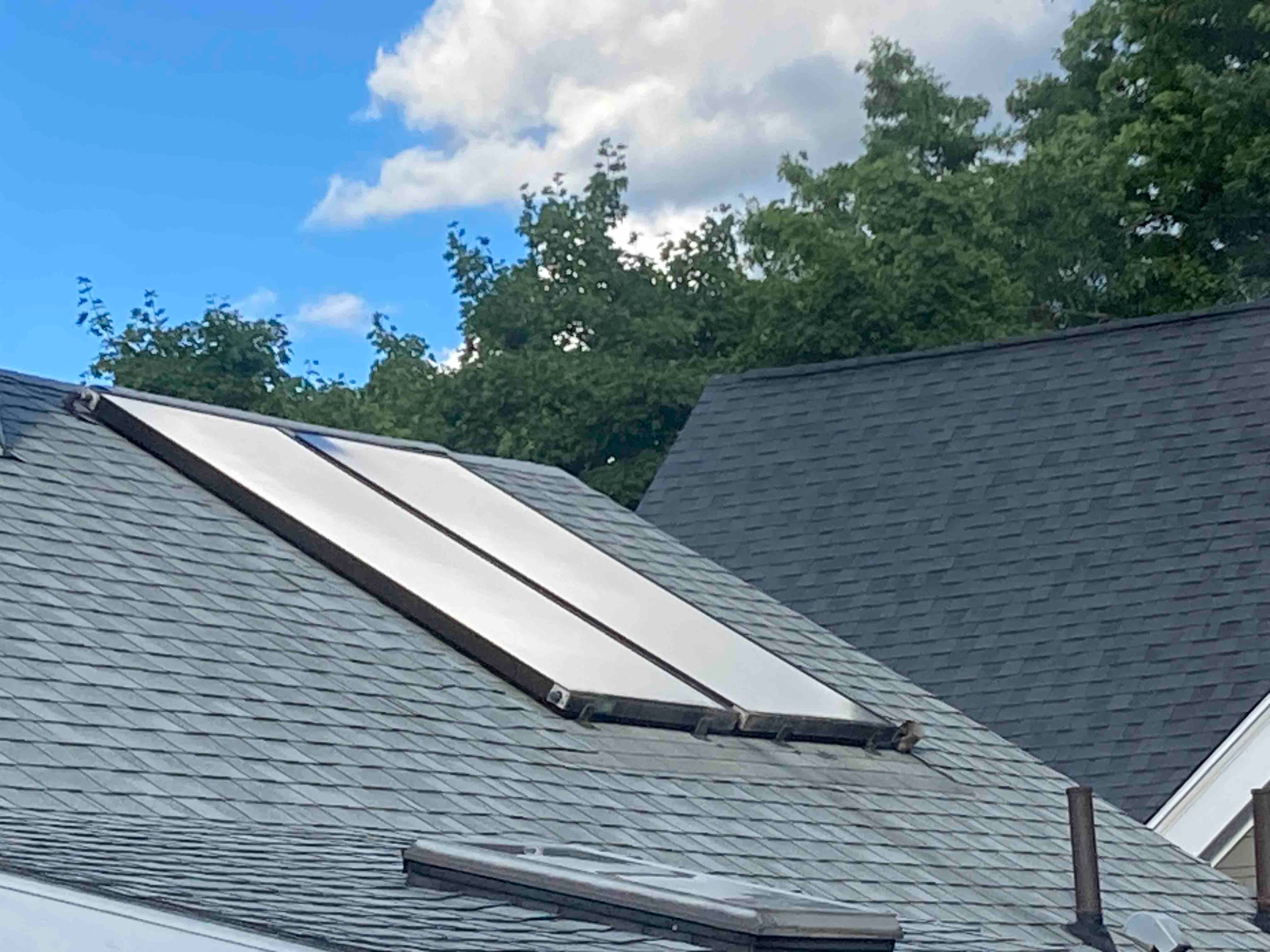
The press and its sources in academia and advocacy groups are panicking over what One Big Beautiful Bill will mean for alternative energy.
“Trump's ‘Big Beautiful Bill’ is an attack on American energy production,” Noah Smith writes. Smith links to a social media thread by an assistant professor at Princeton, Jesse Jenkins, who warns, “Stunningly, the new Senate budget bill contains a NEW tax on wind & solar power projects…this bill could RAISE TAXES on the most important new sources of electricity supply in the USA by at least roughly 40-70%!! That is utter insanity!”
“Senate Megabill Stuns the Clean Energy Industry With New Tax on Wind and Solar,” is the Wall Street Journal headline.
“Senate’s tax bill seeks to gut clean energy,” is the Washington Post headline. The Post reports, “It’s not just the solar industry that is in jeopardy. Battery manufacturers, wind turbine assemblers and makers of electric-car parts will be hurt, along with producers of computer chips, minerals, industrial glass and other components that underpin modern energy technologies.”
“Surprise Tax in G.O.P. Bill Could Cripple Wind and Solar Power,” is the New York Times headline about “a move that industry groups say could devastate the renewable power industry.”
The panic is excessive, and the headlines omit some essential facts.
The alternative energy industry collected so much in subsidies during the Biden administration that it should be able to survive on that until the Democrats regain political control and re-open the spigots. Democrat-controlled states and their pension funds are free to keep investing in alternative energy and subsidizing it through government purchasing, mandates, and tax breaks.
Rather than abolishing the tax breaks outright, the Senate bill creates incentives to speed up the projects. “Wind and solar power do not fare well. Projects would only qualify for a federal tax credit worth at least 30 percent of project costs if they finish construction by the end of 2027,” the Times reports. The “end of 2027” is two and a half years away.
All the noise is basically an attack on Republicans for not keeping the clean-energy government spending spigots open forever at Biden “Inflation Reduction Act” levels. That decision should surprise precisely no one; Republicans ran in 2024 against what they called the “Green New Scam.”
The government subsidies for these projects wind up flowing to a combination of foreign interests, left-leaning venture capitalists, and Chinese suppliers. The Times article quotes one complainer: “This puts into complete disarray billions of dollars in investments that we’ve all planned,” said Sandhya Ganapathy, chief executive of EDP Renewables North America, a leading wind and solar developer. What the Times doesn’t tell readers is that “EDP” stands for Energias de Portugal, S.A. Why should American taxpayers subsidize some Portuguese windmill operator?
The “new tax” that the headlines mention applies only to projects that rely on materials from Communist China. My preference is to deal with China by working to free it rather than raising taxes on imports. Until China allows independent labor unions, though, some measure is needed to adjust for the fact that its workers are prevented from organizing unions without Communist Party control. Otherwise American workers are undercut. And if American energy is dependent on a supply chain from a potentially hostile country, it poses a national security threat. What’s next, an iPhone-style claim that only the “small hands” of Chinese workers are capable of making solar panels and wind turbines?
Alternative energy companies will benefit from the same provisions in the Big Beautiful Bill that other companies will—lower tax rates, 100 percent expensing rather than extended depreciation for new domestic factories.
The case for these alternative technologies has always been partly the promise that they are cheap and abundant—that they will save money, even without subsidies. Set aside the climate change or pollution aspects, at least for now. Wind or sun are free and widely available, while oil and gas require drilling and transportation. A lot of solar is already installed, in part because property owners like being paid to generate electricity rather than paying fees to purchase it. Progress on nuclear and hydrogen is moving so rapidly that by the end of 2027 solar and wind may look relatively less attractive by comparison.
A useful analogy is the auto industry, where many drivers are freely choosing to buy unsubsidized hybrids rather than subsidized electric cars or old-fashioned non-hybrid gasoline cars. The hybrid technology has gotten so good that you might as well get the improved gas mileage and save the money on gas. When they were first introduced, hybrids were subsidized, but at this point, the subsidy is unnecessary, because the purchases make sense without the subsidy.
If the green-energy crowd really wants to save the planet, they should reallocate the money they are spending on sky-is-falling lobbyists and publicists and devote it instead to research and development on power that doesn’t require subsidies to outperform fossil fuels on price. Otherwise it just looks like more special interest pleading—Green Energy at Gucci Gulch. The press would rather echo the panic than investigate who is benefiting from the subsidies. Even Elon Musk has suddenly turned—practically overnight—in the press from the villain who was gutting government to a heroic and credible defender of clean energy. Where are the editors?
Moment of joy: Almost as good as the 2005 Budweiser Super Bowl “Thank You” commercial with the airport standing ovation for returning soldiers, and in the same general vein, is this video showing the arrival of 20 Israelis to Camp Ramah in New England at 12:15 am, after a long journey, on Thursday, June 16, 2025.
The camp is in Massachusetts, affiliated with Conservative Judaism, and draws campers and staff largely from Democrat-leaning states in New England, New York, New Jersey, and the Maryland-D.C.-Virginia area. It’s hard to imagine a more warm greeting from American Jews to the Israelis who have been dodging missiles and more for many months. It’s a reality worth remembering the next time some New York Times news article insists that “younger, more progressive Jews have grown increasingly critical of Israel, and impatient with older generations, whose religious identities have long been tied up with support for the Jewish state.”
New Scott Grannis: The Calafia Beach Pundit, Scott Grannis, is out with a new (Friday June 27) post, “Big Picture charts: modest growth and low inflation.” He writes in part, “Add it all up and the outlook for inflation is LOW for the foreseeable future. I think the Fed is getting very close to realizing this, so we will soon have lower interest rates and that should help….”
Goolsbee afterthought: After publishing Friday I realized I left out one of the best lines of that Austan Goolsbee-Tyler Cowen podcast. Goolsbee: “When we came into 2023, you’ll recall the Bloomberg economists said there was a 100 percent chance of recession in 2023. They announced it at the end of 2022.”
Sometimes the expert consensus is wrong. It’s something to remember the next time you hear Fed Chairman Jerome Powell talk, as he did at his June 18, 2025 press conference, about how “every forecaster you can name, who is a professional forecaster with adequate resources and forecasts for a living, is forecasting a pretty — everyone that I know is forecasting a meaningful increase in inflation in coming months from tariffs.” Or about how “our forecasts are generally not particularly different from those of other well-resourced forecasting operations.”
Just because the forecasters all agree doesn’t mean that they are correct; it could mean that they all are influenced by one another or that they all are making the same mistake. I’m not saying that’s so with tariffs and inflation. But Powell talks about the forecasts as if he were unaware of the point Goolsbee makes about what happened in late 2022.
And just for the record, you can look up my January 2, 2023 New York Sun column: “Right now, the negativity on Wall Street is so widespread it starts to feel almost like conformity….Less attention is paid to the reasons for bullishness. Those reasons, though, might win out in the end….the reality in a lot of the American economy right now — housing, hotels, new and used cars, labor — is that demand is hot even with price increases. You can look at that as inflationary, or you can look at it as a sign that this is not an economy headed into recession. …What’s suspicious, though, is the confidence that the negative crowd has in its pessimistic predictions for the year ahead. The experts don’t often admit it, but they could be wrong. If so, those few investors who see it differently now may have a surprisingly prosperous new year.”