


Kaveh Afrasiabi, who was pardoned by President Biden as part of a 2023 prisoner exchange deal with Iran after being charged with acting as an unregistered foreign agent of Iran, now says the Iranian government is “corrupt to the core,” “ossified,” and “faces a serious crisis of legitimacy.”
Afrasiabi made the comments from Concord, Massachusetts, in a Friday, January 2, phone interview with The Editors.
Afrasiabi, an Iranian citizen who is a U.S. permanent resident, pleaded not guilty in February 2021 after prosecutors said he was paid approximately $265,000 by the Iranian U.N. mission since 2007 and also received health insurance benefits. He was a frequent contributor to the New York Times, which did not disclose to its readers that Afrasiabi was being paid by the Iranian U.N mission while writing articles for the Times about U.S. policy toward Iran.
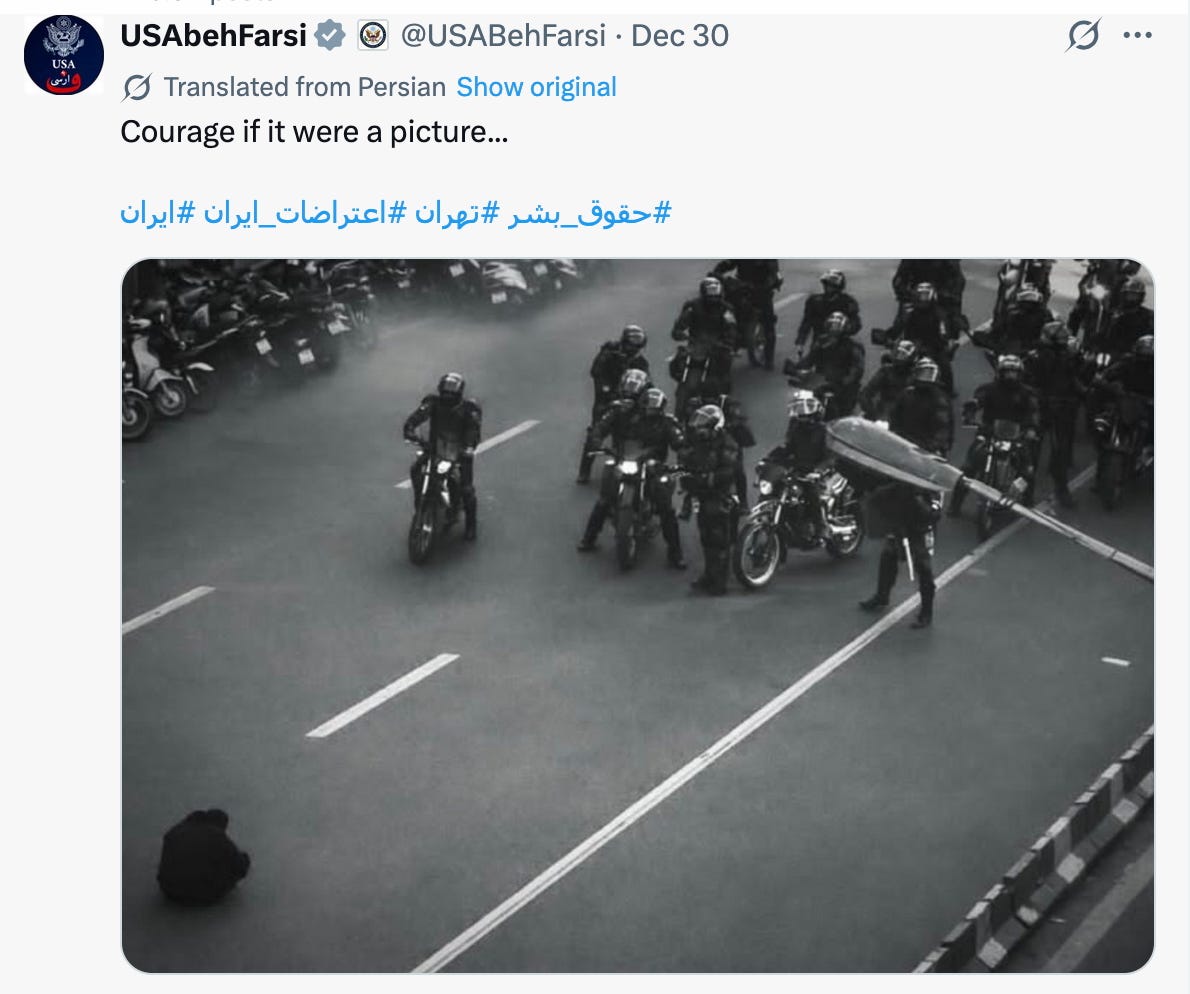
Afrasiabi has been posting to social media about the protests sweeping Iran.
“I stand by the heroic Iranian people and their just struggle for freedom against this oppressive and corrupt regime. I devoted so many years of my life to peaceful reform only to be disappointed and learn that this regime is incapable of genuine reform,” he posted earlier today, a post that prompted me to get him on the phone.
“The mullahs have ruled Iran for half a century making a mess of it. It is time for a republic of Iran and strict separation of religion and politics,” he posted. On December 31, he posted, “Half a century of suffocating theocracy in Iran is coming to an end. The demand for freedom is inescapable.”
I asked Afrasiabi what had changed. He said that while he took part in the Iranian revolution as a 17-year-old, he had become disillusioned, at first pursuing reform through dialogue between the regime and the United States. “This is completely consistent with my lifelong efforts,” he said.
Yet he also said, “we have now entered a new stage,” with “a decaying leadership” in Iran and “pent-up frustrations” of the Iranian people “that have exploded into the open.”
He called for “free and democractic elections” and “separation of religion and politics.” He said the latest reports indicate that protests have spread to include 70 or 80 cities and towns in Iran, with some burning symbols of the regime. He said that toppling the regime is “not an easy undertaking,” but that there is a “fairly good possibility” that the “disorganized and spontaneous” protests would gain momentum and become more troublesome for the regime.
Asked what should come after the Islamic republic, he said he hoped that laws would be changed and that Iran’s foreign policy would be modified to stop wasting resources on “foreign adventurism” and to end the “obsession with Israel.”
Asked what the U.S. or other countries can do to help, he said foreign capitals should issue statements of solidarity supporting the protesters but tread carefully before taking military action for fear of triggering a counterproductive nationalistic response.
Afrasiabi’s statement is the latest in a series indicating that the Iranian protests are getting traction and may perhaps pose a serious threat to the terror-sponsoring, human-rights-abusing, theocratic regime of Ayatollah Ali Khamenei.
President Trump posted a statement to social media that said, “If Iran fires on peaceful protesters and violently murders them, which is their usual practice, the United States of America will come to their aid. We are fully prepared and armed and ready for action. Thank you for your attention to this matter!”
An ambassador to Israel for President Obama who also served in the Biden administration, Daniel Shapiro, posted, “My advice to Democrats: Express support now for the Iranian people in their struggle against the brutal regime. This should be a bipartisan issue. Press Trump to do more than issue threats: support protesters with internet access and prepare now to advise/assist in a transition.”
Shapiro also posted:
Trump’s message of support for Iranian protesters has the potential to be a tipping point moment, especially if it constrains the regime from using force to crush them. It also imposes an obligation on the U.S. to follow through if needed, with both the risk of deeper U.S. military involvement, and the moral hazard of failing to back up the threat.
The Iranian people may have an opportunity to bring the tyranny of the mullahs that has ruined their country to an end. They deserve support. Their success can mean a brighter future for Iran and the entire region.
There should also be active planning in the Administration now for the transition that may unfold. The U.S. must be prepared to provide humanitarian assistance, expertise in institution building and reconstruction, carefully implemented sanctions relief, and coordination among regional partners to assist Iranians in steering toward a transition to a peaceful, stable (and hopefully democratic) outcome.
Reflecting on his experience, Afrasiabi said, “I had a limited international affairs consulting role and used my rapport for release of several US hostages and hoping for a nuclear deal that could pave the way to Iran’s democratization. In retrospect I realize I was naive and underestimated the theocracy’s wherewithal.”
How could Trump support protesters with Internet access? I thought Trump was trying to eliminate Radio Free Europe, Radio Liberty, and Radio Free Asia.