

Britain’s Elections This Week Pose Crucial Tests for Farage, Starmer
Tory party leadership could also rest on contest’s outcome

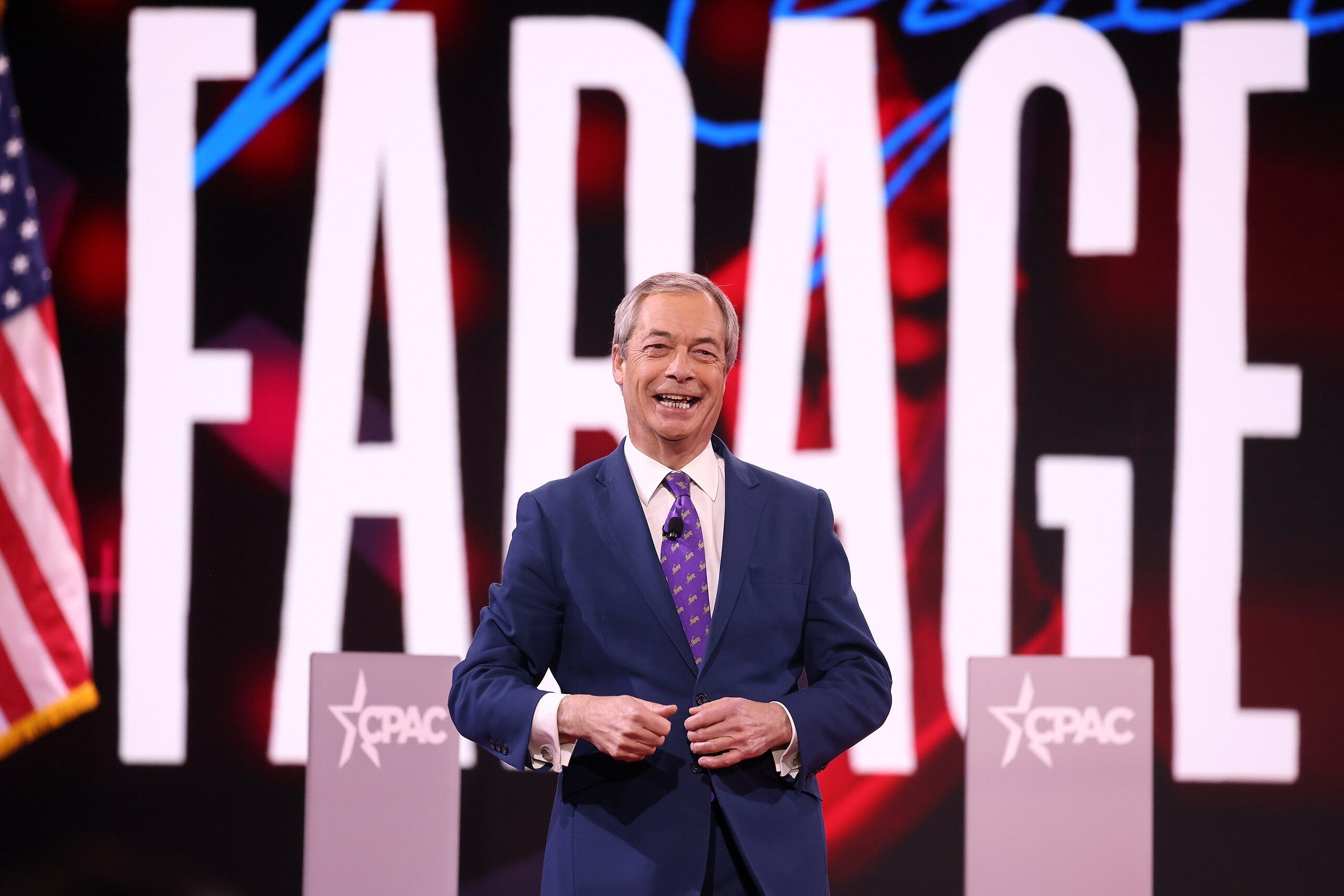
British local-government elections aren’t typically of great interest to American readers. But this week’s vote, scheduled for Thursday, May 1 — the first big electoral test of Keir Starmer’s Labour government since they came to office last July — is worth paying attention to. It will be the first concrete test of whether Nigel Farage’s Reform party has become a serious player, and if UK politics is realigning.
A brilliant communicator, Farage was a central player in Britain’s Brexit debates. He was the dominant figure in the UK Independence party; without its threat to the Tories the referendum on exiting the European Union might have never been called.
Farage has huge appeal in white, working class seats in the UK — the so-called Red Wall areas that have traditionally always voted Labour. But this base has also meant that his message has changed over time. When Farage first entered the political fray in the late 1990s he was a free market, low-tax Thatcherite who wanted to restore British sovereignty.
Now he is much more ready to embrace economic nationalism and state intervention in the economy. He has called for the nationalization of both the steel and the water industry and has signaled that he now supports further extending workers’ employment protections. Farage was perhaps the UK’s loudest Trump cheerleader — vying for that title with the prime minister for 49 days Liz Truss — although he has been rather more quiet in that regard in recent months as the president’s policies on Ukraine and on trade policy have become more unpopular on the European side of the Atlantic.
In July 2024, Labour won a massive parliamentary majority — 411 seats, out of 650 — on a modest share of the vote, just under 34 percent. No British government had been elected on a lower share of the vote for over 100 years, yet its tally of seats has only been surpassed by the winning party in three elections over that century.
Starmer’s government has had a rocky start and has suffered in the polls. It is now roughly level-pegging with Reform, at around 25 percent each, with the Conservatives a tad behind in the low 20s. The rest of the vote is split between the centrist Liberal Democrats, the Greens, and assorted Islamist independents.
Due to where this week’s votes are taking place — they are only in certain areas of England — they won’t tell us much about the advance of Islamist type-candidates, but they will be a huge test for Reform. Farage’s party is putting up candidates for virtually every fight going, more than any other party. How it fares will determine the political narrative between now and the next general election in 3 or 4 years time.
If Reform hits its targets, the story will be that Farage has a realistic shot of becoming prime minister at the next election, a fairly extraordinary turn of events for a party that won just five seats in the Commons in the 2024 election, itself a breakthrough. If Reform underperforms, much of the wind will go out of its sails.
If the Tories lose substantially to the insurgents, the days of Kemi Badenoch as party leader could be numbered. Badenoch was elected in November 2024. If her party underperforms, the Conservative leadership could then be taken over by a right-wing figure, most likely Robert Jenrick, who would seek to do a deal with Farage — although any such deal would be difficult with Reform in the ascendancy. But just as likely is that a centrist Tory would come out on top, in all probability James Cleverly, who would rule out any pacts with Farage.
For Farage to be seen as a contender for the top office he will need to achieve two things. Firstly Reform will need to come out on top in the local elections, or at least make an arguable case that his party has triumphed. That should be possible. Most of the local authorities up for election were last voted for in 2021 when the Tories were polling at over 40 per cent, so they will suffer heavy losses. Due to planned local government reorganizations, elections in some of the best areas for Reform have been postponed at the instigation of the current Labour government but only after the request of the Conservative local administrations in those areas. So if Farage does not do quite as well as his supporters hope for, he can use this as a ready excuse.
Secondly, Reform will need to win a parliamentary by-election (what would be called a special election in the United States) also to be held on May 1. This vote in the constituency of Runcorn and Helsby, around 15 miles from Liverpool, is caused by the conviction of its sitting Labour MP Mike Amesbury for assault, and his subsequent resignation. After a night out in the local hostelries last October, the MP punched a man to the ground for speaking rudely to him in the street. It was Amesbury’s bad luck that he was caught doing so on closed circuit television. This resulted in his career coming to an end, and a ten-week prison sentence, subsequently suspended on appeal.
Reform came second in Runcorn in the 2024 general election, but a long way behind Labour in this usually ultra safe seat. Starmer’s party got more than 50 percent of the vote, with Reform at 18 and the Tories at 16 percent. For Reform’s candidate Sarah Pochin to win this seat will be tough. In his various iterations, Farage’s political vehicles have generally underperformed in by-elections and in Runcorn his party has a steep hill to climb.
In some respects, Runcorn is just the kind of northern, overwhelmingly white, working class seat in which Reform is making its biggest advances. But it is also close to Liverpool, a city which has remained steadfastly loyal to Labour and so far proven insusceptible to Farage’s charms.
If Farage pulls off both these feats on Thursday, the story of British politics that will be endlessly replayed over the coming years is whether Farage will make it to Downing Street. If he fails this week, the discussion will turn to whether the Reform phenomenon was largely hype. These local elections are likely to have greater political consequences than any other in the last 40 years.